Garden Design
Heat Tolerant Perennials for Zone 7: What's Blooming When Everything Else Quits
Heat Tolerant Perennials for Zone 7: What's Blooming When Everything Else Quits
7
min read

Summer is brutal for gardeners! Here in my New Jersey Zone 7A colonial cottage garden, Mother Nature has been putting us through a wild weather rollercoaster: scorching days with temperatures climbing well above 100°F, followed by humidity and torrential rains.
If you were to walk through my flower beds today, you might wonder:
Where did all the traditional cottage garden flowers go?
Good question! When I first decided to turn my lawn into a colonial cottage garden, summer proved to be a major eye-opener. Late spring and early summer are often dominated by those famous "Instagram-worthy" blooms—spires of foxgloves, colorful lupins, and majestic delphiniums. But by mid-July, those early stars are completely spent. They are done for the season or hanging on by a thread.
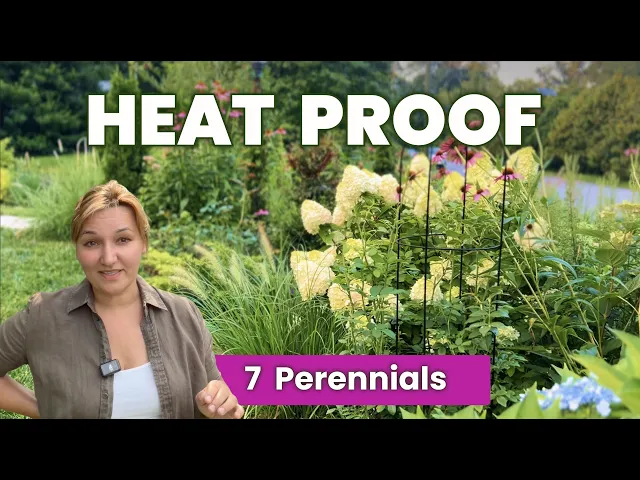
Today, I want to walk you through seven reliable plants that are putting on a spectacular show in my garden right now, along with the fundamental design strategy I use to keep my borders looking lush and structured even during midsummer lulls.
Plant | Bloom Color | Height | Sun | Drought Tolerant? |
|---|---|---|---|---|
Little Lime Punch Hydrangea | Lime green | 3–5 ft | Full/Part | No |
Sea Holly | Steel blue | 2–3 ft | Full | Yes |
Purple Gladioli | Purple | 4–5 ft | Full | Moderate |
Dwarf Echinacea | Vivid pink/magenta | 12–14 in | Full/Part | Yes |
Hardy Geranium | Soft purple | 10–18 in | Full/Part | Moderate |
Allium Millenium and 'Summer Beauty' | Lilac-pink | 18–24 in | Full | Yes |
Bronze Fennel | Bronze/Yellow | 5–6 ft | Full | Yes |

Real plants. Real garden.
Honest perspective.
I share what works in my garden, including the mistakes!
Shop My Favorite
Heat-Proof Perennials
7 Heat Tolerant Perennials for Zone 7 With Continuous Bloom & Vibrant Color

1. Little Lime Punch Hydrangea
I have a few different hydrangeas scattered across my property, but honestly, little Lime Punch Hydrangea is my absolute favorite. I actually filmed a whole dedicated video about her last year because of her incredible performance. She is an exceptional compact shrub for filling in border gaps right when midsummer arrives. The blooms open in a crisp, striking lime green hue that adds an instant sense of cooling refreshment to the hot July garden.
Growing Needs & Plant Profile:
Mature Height & Spread: 3 to 5 feet tall and 3 to 5 feet wide.
Light Requirements: Full sun to partial shade (in warmer climates like Zone 7+, morning sun with afternoon shade protects the delicate blooms from scorching).
Hardiness Zones: USDA Zones 3 through 8.
Soil & Water Preferences: Prefers rich, moist, well-draining soil heavily amended with organic matter. Requires consistent moisture, especially during 100°F heatwaves.

2. Sea Holly (Eryngium)
Right next to my Lime Punch Hydrangea, the Sea Holly produces intense, spiky, metallic blue blooms. The color contrast between the cool, architectural blue of the Sea Holly and the fresh lime-green tones of the hydrangea is simply breathtaking. It brings a sculptured, textured look that stands up effortlessly to summer heat. One thing to remember is that Sea Holly thrives in hot, dry conditions. Next to my hydrangea, it grows taller and spills like a fountain to one side. In dry flower bed, it will be short and upright.
Growing Needs & Plant Profile:
Mature Height & Spread: 2 to 3 feet tall and 1 to 2 feet wide.
Light Requirements: Full sun (requires at least 6 hours of direct sunlight to maintain stem strength and vibrant blue color).
Hardiness Zones: USDA Zones 4 through 9.
Soil & Water Preferences: Thrives in lean, dry to medium, well-draining soils. Highly drought-tolerant once established; deeply hates soggy winter ground.

3. Deep Purple Gladioli
Positioned just alongside the Sea Holly and hydrangea, I have a grouping of striking deep purple Gladioli. I planted these directly from bulbs, and they reward me by returning reliably year after year. The rich, velvety purple flowers give dramatic vertical height right in the middle of July when many of my other purple spires like lupins and foxgloves are no longer blooming.
Growing Needs & Plant Profile:
Mature Height & Spread: 3 to 4 feet tall and 6 to 12 inches wide.
Light Requirements: Full sun for optimal bloom production and strong upright stems.
Hardiness Zones: USDA Zones 7 through 10 (perennial in Zone 7a; in colder zones, corms should be dug up and overwintered indoors).
Soil & Water Preferences: Well-draining, sandy loam enriched with compost. Keep soil consistently moist while flower stalks are developing.

4. Dwarf Echinacea (Coneflower)
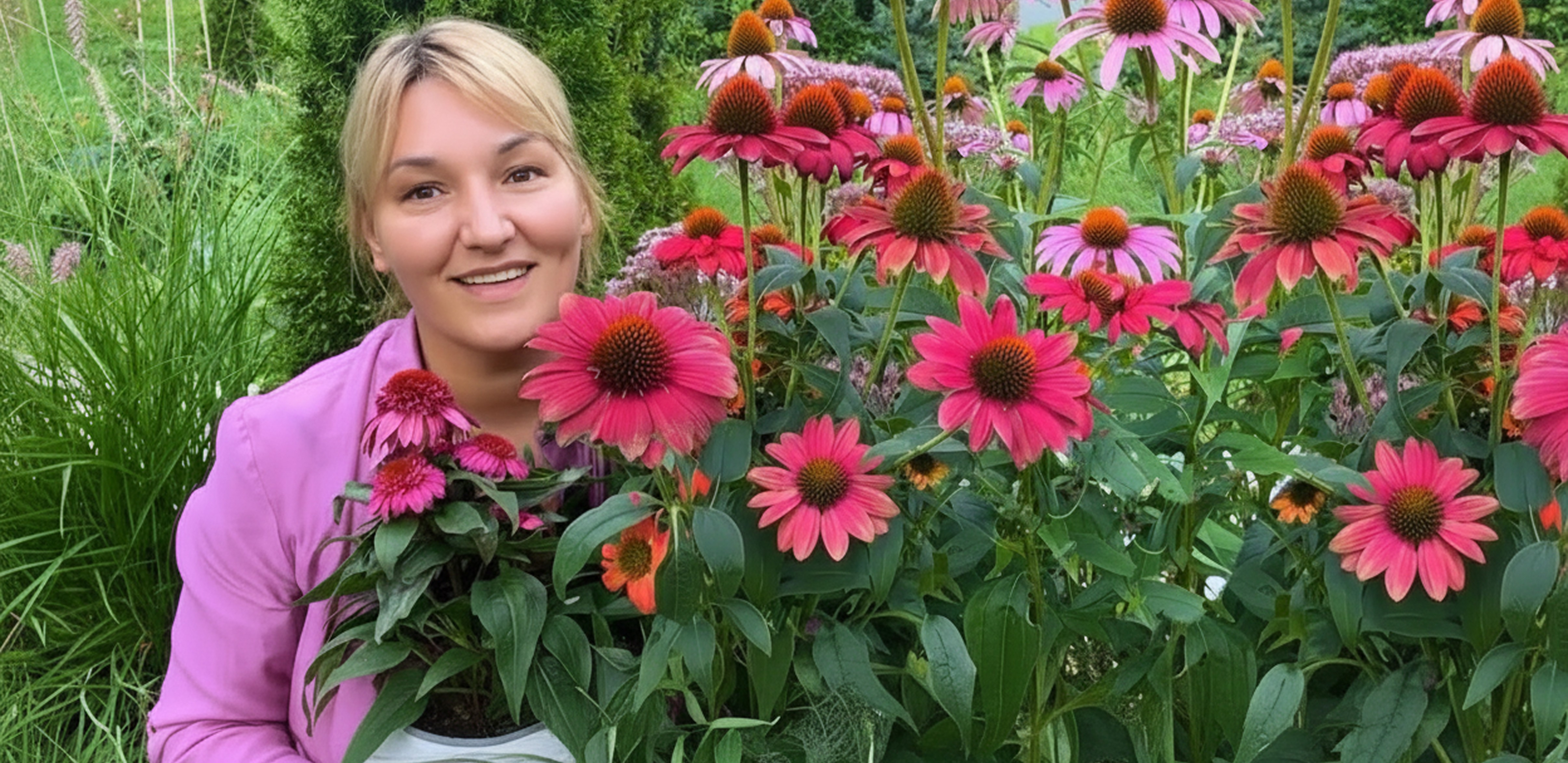
Tucked directly in front of my taller mid-border plants sits a delightfully compact cultivar of Echinacea. Standing at only about one foot tall, these dwarf coneflowers are ideally sized for the very front edge of the border. I originally purchased these last year because my garden was desperately lacking bright midsummer color. They produce intensely vivid blossoms—so bright, in fact, that they almost push the boundaries of my usually soft, pastel color palette! But during the heat of July, their punchy energy is a welcome sight.
Growing Needs & Plant Profile:
Mature Height & Spread: 12 to 14 inches tall and 12 to 18 inches wide.
Light Requirements: Full sun to light partial shade.
Hardiness Zones: USDA Zones 4 through 9.
Soil & Water Preferences: Highly adaptable to poor, rocky, or clay soils provided drainage is good. Once established, they possess excellent drought tolerance.

5. Hardy Geranium (Cranesbill)
Much more in line with my preference for soft, classic garden tones is this remarkable hardy geranium (cranesbill). I am truly impressed with this perennial's durability. The section of the border where it lives gets completely drenched in intense, unyielding sunlight all day long. Despite the heat, this geranium blooms happily in shades of soft purple, creeping outward to form a seamless, flower-filled ribbon along the edge of the garden bed. Best of all, it will continue blooming like this straight through late fall.
Growing Needs & Plant Profile:
Mature Height & Spread: 10 to 18 inches tall and 18 to 24 inches wide.
Light Requirements: Full sun to partial shade (demonstrates exceptional heat and sun tolerance compared to older varieties).
Hardiness Zones: USDA Zones 4 through 8.
Soil & Water Preferences: Average, medium moisture, well-draining soil. Shear back slightly after the first main flush if tidying is needed, though it flowers continuously with minimal fuss.

6. Allium 'Summer Beauty'
Another fantastic perennial anchoring the front of my border is Allium 'Summer Beauty'. You might already be familiar with its popular relative, Allium 'Millennium'. These ornamental onions are brilliant assets across multiple seasons because their tidy, glossy, grass-like foliage remains attractive from spring to frost. However, their lilac-pink globe blooms pop open specifically in July. They act as a vital bridge in the garden landscape, keeping the border looking full and intentional right before late-season bloomers like my Autumn Joy Sedum wake up and take over.
Growing Needs & Plant Profile:
Mature Height & Spread: 18 to 24 inches tall and 12 to 18 inches wide.
Light Requirements: Full sun.
Hardiness Zones: USDA Zones 4 through 9.
Soil & Water Preferences: Prefers dry to medium moisture, well-draining soil. Naturally resistant to deer, rabbits, and typical summer garden pests.

7. Bronze Fennel
Finally, no mid-July garden tour would be complete without highlighting my spectacular Bronze Fennel. I actually have a cluster of multiple plants growing together here. With its feathery, smoky-bronze foliage and yellow umbel flowers, it adds an ethereal, airy dimension to the border. It is absolute magnet for pollinators—bees and butterflies hover around it constantly. Because it creates such a dramatic, wild statement as it grows quite big, I honestly just leave it completely untouched and let it do its thing.
Growing Needs & Plant Profile:
Mature Height & Spread: 5 to 6 feet tall and 2 to 3 feet wide.
Light Requirements: Full sun (essential for deep bronze coloration).
Hardiness Zones: USDA Zones 5 through 9 (frequently self-seeds to return reliably each spring).
Soil & Water Preferences: Tolerates lean, dry soil; thrives in average, well-draining ground with modest moisture. Highly heat and drought tolerant.
Shop My Favorite
Heat-Proof Perennials
Master Class in Garden Design: Building the Three Structural "Bones"
Beyond selecting heat-hardy July bloomers, the real secret to maintaining a garden that looks cohesive and beautiful year-round lies in your underlying structural design. In traditional garden design, people frequently emphasize "the bones" of a garden, usually referring to hardscaping, fences, or stone walls. But when I converted my suburban front lawn into a colonial cottage garden, I realized each individual flower bed needed its own living infrastructure.
To avoid ugly midsummer gaps when blossoms fade, I structure every bed using three distinct layers of living "bones":
1. The Green Bones (Evergreens): Boxwoods, small conifers, or evergreen hollies provide permanent structure, deep green color, and ground anchoring. Even when every flower in the bed is cut back or between bloom cycles, the green bones keep the garden looking intentional rather than abandoned.
2. The Colorful Bones (Shrubs): Deciduous flowering and foliage shrubs—such as hydrangeas, spireas, or physocarpus (ninebark)—add seasonal height, woody architecture, and reliable blooms that last far longer than herbaceous perennials.
3. The Soft Layer (Ornamental Grasses): Ornamental grasses bring movement, fine texture, and a soft, flowing quality that catches the summer breeze. They fill air spaces between perennials and peak in beauty during late summer and autumn.
When you weave these structural layers directly into your borders, the dynamic of your garden shifts dramatically. While individual flowers come and go through continuous succession planting, the overall garden bed retains shape, depth, and rich textural variety. A gap left by fading foxgloves is no longer an eyesore—it simply reveals the lush greens of your structural shrubs and the dancing blades of ornamental grasses behind it.
FAQs (Frequently Asked Questions)
How do I stop my cottage garden from looking empty in midsummer?
To avoid empty gaps in July, practice succession planting by combining early spring bulbs, midsummer perennials (like Allium 'Summer Beauty' and Sea Holly), and late-blooming perennials (like Sedum and Asters). Additionally, incorporate evergreen shrubs, flowering shrubs, and ornamental grasses into your beds to ensure structural interest even when flower count is low.
Do I need to dig up Gladioli bulbs in the winter?
It depends on your climate zone. In USDA Hardiness Zone 7 and warmer (such as my Zone 7A garden in New Jersey), Gladioli bulbs can typically stay in the ground year-round with a protective layer of winter mulch. In Zones 6 and colder, you should dig up the corms after the foliage dies back in fall, store them in a cool, dry spot indoors, and replant them in spring after the danger of frost has passed.
Can Bronze Fennel grow in a regular flower border?
Yes! Bronze Fennel makes an extraordinary ornamental backdrop in cottage garden borders thanks to its smoky, delicate foliage and tall height. However, keep in mind that it can grow up to 6 feet tall and tends to self-seed freely. If you want to prevent seedlings from spreading throughout your beds, deadhead the yellow seed heads before they scatter.
How do I keep my hydrangeas blooming through intense summer heat?
Hydrangeas need consistent moisture during extreme heat, especially panicle types like Lime Punch. Apply a 2- to 3-inch layer of organic mulch around the root zone to retain soil moisture and keep root temperatures cool. In hot regions (Zone 7+), planting hydrangeas where they receive direct morning sun and afternoon shade will prevent bloom scorching.
Final Thoughts: Embracing the Evolving Garden
Transforming a plain front lawn into a thriving colonial cottage garden has been one of the most rewarding journeys of my life. It has taught me that a garden isn't a static painting—it's a living, breathing process that constantly changes from week to week. July doesn't have to be a month of garden frustration. By welcoming midsummer workhorses like Sea Holly, Alliums, hardy Geraniums, and Lime Punch Hydrangeas, and framing them with strong green bones, your garden can stay lush, colorful, and inviting straight through the heat of summer.
Key Takeaways Summary
Early cottage garden bloomers like foxgloves and delphiniums are done by mid-July.
Heat-tolerant plants are what keep a Zone 7 border full through August.
Little Lime Punch Hydrangea earns its spot with cool lime-green blooms and a shape that handles 100°F heat when watered well
Sea Holly, Alliums Milenium and Summer Beauty, and Dwarf Echinacea are easy plants: once established, they handle poor soil and drought on their own
Bronze Fennel adds light texture and feeds pollinators, while Hardy Geranium adds steady color low to the ground through the heat
The real fix for summer gaps is structure, not more flowers: evergreens, shrubs, and ornamental grasses keep beds looking full between blooms
Thank you so much for joining me on this tour of my mid-July garden! If you enjoyed these tips, be sure to explore more stories here on my blog and follow along as we explore plant care, seasonal garden design, and the art of turning simple lawns into beautiful colonial cottage havens. Happy gardening!
Summer is brutal for gardeners! Here in my New Jersey Zone 7A colonial cottage garden, Mother Nature has been putting us through a wild weather rollercoaster: scorching days with temperatures climbing well above 100°F, followed by humidity and torrential rains.
If you were to walk through my flower beds today, you might wonder:
Where did all the traditional cottage garden flowers go?
Good question! When I first decided to turn my lawn into a colonial cottage garden, summer proved to be a major eye-opener. Late spring and early summer are often dominated by those famous "Instagram-worthy" blooms—spires of foxgloves, colorful lupins, and majestic delphiniums. But by mid-July, those early stars are completely spent. They are done for the season or hanging on by a thread.
Today, I want to walk you through seven reliable plants that are putting on a spectacular show in my garden right now, along with the fundamental design strategy I use to keep my borders looking lush and structured even during midsummer lulls.
Plant | Bloom Color | Height | Sun | Drought Tolerant? |
|---|---|---|---|---|
Lime Punch Hydrangea | Lime green | 3–5 ft | Full/Part | No |
Sea Holly | Steel blue | 2–3 ft | Full | Yes |
Purple Gladioli | Purple | 4–5 ft | Full | Moderate |
Dwarf Echinacea | Vivid pink/magenta | 12–14 in | Full/Part | Yes |
Hardy Sun-Loving Geranium | Soft purple | 10–18 in | Full/Part | Moderate |
Allium 'Summer Beauty' | Lilac-pink | 18–24 in | Full | Yes |
Bronze Fennel | Bronze/Yellow | 5–6 ft | Full | Yes |
Real plants. Real garden.
Honest perspective.
I share what works in my garden, including the mistakes!
Shop My Favorite
Heat-Proof Perennials
7 Heat Tolerant Perennials for Zone 7 With Continuous Bloom & Vibrant Color

1. Little Lime Punch Hydrangea
I have a few different hydrangeas scattered across my property, but honestly, little Lime Punch Hydrangea is my absolute favorite. I actually filmed a whole dedicated video about her last year because of her incredible performance. She is an exceptional compact shrub for filling in border gaps right when midsummer arrives. The blooms open in a crisp, striking lime green hue that adds an instant sense of cooling refreshment to the hot July garden.
Growing Needs & Plant Profile:
Mature Height & Spread: 3 to 5 feet tall and 3 to 5 feet wide.
Light Requirements: Full sun to partial shade (in warmer climates like Zone 7+, morning sun with afternoon shade protects the delicate blooms from scorching).
Hardiness Zones: USDA Zones 3 through 8.
Soil & Water Preferences: Prefers rich, moist, well-draining soil heavily amended with organic matter. Requires consistent moisture, especially during 100°F heatwaves.

2. Sea Holly (Eryngium)
Right next to my Lime Punch Hydrangea, the Sea Holly produces intense, spiky, metallic blue blooms. The color contrast between the cool, architectural blue of the Sea Holly and the fresh lime-green tones of the hydrangea is simply breathtaking. It brings a sculptured, textured look that stands up effortlessly to summer heat. One thing to remember is that Sea Holly thrives in hot, dry conditions. Next to my hydrangea, it grows taller and spills like a fountain to one side. In dry flower bed, it will be short and upright.
Growing Needs & Plant Profile:
Mature Height & Spread: 2 to 3 feet tall and 1 to 2 feet wide.
Light Requirements: Full sun (requires at least 6 hours of direct sunlight to maintain stem strength and vibrant blue color).
Hardiness Zones: USDA Zones 4 through 9.
Soil & Water Preferences: Thrives in lean, dry to medium, well-draining soils. Highly drought-tolerant once established; deeply hates soggy winter ground.

3. Deep Purple Gladioli
Positioned just alongside the Sea Holly and hydrangea, I have a grouping of striking deep purple Gladioli. I planted these directly from bulbs, and they reward me by returning reliably year after year. The rich, velvety purple flowers give dramatic vertical height right in the middle of July when many of my other purple spires like lupins and foxgloves are no longer blooming.
Growing Needs & Plant Profile:
Mature Height & Spread: 3 to 4 feet tall and 6 to 12 inches wide.
Light Requirements: Full sun for optimal bloom production and strong upright stems.
Hardiness Zones: USDA Zones 7 through 10 (perennial in Zone 7a; in colder zones, corms should be dug up and overwintered indoors).
Soil & Water Preferences: Well-draining, sandy loam enriched with compost. Keep soil consistently moist while flower stalks are developing.

4. Dwarf Echinacea (Coneflower)
Tucked directly in front of my taller mid-border plants sits a delightfully compact cultivar of Echinacea. Standing at only about one foot tall, these dwarf coneflowers are ideally sized for the very front edge of the border. I originally purchased these last year because my garden was desperately lacking bright midsummer color. They produce intensely vivid blossoms—so bright, in fact, that they almost push the boundaries of my usually soft, pastel color palette! But during the heat of July, their punchy energy is a welcome sight.
Growing Needs & Plant Profile:
Mature Height & Spread: 12 to 14 inches tall and 12 to 18 inches wide.
Light Requirements: Full sun to light partial shade.
Hardiness Zones: USDA Zones 4 through 9.
Soil & Water Preferences: Highly adaptable to poor, rocky, or clay soils provided drainage is good. Once established, they possess excellent drought tolerance.

5. Hardy Geranium (Cranesbill)
Much more in line with my preference for soft, classic garden tones is this remarkable hardy geranium (cranesbill). I am truly impressed with this perennial's durability. The section of the border where it lives gets completely drenched in intense, unyielding sunlight all day long. Despite the heat, this geranium blooms happily in shades of soft purple, creeping outward to form a seamless, flower-filled ribbon along the edge of the garden bed. Best of all, it will continue blooming like this straight through late fall.
Growing Needs & Plant Profile:
Mature Height & Spread: 10 to 18 inches tall and 18 to 24 inches wide.
Light Requirements: Full sun to partial shade (demonstrates exceptional heat and sun tolerance compared to older varieties).
Hardiness Zones: USDA Zones 4 through 8.
Soil & Water Preferences: Average, medium moisture, well-draining soil. Shear back slightly after the first main flush if tidying is needed, though it flowers continuously with minimal fuss.

6. Allium 'Summer Beauty'
Another fantastic perennial anchoring the front of my border is Allium 'Summer Beauty'. You might already be familiar with its popular relative, Allium 'Millennium'. These ornamental onions are brilliant assets across multiple seasons because their tidy, glossy, grass-like foliage remains attractive from spring to frost. However, their lilac-pink globe blooms pop open specifically in July. They act as a vital bridge in the garden landscape, keeping the border looking full and intentional right before late-season bloomers like my Autumn Joy Sedum wake up and take over.
Growing Needs & Plant Profile:
Mature Height & Spread: 18 to 24 inches tall and 12 to 18 inches wide.
Light Requirements: Full sun.
Hardiness Zones: USDA Zones 4 through 9.
Soil & Water Preferences: Prefers dry to medium moisture, well-draining soil. Naturally resistant to deer, rabbits, and typical summer garden pests.

7. Bronze Fennel
Finally, no mid-July garden tour would be complete without highlighting my spectacular Bronze Fennel. I actually have a cluster of multiple plants growing together here. With its feathery, smoky-bronze foliage and yellow umbel flowers, it adds an ethereal, airy dimension to the border. It is absolute magnet for pollinators—bees and butterflies hover around it constantly. Because it creates such a dramatic, wild statement as it grows quite big, I honestly just leave it completely untouched and let it do its thing.
Growing Needs & Plant Profile:
Mature Height & Spread: 5 to 6 feet tall and 2 to 3 feet wide.
Light Requirements: Full sun (essential for deep bronze coloration).
Hardiness Zones: USDA Zones 5 through 9 (frequently self-seeds to return reliably each spring).
Soil & Water Preferences: Tolerates lean, dry soil; thrives in average, well-draining ground with modest moisture. Highly heat and drought tolerant.
Shop My Favorite
Heat-Proof Perennials
Master Class in Garden Design: Building the Three Structural "Bones"
Beyond selecting heat-hardy July bloomers, the real secret to maintaining a garden that looks cohesive and beautiful year-round lies in your underlying structural design. In traditional garden design, people frequently emphasize "the bones" of a garden, usually referring to hardscaping, fences, or stone walls. But when I converted my suburban front lawn into a colonial cottage garden, I realized each individual flower bed needed its own living infrastructure.
To avoid ugly midsummer gaps when blossoms fade, I structure every bed using three distinct layers of living "bones":
1. The Green Bones (Evergreens): Boxwoods, small conifers, or evergreen hollies provide permanent structure, deep green color, and ground anchoring. Even when every flower in the bed is cut back or between bloom cycles, the green bones keep the garden looking intentional rather than abandoned.
2. The Colorful Bones (Shrubs): Deciduous flowering and foliage shrubs—such as hydrangeas, spireas, or physocarpus (ninebark)—add seasonal height, woody architecture, and reliable blooms that last far longer than herbaceous perennials.
3. The Soft Layer (Ornamental Grasses): Ornamental grasses bring movement, fine texture, and a soft, flowing quality that catches the summer breeze. They fill air spaces between perennials and peak in beauty during late summer and autumn.
When you weave these structural layers directly into your borders, the dynamic of your garden shifts dramatically. While individual flowers come and go through continuous succession planting, the overall garden bed retains shape, depth, and rich textural variety. A gap left by fading foxgloves is no longer an eyesore—it simply reveals the lush greens of your structural shrubs and the dancing blades of ornamental grasses behind it.
FAQs (Frequently Asked Questions)
How do I stop my cottage garden from looking empty in midsummer?
To avoid empty gaps in July, practice succession planting by combining early spring bulbs, midsummer perennials (like Allium 'Summer Beauty' and Sea Holly), and late-blooming perennials (like Sedum and Asters). Additionally, incorporate evergreen shrubs, flowering shrubs, and ornamental grasses into your beds to ensure structural interest even when flower count is low.
Do I need to dig up Gladioli bulbs in the winter?
It depends on your climate zone. In USDA Hardiness Zone 7 and warmer (such as my Zone 7A garden in New Jersey), Gladioli bulbs can typically stay in the ground year-round with a protective layer of winter mulch. In Zones 6 and colder, you should dig up the corms after the foliage dies back in fall, store them in a cool, dry spot indoors, and replant them in spring after the danger of frost has passed.
Can Bronze Fennel grow in a regular flower border?
Yes! Bronze Fennel makes an extraordinary ornamental backdrop in cottage garden borders thanks to its smoky, delicate foliage and tall height. However, keep in mind that it can grow up to 6 feet tall and tends to self-seed freely. If you want to prevent seedlings from spreading throughout your beds, deadhead the yellow seed heads before they scatter.
How do I keep my hydrangeas blooming through intense summer heat?
Hydrangeas need consistent moisture during extreme heat, especially panicle types like Lime Punch. Apply a 2- to 3-inch layer of organic mulch around the root zone to retain soil moisture and keep root temperatures cool. In hot regions (Zone 7+), planting hydrangeas where they receive direct morning sun and afternoon shade will prevent bloom scorching.
Final Thoughts: Embracing the Evolving Garden
Transforming a plain front lawn into a thriving colonial cottage garden has been one of the most rewarding journeys of my life. It has taught me that a garden isn't a static painting—it's a living, breathing process that constantly changes from week to week. July doesn't have to be a month of garden frustration. By welcoming midsummer workhorses like Sea Holly, Alliums, hardy Geraniums, and Lime Punch Hydrangeas, and framing them with strong green bones, your garden can stay lush, colorful, and inviting straight through the heat of summer.
Key Takeaways Summary
Early cottage garden bloomers like foxgloves and delphiniums are done by mid-July.
Heat-tolerant plants are what keep a Zone 7 border full through August.
Little Lime Punch Hydrangea earns its spot with cool lime-green blooms and a shape that handles 100°F heat when watered well
Sea Holly, Alliums Milenium and Summer Beauty, and Dwarf Echinacea are easy plants: once established, they handle poor soil and drought on their own
Bronze Fennel adds light texture and feeds pollinators, while Hardy Geranium adds steady color low to the ground through the heat
The real fix for summer gaps is structure, not more flowers: evergreens, shrubs, and ornamental grasses keep beds looking full between blooms
Thank you so much for joining me on this tour of my mid-July garden! If you enjoyed these tips, be sure to explore more stories here on my blog and follow along as we explore plant care, seasonal garden design, and the art of turning simple lawns into beautiful colonial cottage havens. Happy gardening!

Written by Jolanta Reynolds
You Might Like
You Might Like


You Might Like

Subscribe to my newsletter
Get new garden posts, seasonal tips, and what's blooming in my New Jersey cottage garden — straight to your inbox.
By subscribing, you agree to the Privacy Policy
Subscribe
to my
newsletter
Get new garden posts, seasonal tips, and what's blooming in my New Jersey cottage garden — straight to your inbox.
By subscribing, you agree to the Privacy Policy