
Lawn to Garden
Climbing Rose 'New Dawn' Review: How to Get Hundreds of Cottage Garden Blooms
Climbing Rose 'New Dawn' Review: How to Get Hundreds of Cottage Garden Blooms
5
min read

I know I am a bit late to the party when it comes to the 'New Dawn' rose. This iconic climbing rose was originally introduced back in the 1930s, and it was officially voted the most popular rose in the world around 1997. Even though it has been a staple in romantic landscapes for nearly a century, I still want to share my personal observations and experience growing it in my own garden in New Jersey, Zone 7a.
If you have been searching for a SUPER fast-growing, English-style climbing rose to elevate your space, 'New Dawn' deserves a prime spot on your garden wishlist.
How Fast Does 'New Dawn' Climbing Rose Grow?
It is absolutely true what they say: 'New Dawn' is an extremely vigorous climbing rose. I planted my 'New Dawn' rose about three years ago. During the first year after planting, I didn't bother adding a trellis support because I simply didn't think I would need it so soon. That was a big miscalculation!

This is 'New Dawn' the next year after I planted it in my garden (I planted it in the spring and this how it looked the next spring).
By the time the second year rolled around, this rose had completely engulfed and filled the entire trellis framework. In fact, the only reason 'New Dawn' isn't currently climbing all over the roof of my house is because I have to aggressively trim it back every single year.
Is 'New Dawn' Rose a repeat bloomer?
Yes, but… Over the past three years, I have paid close attention to how 'New Dawn' allocates its energy throughout the season. The flowering performance follows a distinct and fascinating rhythm:
The Massive First Flush: Around the end of May and the beginning of June, the rose puts on an unforgettable show. The entire plant becomes utterly smothered in soft, romantic flowers. Moreover, the buds are literarily everywhere! The sheer density of blooms during late spring takes your breath away.

Look at all the buds! They are everywhere!

Another view of hundreds and hundreds of buds.
Mid-Summer-to-Fall Energy Shift: Because 'New Dawn' is a true reblooming (repeat-flowering) rose, it continues to produce bloom right through the rest of the growing season. However, it's noticeably less intense than the massive spring flush.

You will still see beautiful, soft romantic flowers. In a way, you get to appreciate each with more focus! They shutter quite quickly so you will not enjoy it as a cut rose, but as each bloom fades, there are usually 3-4 more buds on the same cane getting ready.
Basal Cane Explosion: I believe the reason mid-summer blooming lightens up is that the rose shifts its powerful energy reserves into pushing out massive new growth. If I go away on vacation in late August and return in early September, I am always greeted by monstrous, fresh canes shooting up from the bottom. I am talking about main basal canes as thick as a broom handle! It doesn't just put out slender lateral stems; it pushes out massive main structural canes with an intensity that completely exceeded my expectations.
When to cut back 'New Dawn' roses?
'New Dawn' follows the typical climbing rose pruning schedule - you should cut the lateral canes (selectively the main canes) annually in late winter to early spring (when forsythias begin to bloom) while the plant is dormant.
But before you head out with your pruners, do yourself a favor. PEG SOME OF THE CANES. Whenever I have some room, I peg my roses. Roses love to be bent. Give their canes that gentle 45 degree angle and you will be blown away with the amount of blooms you will see next spring!
How to Peg 'New Dawn' Rose Canes for Maximum Blooms
In previous years, whenever those massive, thick late-season canes shot out, my usual routine was simply to snip them back to keep the plant contained. But one year, I decided to try something completely different: pegging.

Instead of cutting off a long, dominant structural cane, I carefully bent it horizontally and secured it down to the ground. 'New Dawn' canes are massive and thick so my usual method of using soft pantyhose ties isn't going to fly here!
The results were nothing short of extraordinary! Every single node along the cane burst into action, producing lateral branches packed to the brim with flower buds.
Thanks to pegging that single large cane, the rose went into overdrive. This spring alone, I conservatively estimate that my 'New Dawn' rose produced more than 700 hundreds of flower buds! If you want to maximize your bloom count on climbing roses, training or pegging canes horizontally is a absolute game-changer.
Is 'New Dawn' rose disease resistant?
When it comes to overall health and fungal disease resistance, 'New Dawn' has performed wonderfully in my garden. Unlike many older rose varieties that can suffer from black spot, powdery mildew, or rust, my plant keeps its foliage clean of fungal issues without needing constant spraying.
However, 'New Dawn' does have one major weakness in my yard: rose sawfly larvae, commonly known as rose slugs.
Because 'New Dawn' grows with such incredible vigor, it constantly produces an abundance of soft, tender, succulent young shoots. Unfortunately, that fresh growth is absolute fine dining for sawfly larvae. A couple of seasons ago, the sawflies were so aggressive that my rose was completely defoliated—decimated down to bare stems without a single leaf left intact!
How to Identify and Treat Rose Slugs (Sawfly Larvae) Organically
Determined not to lose the foliage again, I knew I had to take action!
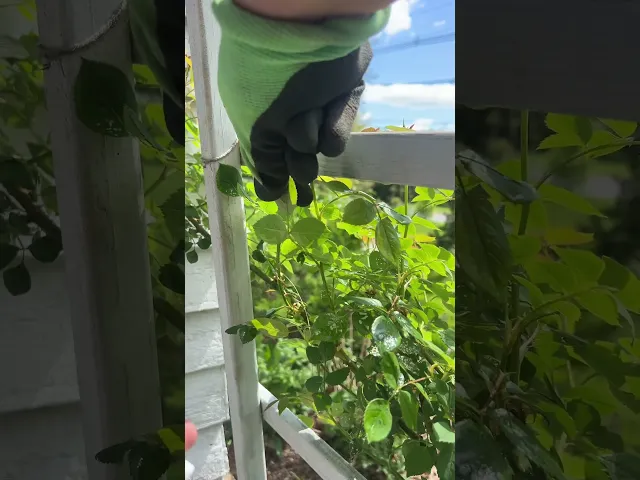
Early Detection: I monitored the foliage closely right at the start of the spring season. The moment I spotted the very first tiny pinpricks or transparent windows on the leaves (the telltale early damage of young sawfly larvae), I took action immediately.
Targeted Organic Spraying: I treated the plant early with a combination spray of spinosad and insecticidal soap (often referred to as spinet soap).
Results: By intervening early in the lifecycle before the population exploded, the rose stayed completely lush, leafy, and healthy all season long! Catching the issue at the first sign of damage is really a must!
Best Companion Plants for 'New Dawn':
Pairing with Clematis
Back when the rose slugs completely stripped my 'New Dawn' rose bare, the structural trellis looked empty and sad. That's when I decided I needed another plant on the trellis that will not fight New Dawn and will be leafy enough to cover spots where New Dawn got munched on by the annoying sawfly.

The winner: a lovely 'Polish Spirit' Clematis planted right at the base of the rose.

Look how dense are the leaves and how lush lime green is their color!
The Clematis weaves its way gracefully through the lower and middle canes of the climbing rose. This companion pairing offers two huge benefits:
Foliage & Color Backup: Clematis foliage fills the visual gaps so the trellis never looks bare.And the flowers are lovely and there are so many varieties to choose from!
Classic Cottage Aesthetics: Roses and clematis are the quintessential cottage garden pairing. The clematis flowers intertwine with the rose blooms, adding depth, contrasting texture, and rich complementary color to the entire vertical display.
Soft Pink Blooms and Overall Garden Impact
The individual flowers of 'New Dawn' are a classic, delicate, romantic soft pink. Up close, the blooms are fragile and gentle; individual cut flowers on the bush may not hold on for an exceptionally long duration compared to modern floribunda or hybrid tea roses. However, what individual blooms lack in longevity, the plant far makes up for in sheer numerical force.

When you have a massive vine producing over a thousand soft blush-pink blooms all opening in unison, the visual impact across your home exterior or garden wall is drop-dead gorgeous. It creates that dreamy, timeless, romantic English garden atmosphere faster than almost any other climber on the market.
Growing Requirements for Featured Cottage Garden Plants
To help you successfully cultivate these beautiful climbers in your own landscape, here are the essential growing specifications for the plants discussed:
Climbing Rose 'New Dawn' (Rosa 'New Dawn')
Growing Needs: 'New Dawn' is an extremely hardy, large-flowering climbing rose that thrives across USDA Hardiness Zones 5a through 9b. At maturity, this vigorous climber easily reaches a height of 10 to 20 feet with a spread of 6 to 10 feet. It requires full sun (at least 6 hours of direct sunlight daily) to encourage maximum bloom production and strong cane structure, though it is notably more shade-tolerant than many other rose varieties. Plant 'New Dawn' in rich, well-draining soil enriched with organic compost, maintaining a soil pH between 6.0 and 6.5. It prefers consistent moisture—approximately 1 inch of water per week—applied directly to the root zone via drip irrigation or direct soaking to keep the foliage dry and minimize fungal risk.
Clematis (Clematis spp.)
Growing Needs: Clematis species and hybrid vines generally perform best in USDA Hardiness Zones 4a through 9a. Depending on the specific cultivar trained alongside your rose, mature heights typically range from 6 to 12 feet with a spread of 3 to 6 feet. Clematis thrives under the classic rule: "heads in the sun, feet in the shade." They require full sun to partial shade (4 to 6+ hours of sun) for the top growth, while keeping the root zone cool, shaded, and heavily mulched. They demand fertile, moist, but exceptionally well-drained soil with a neutral to slightly alkaline pH (6.5 to 7.2). Provide regular, deep watering throughout the hot summer months, ensuring the soil remains evenly moist but never waterlogged or soggy.
Frequently Asked Questions
When is the best time to prune and train a 'New Dawn' climbing rose?
Major structural pruning should take place in late winter or early spring while the plant is still dormant, just as the buds begin to swell. During this time, remove dead, damaged, or diseased wood, and trim back small twiggy growth. Throughout the growing season, keep an eye out for long, vigorous basal canes produced in late summer; bend and tie these main canes horizontally onto your trellis or wall support while they are still pliable to encourage heavy flower bud production for the following spring.
How do I know if rose slugs (sawfly larvae) are eating my rose foliage?
Rose slug damage begins as tiny "windows" or light-colored spots on the leaves where young larvae scrape away the upper layer of leaf tissue. As the larvae mature, they consume whole sections of the leaf, leaving behind a skeletonized appearance consisting only of main leaf veins. Inspect the undersides of damaged leaves early in the spring to spot the small, greenish, caterpillar-like larvae.
Is 'New Dawn' suitable for growing over a garden arch or pergola?
Yes, 'New Dawn' is an ideal candidate for large arbors, pergolas, and stout garden arches due to its rapid growth and flexible canes. However, because it grows so vigorously and develops thick, heavy structural canes over time, ensure your support structure is sturdy, well-anchored, and made of high-quality wood or metal that can handle substantial wind loads and weight.
Can 'New Dawn' rose tolerate partial shade?
While 'New Dawn' performs best and produces the highest volume of flowers in full sun (6+ hours per day), it is famously recognized as one of the most shade-tolerant climbing roses available. It can successfully grow and bloom in locations that receive partial shade or bright dappled sunlight, making it a versatile choice for tricky garden spots where other roses fail.
Final Thoughts
Even though 'New Dawn' has been charming gardeners since the 1930s, it completely deserves its reputation as a world-favorite climbing rose. It grows fast, produces an incredible quantity of gentle, soft pink blooms, handles disease like a champ, and responds brilliantly to basic training techniques like pegging. If you are willing to spend a little time training its fast-growing canes in late summer and staying vigilant against early spring rose slugs, 'New Dawn' will reward you with a sweeping, fairytale-like display that turns your garden into a true romantic sanctuary. Happy gardening!
I know I am a bit late to the party when it comes to the 'New Dawn' rose. This iconic climbing rose was originally introduced back in the 1930s, and it was officially voted the most popular rose in the world around 1997. Even though it has been a staple in romantic landscapes for nearly a century, I still want to share my personal observations and experience growing it in my own garden in New Jersey, Zone 7a.
If you have been searching for a SUPER fast-growing, English-style climbing rose to elevate your space, 'New Dawn' deserves a prime spot on your garden wishlist.
How Fast Does 'New Dawn' Climbing Rose Grow?
It is absolutely true what they say: 'New Dawn' is an extremely vigorous climbing rose. I planted my 'New Dawn' rose about three years ago. During the first year after planting, I didn't bother adding a trellis support because I simply didn't think I would need it so soon. That was a big miscalculation!

This is 'New Dawn' the next year after I planted it in my garden (I planted it in the spring and this how it looked the next spring).
By the time the second year rolled around, this rose had completely engulfed and filled the entire trellis framework. In fact, the only reason 'New Dawn' isn't currently climbing all over the roof of my house is because I have to aggressively trim it back every single year.
Is 'New Dawn' Rose a repeat bloomer?
Yes, but… Over the past three years, I have paid close attention to how 'New Dawn' allocates its energy throughout the season. The flowering performance follows a distinct and fascinating rhythm:
The Massive First Flush: Around the end of May and the beginning of June, the rose puts on an unforgettable show. The entire plant becomes utterly smothered in soft, romantic flowers. Moreover, the buds are literarily everywhere! The sheer density of blooms during late spring takes your breath away.

Look at all the buds! They are everywhere!

Another view of hundreds and hundreds of buds.
Mid-Summer-to-Fall Energy Shift: Because 'New Dawn' is a true reblooming (repeat-flowering) rose, it continues to produce bloom right through the rest of the growing season. However, it's noticeably less intense than the massive spring flush.

You will still see beautiful, soft romantic flowers. In a way, you get to appreciate each with more focus! They shutter quite quickly so you will not enjoy it as a cut rose, but as each bloom fades, there are usually 3-4 more buds on the same cane getting ready.
Basal Cane Explosion: I believe the reason mid-summer blooming lightens up is that the rose shifts its powerful energy reserves into pushing out massive new growth. If I go away on vacation in late August and return in early September, I am always greeted by monstrous, fresh canes shooting up from the bottom. I am talking about main basal canes as thick as a broom handle! It doesn't just put out slender lateral stems; it pushes out massive main structural canes with an intensity that completely exceeded my expectations.
When to cut back 'New Dawn' roses?
'New Dawn' follows the typical climbing rose pruning schedule - you should cut the lateral canes (selectively the main canes) annually in late winter to early spring (when forsythias begin to bloom) while the plant is dormant.
But before you head out with your pruners, do yourself a favor. PEG SOME OF THE CANES. Whenever I have some room, I peg my roses. Roses love to be bent. Give their canes that gentle 45 degree angle and you will be blown away with the amount of blooms you will see next spring!
How to Peg 'New Dawn' Rose Canes for Maximum Blooms
In previous years, whenever those massive, thick late-season canes shot out, my usual routine was simply to snip them back to keep the plant contained. But one year, I decided to try something completely different: pegging.

Instead of cutting off a long, dominant structural cane, I carefully bent it horizontally and secured it down to the ground. 'New Dawn' canes are massive and thick so my usual method of using soft pantyhose ties isn't going to fly here!
The results were nothing short of extraordinary! Every single node along the cane burst into action, producing lateral branches packed to the brim with flower buds.
Thanks to pegging that single large cane, the rose went into overdrive. This spring alone, I conservatively estimate that my 'New Dawn' rose produced more than 700 hundreds of flower buds! If you want to maximize your bloom count on climbing roses, training or pegging canes horizontally is a absolute game-changer.
Is 'New Dawn' rose disease resistant?
When it comes to overall health and fungal disease resistance, 'New Dawn' has performed wonderfully in my garden. Unlike many older rose varieties that can suffer from black spot, powdery mildew, or rust, my plant keeps its foliage clean of fungal issues without needing constant spraying.
However, 'New Dawn' does have one major weakness in my yard: rose sawfly larvae, commonly known as rose slugs.
Because 'New Dawn' grows with such incredible vigor, it constantly produces an abundance of soft, tender, succulent young shoots. Unfortunately, that fresh growth is absolute fine dining for sawfly larvae. A couple of seasons ago, the sawflies were so aggressive that my rose was completely defoliated—decimated down to bare stems without a single leaf left intact!
How to Identify and Treat Rose Slugs (Sawfly Larvae) Organically
Determined not to lose the foliage again, I knew I had to take action!
Early Detection: I monitored the foliage closely right at the start of the spring season. The moment I spotted the very first tiny pinpricks or transparent windows on the leaves (the telltale early damage of young sawfly larvae), I took action immediately.
Targeted Organic Spraying: I treated the plant early with a combination spray of spinosad and insecticidal soap (often referred to as spinet soap).
Results: By intervening early in the lifecycle before the population exploded, the rose stayed completely lush, leafy, and healthy all season long! Catching the issue at the first sign of damage is really a must!
Best Companion Plants for 'New Dawn': Pairing with Clematis
Back when the rose slugs completely stripped my 'New Dawn' rose bare, the structural trellis looked empty and sad. That's when I decided I needed another plant on the trellis that will not fight New Dawn and will be leafy enough to cover spots where New Dawn got munched on by the annoying sawfly.

The winner: a lovely 'Polish Spirit' Clematis planted right at the base of the rose.

Look how dense are the leaves and how lush lime green is their color!
The Clematis weaves its way gracefully through the lower and middle canes of the climbing rose. This companion pairing offers two huge benefits:
Foliage & Color Backup: Clematis foliage fills the visual gaps so the trellis never looks bare.And the flowers are lovely and there are so many varieties to choose from!
Classic Cottage Aesthetics: Roses and clematis are the quintessential cottage garden pairing. The clematis flowers intertwine with the rose blooms, adding depth, contrasting texture, and rich complementary color to the entire vertical display.
Soft Pink Blooms and Overall Garden Impact
The individual flowers of 'New Dawn' are a classic, delicate, romantic soft pink. Up close, the blooms are fragile and gentle; individual cut flowers on the bush may not hold on for an exceptionally long duration compared to modern floribunda or hybrid tea roses. However, what individual blooms lack in longevity, the plant far makes up for in sheer numerical force.
When you have a massive vine producing over a thousand soft blush-pink blooms all opening in unison, the visual impact across your home exterior or garden wall is drop-dead gorgeous. It creates that dreamy, timeless, romantic English garden atmosphere faster than almost any other climber on the market.
Growing Requirements for Featured Cottage Garden Plants
To help you successfully cultivate these beautiful climbers in your own landscape, here are the essential growing specifications for the plants discussed:
Climbing Rose 'New Dawn' (Rosa 'New Dawn')
Growing Needs: 'New Dawn' is an extremely hardy, large-flowering climbing rose that thrives across USDA Hardiness Zones 5a through 9b. At maturity, this vigorous climber easily reaches a height of 10 to 20 feet with a spread of 6 to 10 feet. It requires full sun (at least 6 hours of direct sunlight daily) to encourage maximum bloom production and strong cane structure, though it is notably more shade-tolerant than many other rose varieties. Plant 'New Dawn' in rich, well-draining soil enriched with organic compost, maintaining a soil pH between 6.0 and 6.5. It prefers consistent moisture—approximately 1 inch of water per week—applied directly to the root zone via drip irrigation or direct soaking to keep the foliage dry and minimize fungal risk.
Clematis (Clematis spp.)
Growing Needs: Clematis species and hybrid vines generally perform best in USDA Hardiness Zones 4a through 9a. Depending on the specific cultivar trained alongside your rose, mature heights typically range from 6 to 12 feet with a spread of 3 to 6 feet. Clematis thrives under the classic rule: "heads in the sun, feet in the shade." They require full sun to partial shade (4 to 6+ hours of sun) for the top growth, while keeping the root zone cool, shaded, and heavily mulched. They demand fertile, moist, but exceptionally well-drained soil with a neutral to slightly alkaline pH (6.5 to 7.2). Provide regular, deep watering throughout the hot summer months, ensuring the soil remains evenly moist but never waterlogged or soggy.
Frequently Asked Questions
When is the best time to prune and train a 'New Dawn' climbing rose?
Major structural pruning should take place in late winter or early spring while the plant is still dormant, just as the buds begin to swell. During this time, remove dead, damaged, or diseased wood, and trim back small twiggy growth. Throughout the growing season, keep an eye out for long, vigorous basal canes produced in late summer; bend and tie these main canes horizontally onto your trellis or wall support while they are still pliable to encourage heavy flower bud production for the following spring.
How do I know if rose slugs (sawfly larvae) are eating my rose foliage?
Rose slug damage begins as tiny "windows" or light-colored spots on the leaves where young larvae scrape away the upper layer of leaf tissue. As the larvae mature, they consume whole sections of the leaf, leaving behind a skeletonized appearance consisting only of main leaf veins. Inspect the undersides of damaged leaves early in the spring to spot the small, greenish, caterpillar-like larvae.
Is 'New Dawn' suitable for growing over a garden arch or pergola?
Yes, 'New Dawn' is an ideal candidate for large arbors, pergolas, and stout garden arches due to its rapid growth and flexible canes. However, because it grows so vigorously and develops thick, heavy structural canes over time, ensure your support structure is sturdy, well-anchored, and made of high-quality wood or metal that can handle substantial wind loads and weight.
Can 'New Dawn' rose tolerate partial shade?
While 'New Dawn' performs best and produces the highest volume of flowers in full sun (6+ hours per day), it is famously recognized as one of the most shade-tolerant climbing roses available. It can successfully grow and bloom in locations that receive partial shade or bright dappled sunlight, making it a versatile choice for tricky garden spots where other roses fail.
Final Thoughts
Even though 'New Dawn' has been charming gardeners since the 1930s, it completely deserves its reputation as a world-favorite climbing rose. It grows fast, produces an incredible quantity of gentle, soft pink blooms, handles disease like a champ, and responds brilliantly to basic training techniques like pegging. If you are willing to spend a little time training its fast-growing canes in late summer and staying vigilant against early spring rose slugs, 'New Dawn' will reward you with a sweeping, fairytale-like display that turns your garden into a true romantic sanctuary. Happy gardening!

Written by Jolanta Reynolds
You Might Like
You Might Like


You Might Like

Subscribe to my newsletter
Get new garden posts, seasonal tips, and what's blooming in my New Jersey cottage garden — straight to your inbox.
By subscribing, you agree to the Privacy Policy
Subscribe
to my
newsletter
Get new garden posts, seasonal tips, and what's blooming in my New Jersey cottage garden — straight to your inbox.
By subscribing, you agree to the Privacy Policy