Garden Design
Where To Plant Yarrow For Maximum Impact
Where To Plant Yarrow For Maximum Impact
5
min read

Yarrow Quick Care
☀️ Full sun | 🌱 Poor to average, well-drained soil | 💧 Extreme drought warrior | ✂️ Deadhead for second flush
Shop 'Summer Berries' Yarrow → 10% off
Have you ever picked up a neat little pot of yarrow and wondered how the mature plant will look like in your garden? Well, the answer is: it depends where you plant it.
I brought home two new yarrow plants from the nursery recently, and holding those tight little pots next to the full-grown yarrow exploding in my flower beds reminded me just how dramatic this shift can be.

Where you plant yarrow matters more than almost anything else.
Depending on your soil, water, and layout, it can stay a short, tough workhorse or turn into a tall, sprawling cottage garden dreamer.
What Happens When Yarrow Hits Open Soil
In a nursery pot, yarrow looks so neat and well-behaved. You might expect it to just widen out into a low, sturdy mound. But once those roots touch open soil, yarrow takes off!
It can stay short and tidy or sprawl to 3 or 4 feet the way it did in my flower bed!
The secret to designing with yarrow is knowing that your water and soil fertility completely change how the plant behaves.
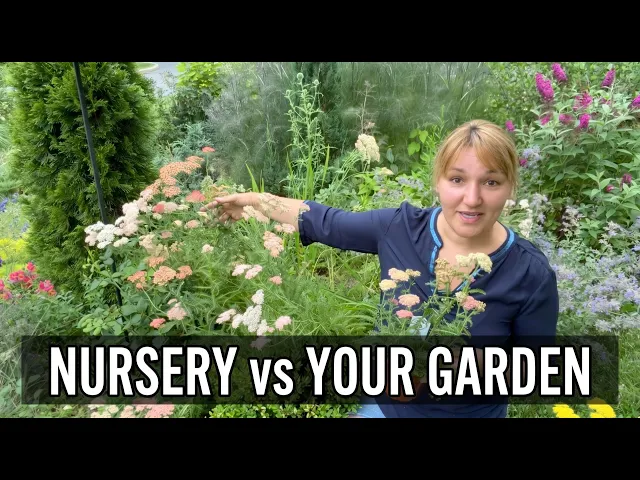
You can also learn more about what to expect from yarrow in a real garden bed in my video:
Spot 1: Un-Irrigated Beds (The Drought Warrior)
Yarrow naturally evolved in dry, rocky, lean soils. If you plant it in a dry spot in your garden that relies purely on rain, you will be surprised how well it behaves!

This yarrow is planted near a sidewalk. No irrigation, some mulch, which makes this narrow flower bed even hotter! Occasional summer rain, keeps these feathery leaves green in July. This plant here is about 1.5 ft tall and a little bit over 2 ft wide.
What happens: Stays compact, stiff, and upright (around 1 to 2 feet tall).
The vibe: Zero flopping and zero staking needed.
Best placement: Hot gravel gardens, dry slopes, or those far edges of the yard where the hose never reaches.
If you want an effortless, low-maintenance plant that thrives on neglect, put yarrow in your driest, leanest bed.

Real plants. Real garden.
Honest perspective.
I share what works in my garden, including the mistakes!
Spot 2: Irrigated Flower Borders (Floppy Cottage Romance)
In my own garden, I actually treat my yarrow to a bit of (unwanted) luxury! I planted my 'Summer Berries' yarrow in a rich border with drip irrigation because they share space with two heavy-feeding roses and my 'Double Play' Spiraea.

Yes, this floppy yarrow is easy 4 ft tall and I love it!
When I feed my roses fertilizer in spring, the neighboring yarrow gets a generous taste of that food too. That extra fertility and regular water cause the stems to stretch up to 4 feet tall.
Some gardeners might complain about "floppy" stems, but I absolutely love it! The sprawling stems weave around neighboring plants, their soft pastel pink and salmon blooms. It creates that loose, painterly, and romantic feel that makes a cottage garden feel so alive.
Best placement: Tucked right next to sturdy shrubs like spiraea or roses that can support those arching stems.

Spot 3: Overly Damp Soil (A Total Disaster)
While yarrow doesn't mind luxury water in rich, well-draining soil, it has one absolute dealbreaker: wet feet.

I have one spot in my garden that stays just a tad too damp and gets excess water runoff. I tried yarrow there, and it was a complete disaster! Instead of lush, feathery green leaves, the foliage turned a terrible, ugly black, the base started to rot, and the plant looked miserable.
Where NEVER to plant: Low spots where water sits, right under downspouts, or heavy clay that stays soggy.
Planting tip: Keep yarrow far away from shade- and water-loving plants like hostas or ferns
My Favorite Yarrow Companion Combinations
To make those flat-topped blooms really pop, pair them with contrasting shapes and textures:

Catmint (Nepeta): Pairing yellow or soft pink yarrow right next to purple 'Walker's Low' catmint gives you an incredible complementary color pop. Both plants are heat and draught resistant so they will thrive in your full sun flower bed.

In a mixed border next to your favorite shrubs and perennials. Yarrow blooms continuously right through mid-summer, keeping your beds full of color while the roses set new buds. Here I have it next to my Double Play Spiraea, ornamental summer alliums, daylily and boxwood.
How To Care For Yarrow So It Keeps Blooming
Sun: Full sun is essential (at least 6 hours of direct light). In shade, stems turn weak and fall completely flat.
Soil: Lean, average, or sandy soil with good drainage.
Watering: Super drought-tolerant once established.
Deadheading: When flower heads start fading in mid-to-late summer, take clean pruners and snip them back to the lower foliage. This triggers a fresh flush of blooms for autumn!
Frequently Asked Questions
Where is the best place to plant yarrow?
Plant yarrow in a spot with full sun and good drainage. It works wonderfully in the front or middle of a border where its broad flower heads can weave through neighboring plants.
Why is my yarrow falling over and flopping?
Yarrow flops when it gets too much fertilizer, too much water, or not enough sun. In rich soil, stems grow long and heavy. You can either let them lean gracefully through nearby shrubs or move the plant to a leaner, drier spot.
Will yarrow spread aggressively?
Wild yarrow can spread fast, but modern garden cultivars (like 'Summer Berries') are much better behaved and form tidy, expanding clumps.
Do deer and rabbits eat yarrow?
No! Yarrow has feathery, highly aromatic foliage that deer and rabbits usually leave completely alone.

Key Takeaways Summary
Placement is everything: Un-irrigated dry beds keep yarrow short and sturdy, while rich, watered beds make stems stretch and arch up to 4 feet.
Embrace the floppy romance: In rich flower beds, long yarrow stems lean over and weave through roses and spiraea for that effortless cottage garden look.
Never flood it: Damp or waterlogged soil causes root rot and turns the lower leaves a terrible, ugly black.
Watercolor blooms: Varieties like 'Summer Berries' shift from soft salmon to pink and peach as individual flowers age in the sun.
Long-distance bloomer: Cut back spent blooms in mid-summer to keep fresh flowers coming all the way till autumn.
Yarrow Quick Care
☀️ Full sun | 🌱 Poor to average, well-drained soil | 💧 Extreme drought warrior | ✂️ Deadhead for second flush
Shop 'Summer Berries' Yarrow → 10% off
Have you ever picked up a neat little pot of yarrow and wondered how the mature plant will look like in your garden? Well, the answer is: it depends where you plant it.
I brought home two new yarrow plants from the nursery recently, and holding those tight little pots next to the full-grown yarrow exploding in my flower beds reminded me just how dramatic this shift can be.
Where you plant yarrow matters more than almost anything else.
Depending on your soil, water, and layout, it can stay a short, tough workhorse or turn into a tall, sprawling cottage garden dreamer.
What Happens When Yarrow Hits Open Soil
In a nursery pot, yarrow looks so neat and well-behaved. You might expect it to just widen out into a low, sturdy mound. But once those roots touch open soil, yarrow takes off!
It can stay short and tidy or sprawl to 3 or 4 feet the way it did in my flower bed!
The secret to designing with yarrow is knowing that your water and soil fertility completely change how the plant behaves.
You can also learn more about what to expect from yarrow in a real garden bed in my video:
Spot 1: Un-Irrigated Beds (The Drought Warrior)
Yarrow naturally evolved in dry, rocky, lean soils. If you plant it in a dry spot in your garden that relies purely on rain, you will be surprised how well it behaves!
This yarrow is planted near a sidewalk. No irrigation, some mulch, which makes this narrow flower bed even hotter! Occasional summer rain, keeps these feathery leaves green in July. This plant here is about 1.5 ft tall and a little bit over 2 ft wide.
What happens: Stays compact, stiff, and upright (around 1 to 2 feet tall).
The vibe: Zero flopping and zero staking needed.
Best placement: Hot gravel gardens, dry slopes, or those far edges of the yard where the hose never reaches.
If you want an effortless, low-maintenance plant that thrives on neglect, put yarrow in your driest, leanest bed.
Real plants. Real garden.
Honest perspective.
Spot 2: Irrigated Flower Borders (Floppy Cottage Romance)
In my own garden, I actually treat my yarrow to a bit of (unwanted) luxury! I planted my 'Summer Berries' yarrow in a rich border with drip irrigation because they share space with two heavy-feeding roses and my 'Double Play' Spiraea.
Yes, this floppy yarrow is easy 4 ft tall and I love it!
When I feed my roses fertilizer in spring, the neighboring yarrow gets a generous taste of that food too. That extra fertility and regular water cause the stems to stretch up to 4 feet tall.
Some gardeners might complain about "floppy" stems, but I absolutely love it! The sprawling stems weave around neighboring plants, their soft pastel pink and salmon blooms. It creates that loose, painterly, and romantic feel that makes a cottage garden feel so alive.
Best placement: Tucked right next to sturdy shrubs like spiraea or roses that can support those arching stems.
Spot 3: Overly Damp Soil (A Total Disaster)
While yarrow doesn't mind luxury water in rich, well-draining soil, it has one absolute dealbreaker: wet feet.
I have one spot in my garden that stays just a tad too damp and gets excess water runoff. I tried yarrow there, and it was a complete disaster! Instead of lush, feathery green leaves, the foliage turned a terrible, ugly black, the base started to rot, and the plant looked miserable.
Where NEVER to plant: Low spots where water sits, right under downspouts, or heavy clay that stays soggy.
Planting tip: Keep yarrow far away from shade- and water-loving plants like hostas or ferns
My Favorite Yarrow Companion Combinations
To make those flat-topped blooms really pop, pair them with contrasting shapes and textures:
Catmint (Nepeta): Pairing yellow or soft pink yarrow right next to purple 'Walker's Low' catmint gives you an incredible complementary color pop. Both plants are heat and draught resistant so they will thrive in your full sun flower bed.
In a mixed border next to your favorite shrubs and perennials. Yarrow blooms continuously right through mid-summer, keeping your beds full of color while the roses set new buds. Here I have it next to my Double Play Spiraea, ornamental summer alliums, daylily and boxwood.
How To Care For Yarrow So It Keeps Blooming
Sun: Full sun is essential (at least 6 hours of direct light). In shade, stems turn weak and fall completely flat.
Soil: Lean, average, or sandy soil with good drainage.
Watering: Super drought-tolerant once established.
Deadheading: When flower heads start fading in mid-to-late summer, take clean pruners and snip them back to the lower foliage. This triggers a fresh flush of blooms for autumn!
Frequently Asked Questions
Where is the best place to plant yarrow?
Plant yarrow in a spot with full sun and good drainage. It works wonderfully in the front or middle of a border where its broad flower heads can weave through neighboring plants.
Why is my yarrow falling over and flopping?
Yarrow flops when it gets too much fertilizer, too much water, or not enough sun. In rich soil, stems grow long and heavy. You can either let them lean gracefully through nearby shrubs or move the plant to a leaner, drier spot.
Will yarrow spread aggressively?
Wild yarrow can spread fast, but modern garden cultivars (like 'Summer Berries') are much better behaved and form tidy, expanding clumps.
Do deer and rabbits eat yarrow?
No! Yarrow has feathery, highly aromatic foliage that deer and rabbits usually leave completely alone.
Key Takeaways Summary
Placement is everything: Un-irrigated dry beds keep yarrow short and sturdy, while rich, watered beds make stems stretch and arch up to 4 feet.
Embrace the floppy romance: In rich flower beds, long yarrow stems lean over and weave through roses and spiraea for that effortless cottage garden look.
Never flood it: Damp or waterlogged soil causes root rot and turns the lower leaves a terrible, ugly black.
Watercolor blooms: Varieties like 'Summer Berries' shift from soft salmon to pink and peach as individual flowers age in the sun.
Long-distance bloomer: Cut back spent blooms in mid-summer to keep fresh flowers coming all the way till autumn.

Written by Jolanta Reynolds
You Might Like
You Might Like


You Might Like

Subscribe to my newsletter
Get new garden posts, seasonal tips, and what's blooming in my New Jersey cottage garden — straight to your inbox.
By subscribing, you agree to the Privacy Policy
Subscribe
to my
newsletter
Get new garden posts, seasonal tips, and what's blooming in my New Jersey cottage garden — straight to your inbox.
By subscribing, you agree to the Privacy Policy