
Garden Design
Where to Plant Catmint for Maximum Impact
Where to Plant Catmint for Maximum Impact
5
min read

Catmint Quick Care
☀️ Full sun | 🌱 Poor, dry soil | 💧 Drought tolerant | ✂️ Shear after first bloom
Shop 'Walker's Low' Catmint → 10% off
Catmint is one of those plants that looks absolutely stunning in some gardens and completely unremarkable in others. The difference isn't the plant — it's the placement. And once you understand why, you'll never look at a flower border the same way again!
The Problem With Catmint (Nepeta)
When you buy a catmint plant, it looks lush and green. Here is a typical 'Walker's Low' catmint quart pot you may be planting in your garden.
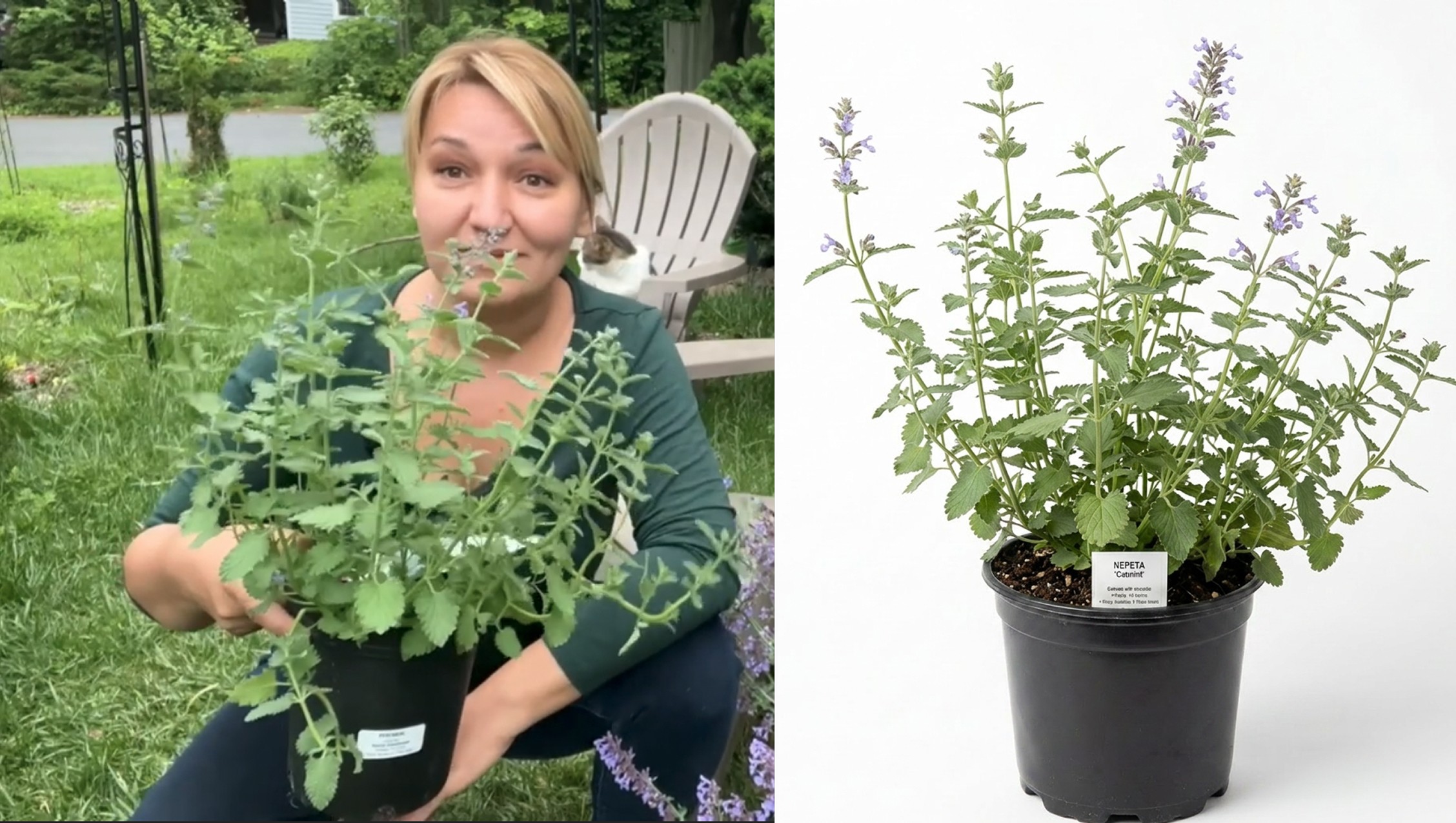
Looking nice and lush, alright!
But once it goes in the ground and starts to grow, something shifts. The plant begins to grow long arching stems of flowers — and if you look closely, you'll notice they carry very few leaves. Whatever foliage they do have is a silvery, muted green. Not particularly striking on its own.
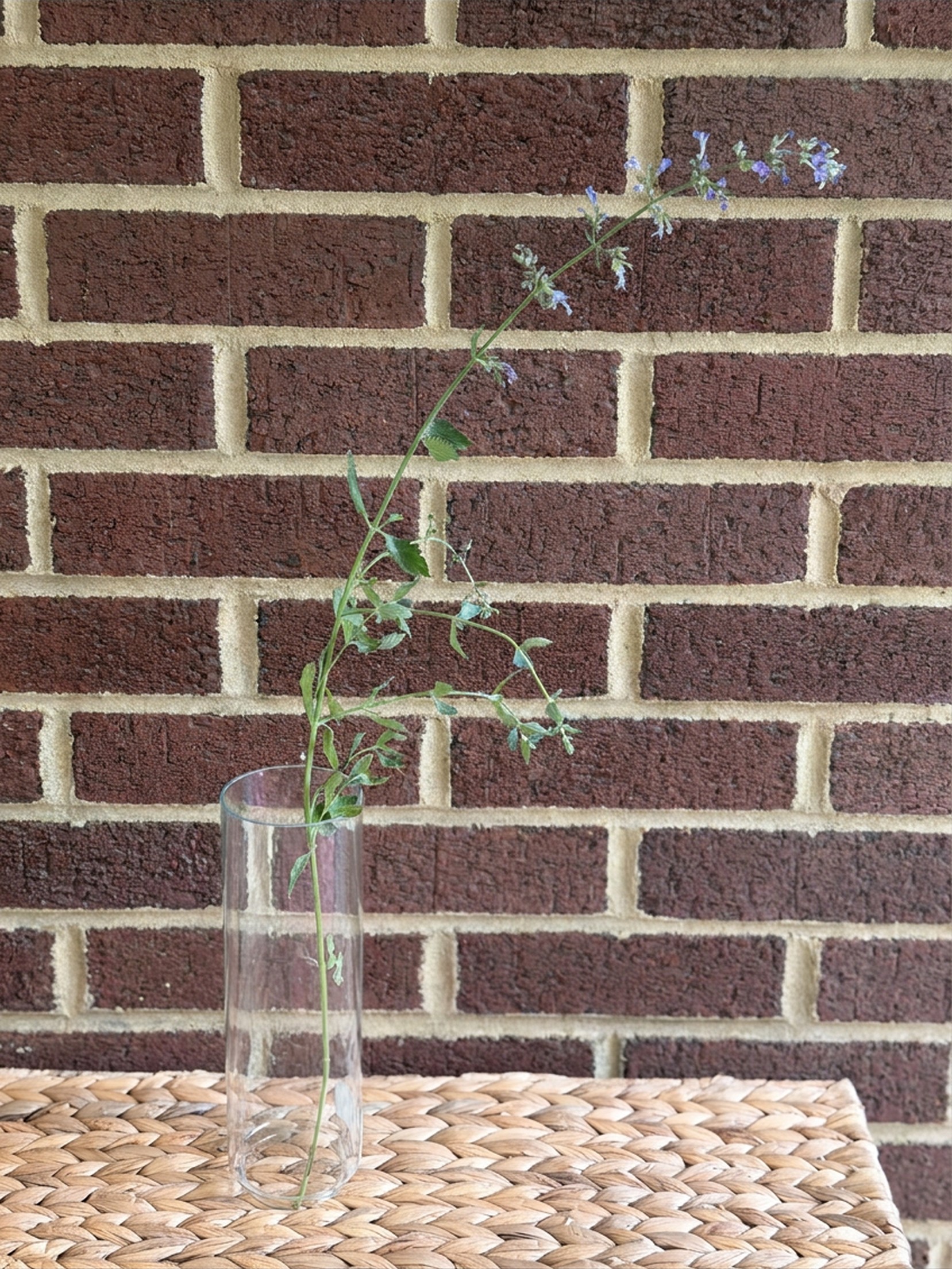
Yup, not quite the lush plant you were expecting!
This is where most gardeners go wrong. They plant catmint in a spot without thinking about what's behind it — and then wonder why those purple flowers never quite pop.
I explain the importance of where to plant catmint in my video and the post below:
The Contrast Problem
Here's the thing about purple: it's not a loud color. It needs the right background to come alive. And for catmint, which let's be honest has a bit of a foliage problem, the placement matters a lot!
I've seen catmint planted in stony landscapes or against grass that's gone a bit yellowish, and the result is always the same — the color becomes muted, almost disappearing into its surroundings. It's not unattractive exactly, just... flat. (Note: unless it is planted in mass planting then the purple magnifies)
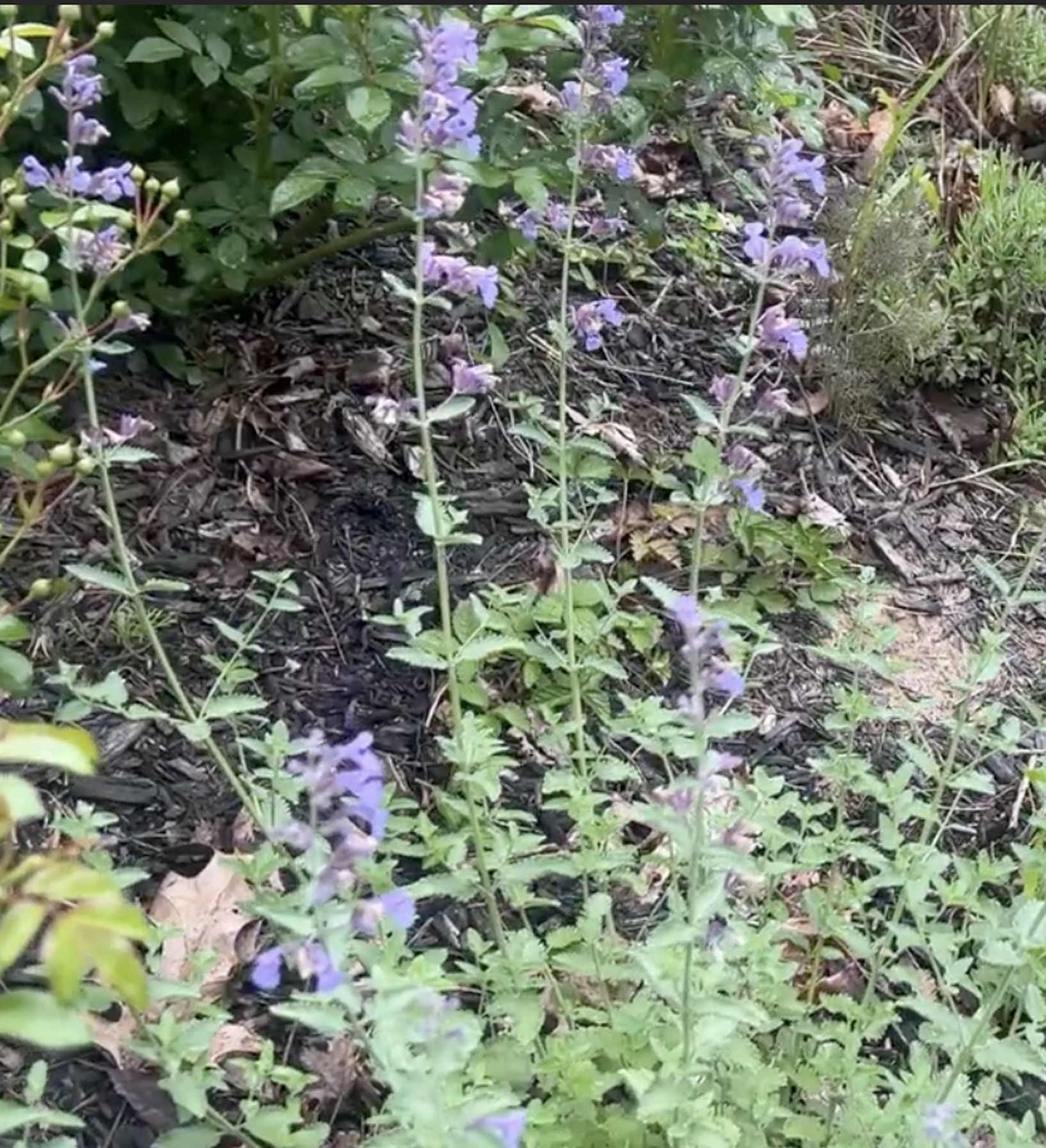
Dark background makes catmint look dull!
Purple's complementary color on the color wheel is yellow. So one beautiful pairing is catmint with a citrusy yellow yarrow — the contrast is vibrant and striking.

But there's an even better trick.
The Green Background Secret
The most dramatic thing you can do for catmint is tuck it between two green perennials — whether they have a deep, rich green or a lemony, yellow-green color. That green background acts almost like the complementary yellow, and suddenly those purple flowers light up.


Real plants. Real garden.
Honest perspective.
I share what works in my garden, including the mistakes!
It's a huge difference. Against rich or lemony green (here between Coreopsis Zagreb and boxwood), it becomes electric.
And here's the detail that really got me: at dusk, surrounded by deep green, catmint becomes almost translucent. It glows. It's one of those quiet magic moments in the garden that you don't expect until you've seen it.
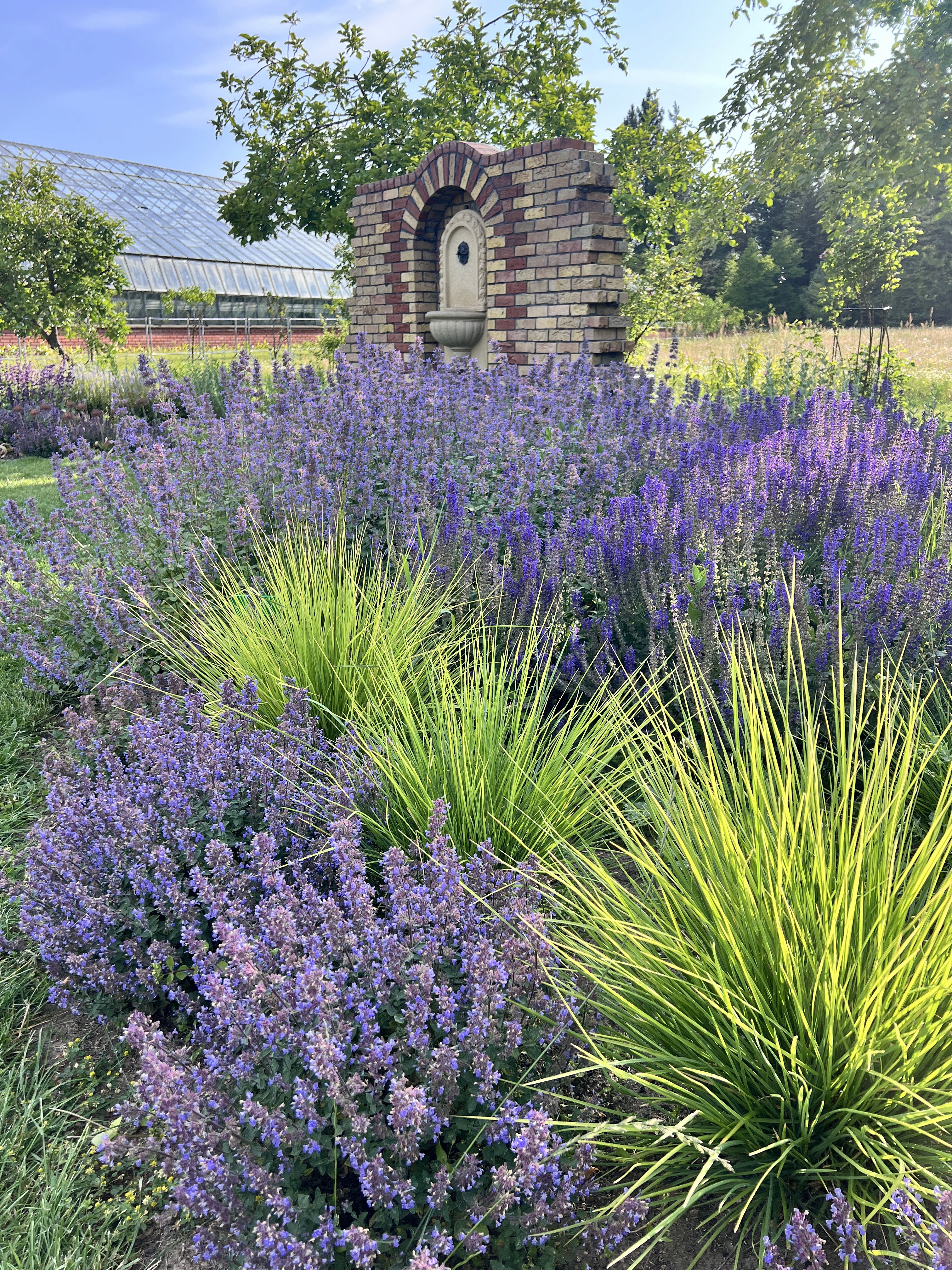
This botanical garden pared mass planted catmint with lemony-green grass to create this magnificent view:

Shop My Favorite
Catmint Varieties
Where It Works Best
In between green shrubs. This is my favorite placement — catmint tucked between two different green shrubs at the front of a border, where those purple flowers spill slightly toward the path. It's the kind of effortless, abundant look that takes a border from "nice" to memorable.
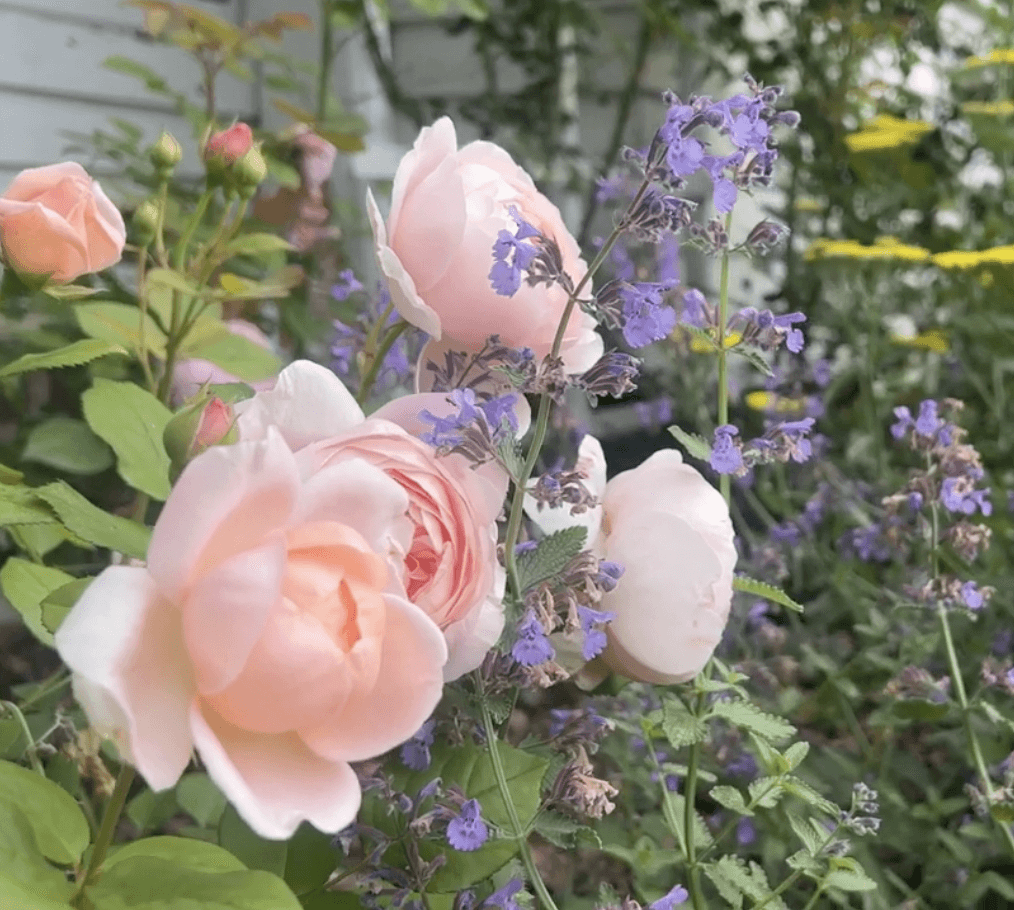
Next to roses. Catmint is the classic rose companion, and for good reason. It works with yellows, oranges, pinks, apricots, deep purples — essentially any rose color you can throw at it. I have it growing next to Ambridge Rose and the combination is soft and romantic without being fussy.
How to Grow Catmint Successfully
Catmint is one of the easiest perennials you can grow — it thrives on neglect.
Sun: Full sun to light shade. More sun = more blooms.
Soil: Average to poor, well-drained soil. Rich soil makes it flop.
Water: Drought tolerant once established. Water during the first season only.
Cutting back: Shear by half after the first flush of blooms in June — it will rebloom in late summer.
Spacing: Give it room. 'Walker's Low' spreads 2–3 feet wide.
YOU MAY ALSO LIKE
Heat Tolerant Perennials for Zone 7: What's Blooming When Everything Else Quits
The Takeaway - Summary
Catmint's purple flowers need contrast. They disappear against dull backgrounds
The best placement: tucked between two green plants at the front of a border
Purple's complementary color is yellow — pair with yarrow for a vibrant combo
At dusk against deep green, catmint becomes almost translucent, one of the garden's quiet magic moments
'Walker's Low' is the best cottage garden variety for long blooming and graceful habit
Always shear back after first flush for a second round of blooms
Frequently Asked Questions
Where is the best place to plant catmint?
Catmint looks best in full sun at the front of a border, where its arching stems can spill naturally over the edge. For the biggest visual impact, plant it against rich green shrubs or perennials that make the purple flowers stand out.
Does catmint need full sun?
Yes. Catmint performs best with at least six hours of direct sunlight each day. More sun means stronger growth, more flowers, and a longer blooming season.
Can catmint grow in shade?
Catmint tolerates light shade, but it won't flower as heavily. Too much shade often results in floppy stems and fewer blooms.
Why does my catmint look floppy?
This is completely normal for many varieties, including 'Walker's Low.' The long flowering stems naturally arch outward. Planting catmint where it has room to spread creates a much more natural, cottage garden look.
What plants look good with catmint?
Catmint pairs beautifully with roses, salvias, yarrow, coreopsis, boxwood, ornamental grasses, and other green perennials. It also complements many cottage garden favorites such as foxgloves and alliums.
Does catmint bloom all summer?
Yes. Catmint is one of the longest-blooming perennials. If you shear it back after its first flush of flowers, it usually produces a second display later in the season.
Should I cut back catmint after it flowers?
Yes. Once the first round of blooms begins to fade, trim the plant back by about one-third. This encourages fresh foliage and another flush of flowers.
Does catmint spread?
Catmint gradually forms a wider clump each year, but it is not considered invasive. Mature plants can become much broader than they appear in the nursery pot.
Is catmint deer and rabbit resistant?
Yes. The aromatic foliage makes catmint unattractive to both deer and rabbits, making it a dependable choice in gardens where browsing is a problem.
Which catmint variety is best for cottage gardens?
'Walker's Low' is one of the most popular choices because of its long flowering season, graceful habit, and ability to pair beautifully with roses and other classic cottage garden plants.
Catmint Quick Care
☀️ Full sun | 🌱 Poor, dry soil
💧 Drought tolerant | ✂️ Shear after bloom
Shop 'Walker's Low' Catmint → 10% off
Catmint is one of those plants that looks absolutely stunning in some gardens and completely unremarkable in others. The difference isn't the plant — it's the placement. And once you understand why, you'll never look at a flower border the same way again!
The Problem With Catmint (Nepeta)
When you buy a catmint plant, it looks lush and green. Here is a typical 'Walker's Low' catmint quart pot you may be planting in your garden.
Looking nice and lush, alright!
But once it goes in the ground and starts to grow, something shifts. The plant begins to grow long arching stems of flowers — and if you look closely, you'll notice they carry very few leaves. Whatever foliage they do have is a silvery, muted green. Not particularly striking on its own.
Yup, not quite the lush plant you were expecting!
This is where most gardeners go wrong. They plant catmint in a spot without thinking about what's behind it — and then wonder why those purple flowers never quite pop.
I explain the importance of where to plant catmint in my video and the post below:
The Contrast Problem
Here's the thing about purple: it's not a loud color. It needs the right background to come alive. And for catmint, which let's be honest has a bit of a foliage problem, the placement matters a lot!
I've seen catmint planted in stony landscapes or against grass that's gone a bit yellowish, and the result is always the same — the color becomes muted, almost disappearing into its surroundings. It's not unattractive exactly, just... flat. (Note: unless it is planted in mass planting then the purple magnifies)
Dark background makes catmint look dull!
Purple's complementary color on the color wheel is yellow. So one beautiful pairing is catmint with a citrusy yellow yarrow — the contrast is vibrant and striking.
But there's an even better trick.
The Green Background Secret
The most dramatic thing you can do for catmint is tuck it between two green perennials — whether they have a deep, rich green or a lemony, yellow-green color. That green background acts almost like the complementary yellow, and suddenly those purple flowers light up.

It's a huge difference. Against rich or lemony green (here between Coreopsis Zagreb and boxwood), it becomes electric.
And here's the detail that really got me: at dusk, surrounded by deep green, catmint becomes almost translucent. It glows. It's one of those quiet magic moments in the garden that you don't expect until you've seen it.
This botanical garden pared mass planted catmint with lemony-green grass to create this magnificent view:
Shop My Favorite
Catmint Varieties
Where It Works Best
In between green shrubs. This is my favorite placement — catmint tucked between two different green shrubs at the front of a border, where those purple flowers spill slightly toward the path. It's the kind of effortless, abundant look that takes a border from "nice" to memorable.
Next to roses. Catmint is the classic rose companion, and for good reason. It works with yellows, oranges, pinks, apricots, deep purples — essentially any rose color you can throw at it. I have it growing next to Ambridge Rose and the combination is soft and romantic without being fussy.
Real plants. Real garden.
Honest perspective.
How to Grow Catmint Successfully
Catmint is one of the easiest perennials you can grow — it thrives on neglect.
Sun: Full sun to light shade. More sun = more blooms.
Soil: Average to poor, well-drained soil. Rich soil makes it flop.
Water: Drought tolerant once established. Water during the first season only.
Cutting back: Shear by half after the first flush of blooms in June — it will rebloom in late summer.
Spacing: Give it room. 'Walker's Low' spreads 2–3 feet wide.
YOU MAY ALSO LIKE
Heat Tolerant Perennials for Zone 7: What's Blooming When Everything Else Quits
The Takeaway - Summary
Catmint's purple flowers need contrast. They disappear against dull backgrounds
The best placement: tucked between two green plants at the front of a border
Purple's complementary color is yellow — pair with yarrow for a vibrant combo
At dusk against deep green, catmint becomes almost translucent, one of the garden's quiet magic moments
'Walker's Low' is the best cottage garden variety for long blooming and graceful habit
Always shear back after first flush for a second round of blooms
Frequently Asked Questions
Where is the best place to plant catmint?
Catmint looks best in full sun at the front of a border, where its arching stems can spill naturally over the edge. For the biggest visual impact, plant it against rich green shrubs or perennials that make the purple flowers stand out.
Does catmint need full sun?
Yes. Catmint performs best with at least six hours of direct sunlight each day. More sun means stronger growth, more flowers, and a longer blooming season.
Can catmint grow in shade?
Catmint tolerates light shade, but it won't flower as heavily. Too much shade often results in floppy stems and fewer blooms.
Why does my catmint look floppy?
This is completely normal for many varieties, including 'Walker's Low.' The long flowering stems naturally arch outward. Planting catmint where it has room to spread creates a much more natural, cottage garden look.
What plants look good with catmint?
Catmint pairs beautifully with roses, salvias, yarrow, coreopsis, boxwood, ornamental grasses, and other green perennials. It also complements many cottage garden favorites such as foxgloves and alliums.
Does catmint bloom all summer?
Yes. Catmint is one of the longest-blooming perennials. If you shear it back after its first flush of flowers, it usually produces a second display later in the season.
Should I cut back catmint after it flowers?
Yes. Once the first round of blooms begins to fade, trim the plant back by about one-third. This encourages fresh foliage and another flush of flowers.
Does catmint spread?
Catmint gradually forms a wider clump each year, but it is not considered invasive. Mature plants can become much broader than they appear in the nursery pot.
Is catmint deer and rabbit resistant?
Yes. The aromatic foliage makes catmint unattractive to both deer and rabbits, making it a dependable choice in gardens where browsing is a problem.
Which catmint variety is best for cottage gardens?
'Walker's Low' is one of the most popular choices because of its long flowering season, graceful habit, and ability to pair beautifully with roses and other classic cottage garden plants.

Written by Jolanta Reynolds
You Might Like
You Might Like


You Might Like

Subscribe to my newsletter
Get new garden posts, seasonal tips, and what's blooming in my New Jersey cottage garden — straight to your inbox.
By subscribing, you agree to the Privacy Policy
Subscribe
to my
newsletter
Get new garden posts, seasonal tips, and what's blooming in my New Jersey cottage garden — straight to your inbox.
By subscribing, you agree to the Privacy Policy