Grow from Seed
How to Grow Zinnias: Don't Make My Mistakes
How to Grow Zinnias: Don't Make My Mistakes
5
min read
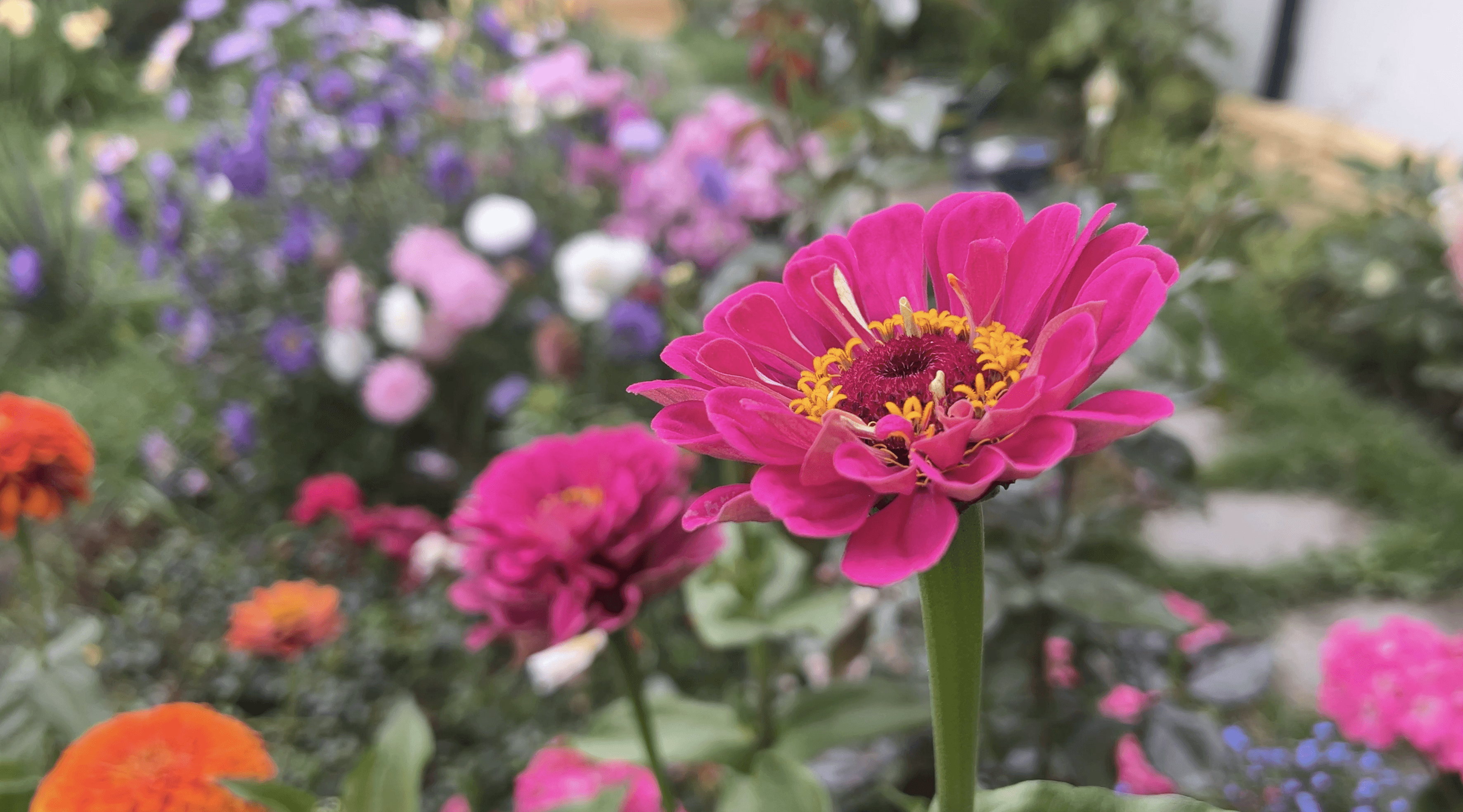
How to Grow Zinnias From Seed
☀️ Full sun | 🌱 Direct sow after last frost — no need to start indoors | 💧 Germinates in 5–7 days | 🌸 Blooms in about 60 days | ✂️ Cut often to keep them coming
Zinnias are long-time garden favorites. Cheerful, colorful, and very easy to grow from seed. And one of those seeds you can plant even in June!
It's no wonder that next to cosmos, they were the first flowers I ever grew from seed. And just like with my cosmos meadow, I learned a lot in the first few years.
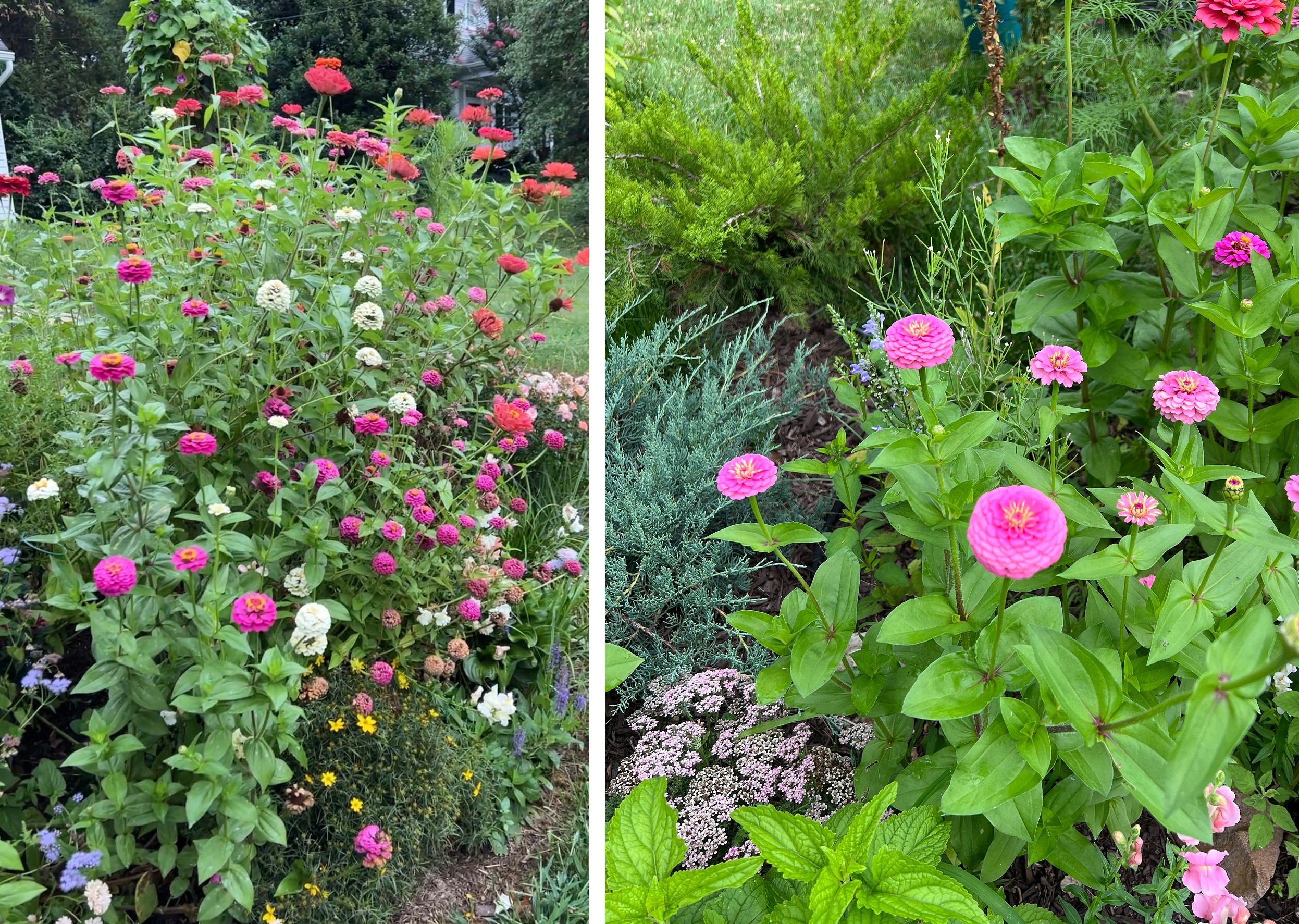
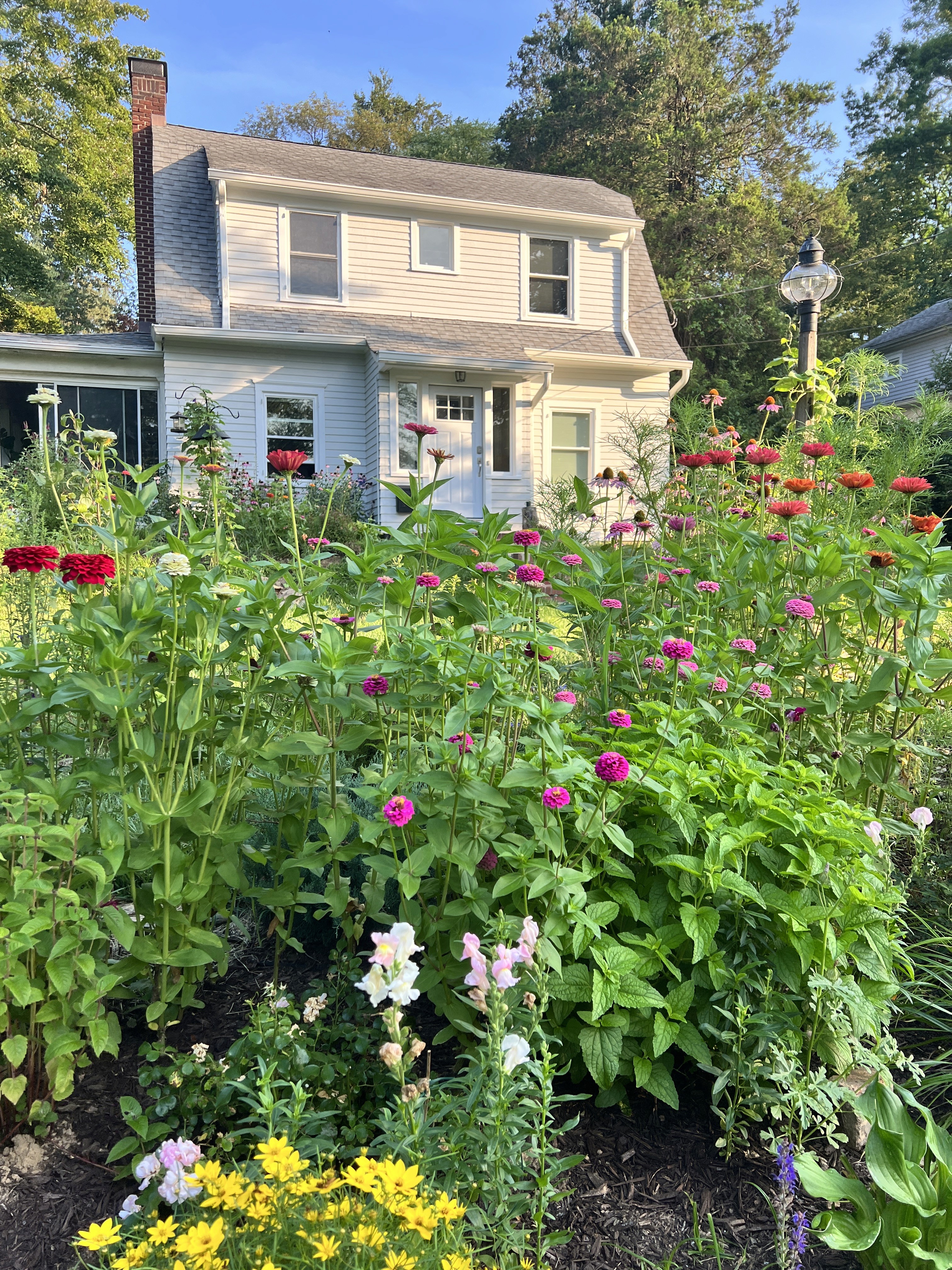
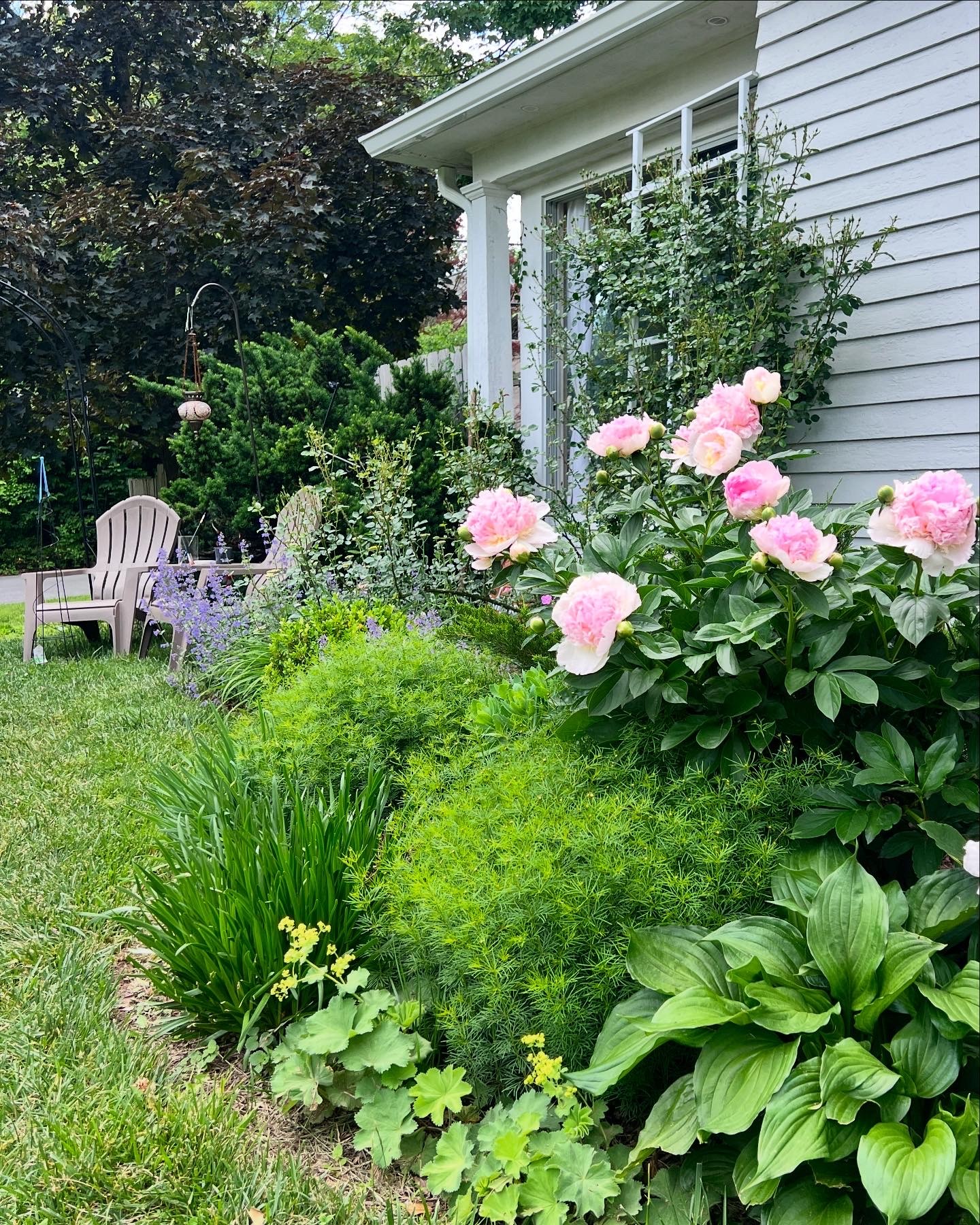
See the photo on the left? That wall of zinnias took over my border. Not exactly what I had in mind. Now look at the right — the cutest little pink pompom buttons sitting perfectly in a mixed border.
That's right. You can grow zinnias the right way or the wrong way. I did both.
The right way to grow zinnia
Here are the facts that will actually help.

Shop My Favorite
Zinnia Varieties
1. Zinnias can grow TALL. Like, really tall.
In rich soil (especially babied like a tomato plant) zinnias can reach 4 to 5 feet. Yup, the packet said 40 or 48 inches. Mine did not get that memo. Some giant varieties push way past that. That's beautiful if you planned for it. It's a problem if you planted them in the middle of a mixed border surrounded by perennials you'd like to actually see.
That's exactly what I did my first season. I planted Benary's Giants and California Giants — a magnificent tall varieties with huge blooms — right in the middle of my border expecting 4 ft plants. By midsummer they had swallowed everything around it. My echinacea, my catmint, my carefully placed perennials — all gone behind a wall of zinnia stems.
From the street it looked quite lovely.
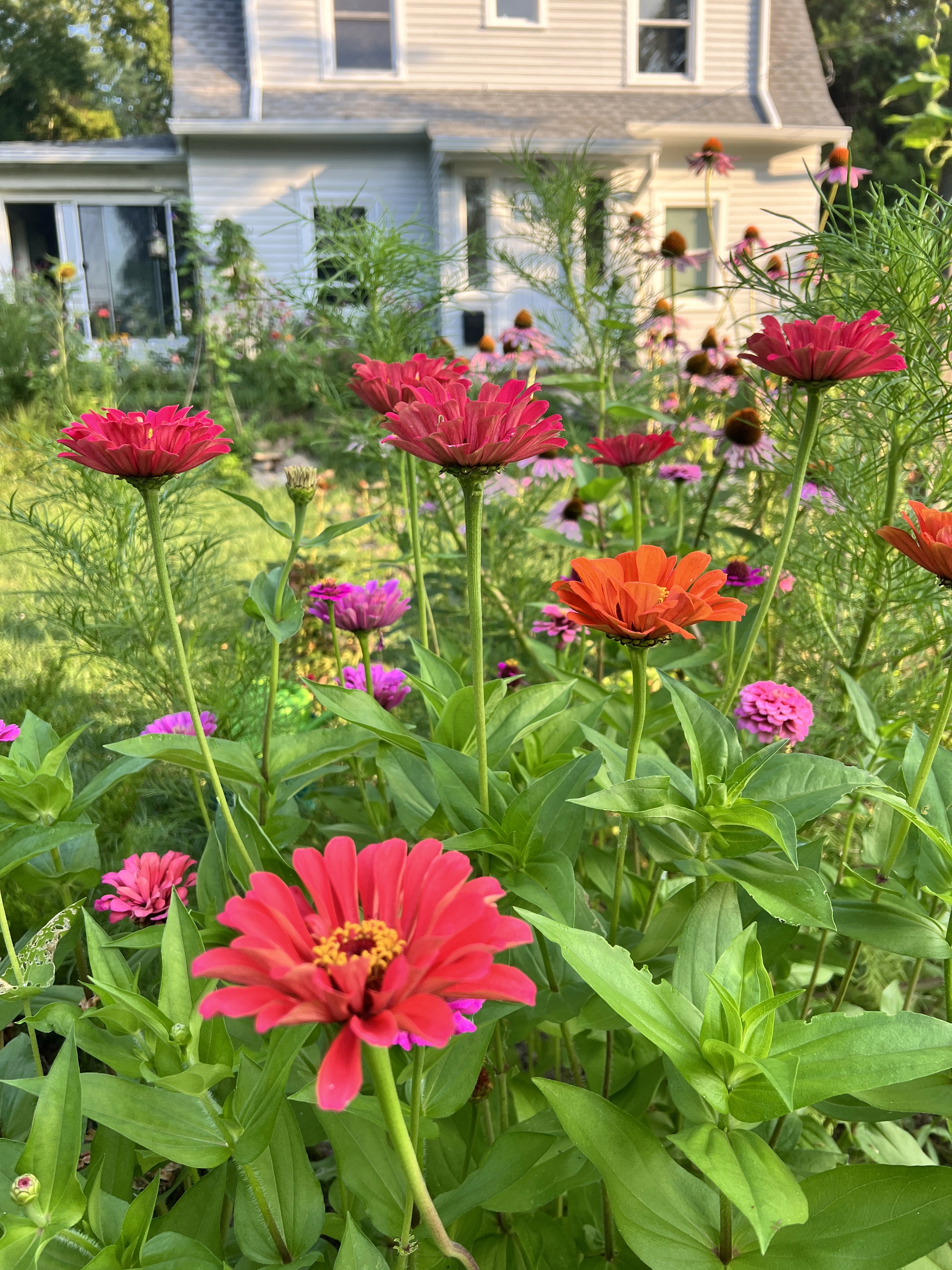
California Giants Mix - Buy seeds here https://collabs.shop/tgnl2p
And the flowers were stunning especially in early summer
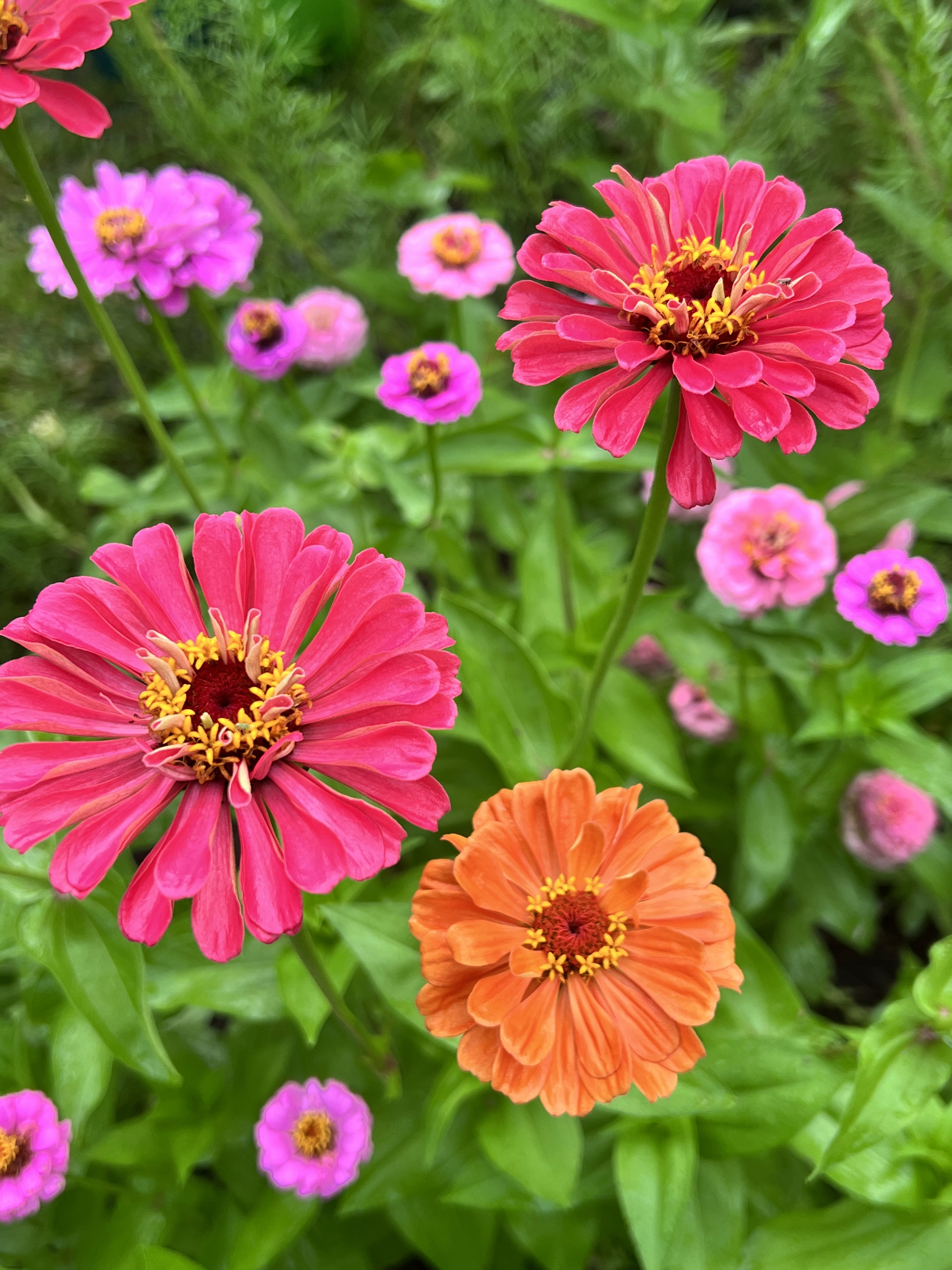
California Giants Mix - Buy seeds here https://collabs.shop/tgnl2p
By August, my flower beds were a JUNGLE!
What I'd do differently:
Plant tall varieties like Benary's Giant at the back of the border or in a dedicated cutting garden. They're too beautiful to skip — just give them the right position.
2. There are compact varieties that are perfect for the middle of the border
This is what changed everything for me. Once I discovered Lilliput zinnias — also called Pompon zinnias — I understood what I'd been missing.
Lilliput zinnias grow to about 18 to 24 inches and produce the most charming small pompom blooms. They don't bully their neighbors. They sit neatly in a mixed border, flower prolifically all season, and they look like something from a fairy garden. Those pink button flowers you see in my photos — that's Lilliput.
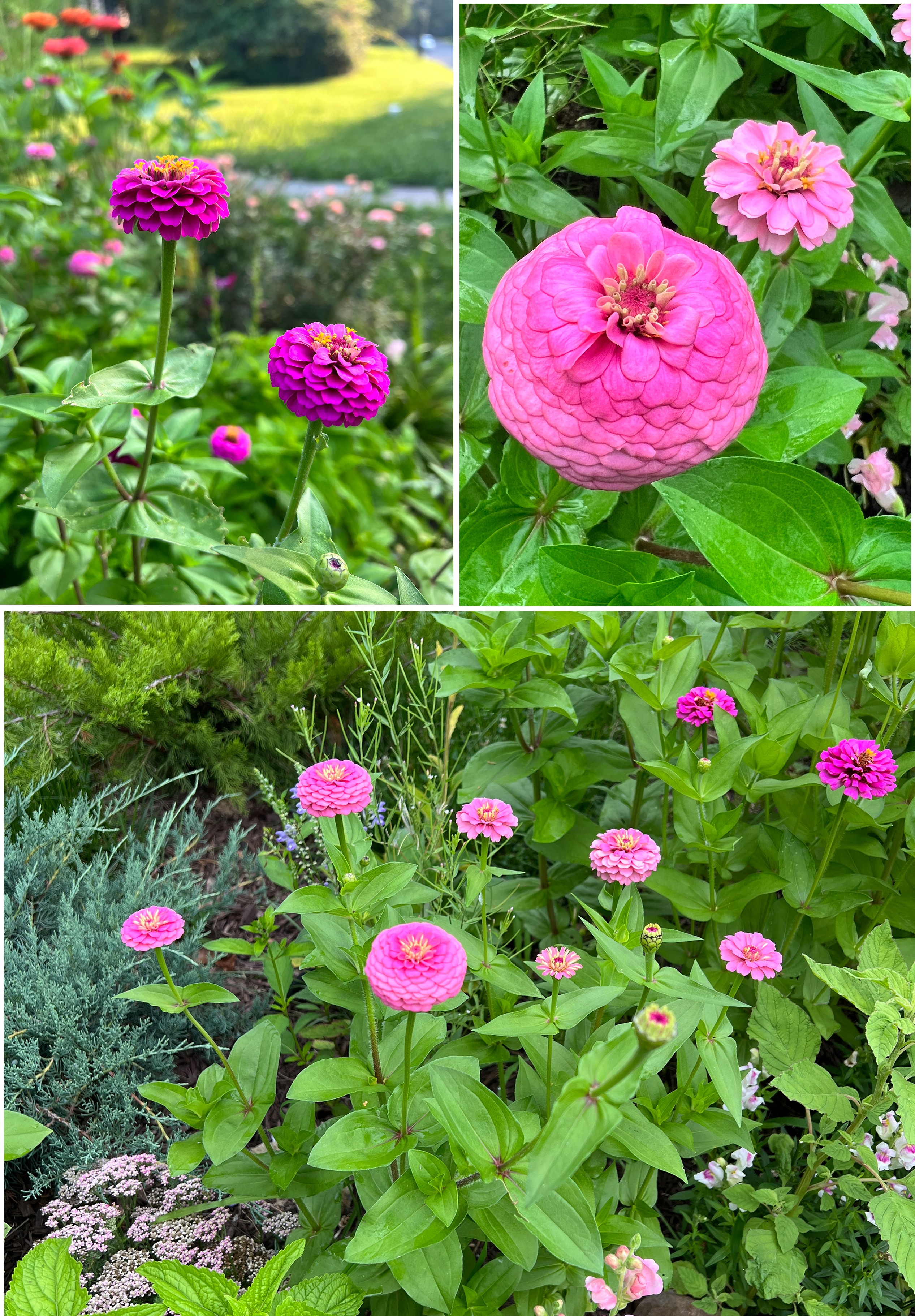
Zinnia Liliput Rose - Buy seeds here https://collabs.shop/hg1wcf
3. They look like expensive dahlias — but they're a fraction of the effort
This is my favorite zinnia secret. Those giant double blooms on Benary's Giant? In a vase, in a photo, in the garden — they are genuinely indistinguishable from dahlias to most people. The layered petals, the dense centers, the bold colors.
Dahlias need to be dug up every winter, stored, divided, and replanted. Zinnias are annuals you direct sow from a $5 seed packet and they do the rest themselves.
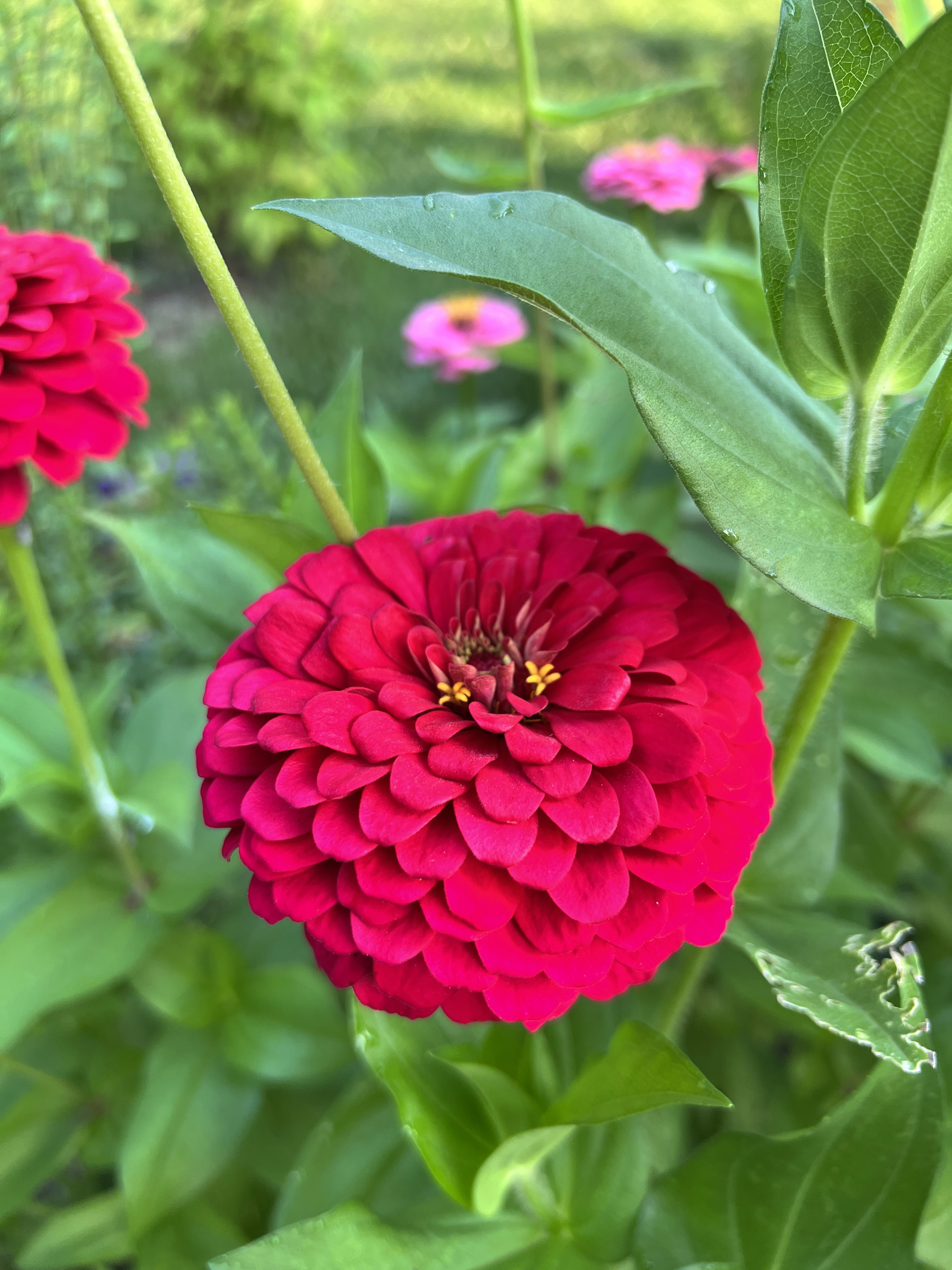
Zinnia Benary's Giant - Buy seeds here https://collabs.shop/c1zvls
4. You don't need to start them indoors
I started my first zinnias indoors. It worked but it was completely unnecessary. Zinnias grow so fast that direct-sown seeds catch up with transplants in no time, and plants that go straight from seed to garden develop stronger root systems.
Direct sow after your last frost date when the soil is warm. In Zone 7a New Jersey that's mid to late May. Seedlings appear in 5 to 7 days. First blooms in about 8 weeks.
And here's the best part: you can sow in June and still get a full season. Zinnias love heat and don't mind a late start at all.
5. They are absolutely perfect in a meadow with cosmos
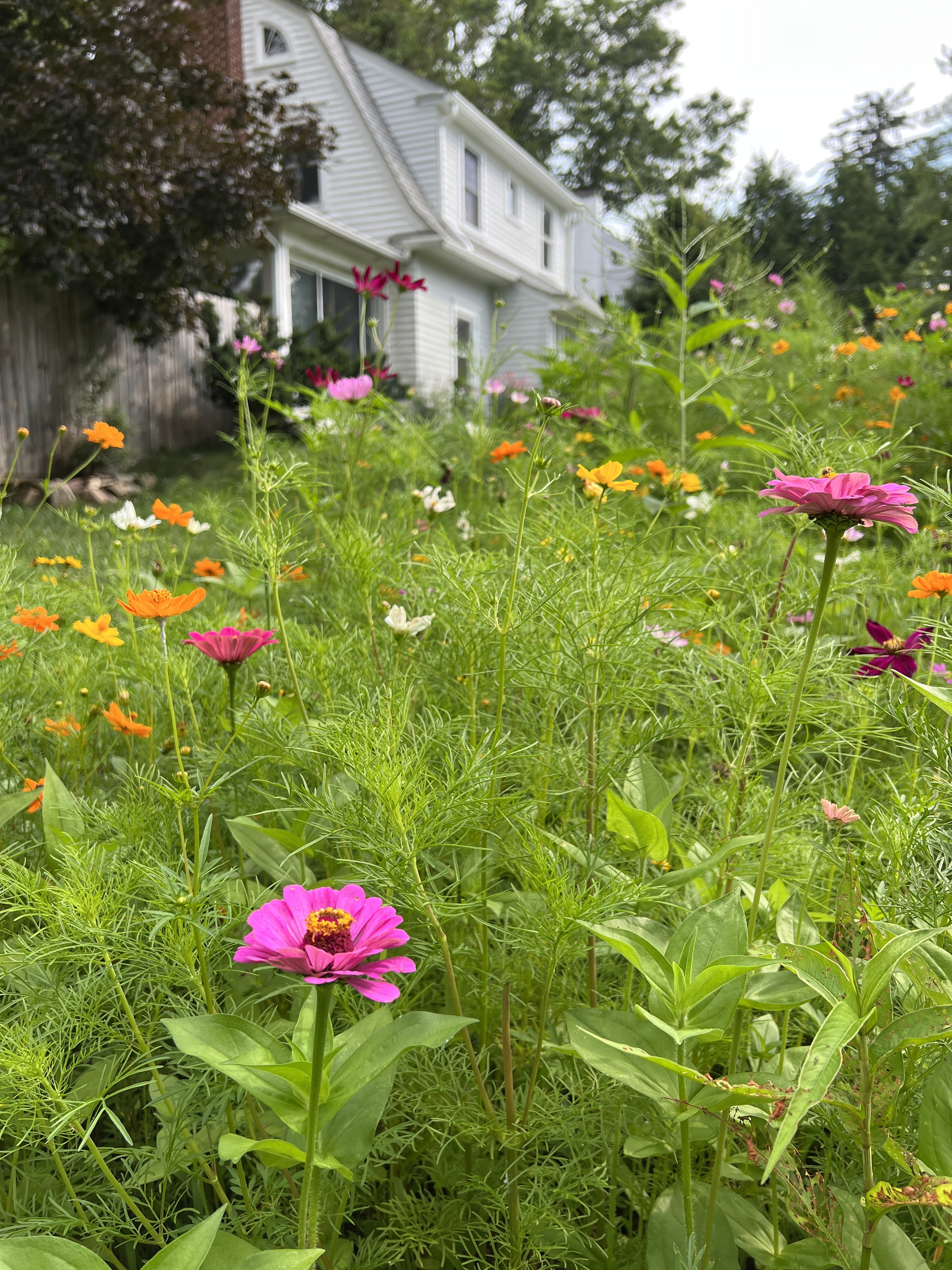
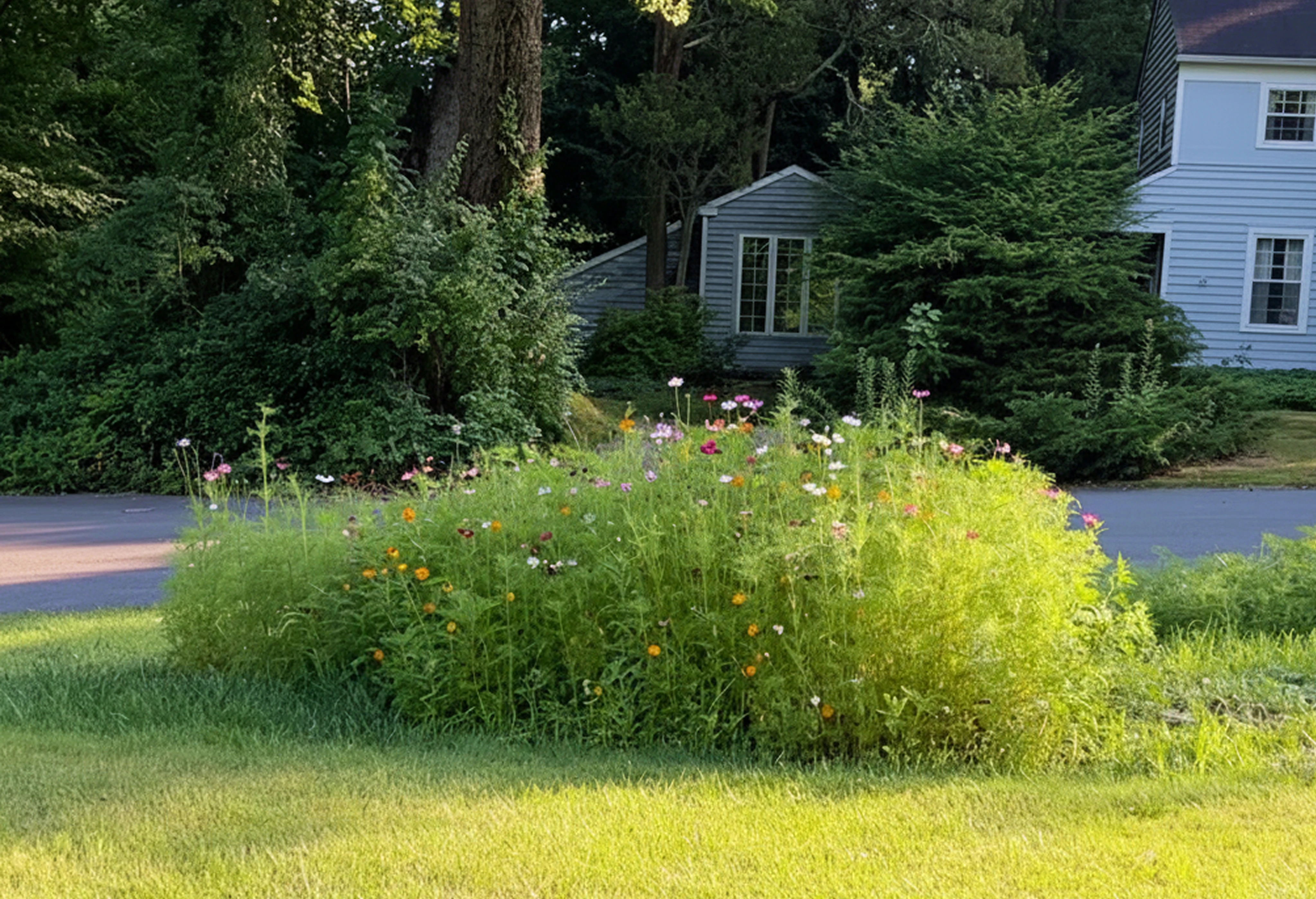
If you grew a cosmos meadow and loved it, add zinnias to the mix next season. They bloom at the same time, love the same conditions — full sun, average soil, direct sown — and together they create a wildly colorful, completely low-maintenance summer display.
The feathery cosmos foliage and the bold zinnia blooms are a beautiful contrast. And both attract butterflies in numbers that will genuinely surprise you.
Here is my cosmos meadow with a few zinnias spinkled in:
6. Cut them. Cut them a lot.
Zinnias are cut-and-come-again flowers. Every stem you cut tells the plant to produce three more. Every spent bloom you leave on the plant tells it the job is done.
Deadhead constantly. Cut for the house generously. The more you take, the more you get — all the way until the first hard frost.
———————————————
One last thought: even my wall of zinnias — the overgrown, slightly chaotic mess that buried half my border — gave me an entire summer of joy. Buckets of flowers for the house. A garden that made people stop and take photos. Butterflies every single day.
Zinnias are forgiving, generous, and almost impossible to truly fail with. Just read the packet and check how tall they get before you decide where to plant them.
Happy gardening! 🌸
FAQ
Is it too late to plant zinnias in June?
Not at all. Zinnias love warm soil and germinate fast — you can direct sow through late June in Zone 7a and still get a full season of blooms before frost.
Do zinnias come back every year?
They're annuals, but they self-seed readily. Let a few spent blooms dry on the plant at the end of the season and you'll find zinnia seedlings popping up the following spring.
How do I stop zinnias getting powdery mildew?
Water at the base only, give plants good airflow, and choose mildew-resistant varieties like the Oklahoma series. Spray at the first sign with a fungicide or diluted baking soda solution.
What are the best zinnias for a cottage garden?
Lilliput (Pompon) for mixed borders — compact and charming. Benary's Giant for back of border or cutting gardens. Oklahoma series if mildew is an issue in your climate.
Can I grow zinnias with cosmos?
Yes — they're a perfect pairing. Same sun, same soil, same direct-sow timing. The feathery cosmos and bold zinnia blooms look beautiful together and both attract pollinators all season.
Key Takeaways Summary
Zinnias can grow 4–5 feet tall — check the packet before you plant giants in the middle of a border
Compact varieties (Lilliput, Profusion) work best for mixed borders
Giants like Benary's or California belong at the back of the border or in a cutting patch
No need to start seeds indoors. Direct sow after your last frost
Zinnias pair beautifully with cosmos in a meadow— same sun, same soil, same direct-sow timing
How to Grow Zinnias From Seed
☀️ Full sun | 🌱 Direct sow after last frost — no need to start indoors | 💧 Germinates in 5–7 days | 🌸 Blooms in about 60 days | ✂️ Cut often to keep them coming
Zinnias are long-time garden favorites. Cheerful, colorful, and very easy to grow from seed. And one of those seeds you can plant even in June!
It's no wonder that next to cosmos, they were the first flowers I ever grew from seed. And just like with my cosmos meadow, I learned a lot in the first few years.
See the photo on the left? That wall of zinnias took over my border. Not exactly what I had in mind. Now look at the right — the cutest little pink pompom buttons sitting perfectly in a mixed border.
That's right. You can grow zinnias the right way or the wrong way. I did both.
Shop My Favorite
Zinnia Varieties
The right way to grow zinnia
Here are the facts that will actually help.
1. Zinnias can grow TALL. Like, really tall.
In rich soil (especially babied like a tomato plant) zinnias can reach 4 to 5 feet. Yup, the packet said 40 or 48 inches. Mine did not get that memo. Some giant varieties push way past that. That's beautiful if you planned for it. It's a problem if you planted them in the middle of a mixed border surrounded by perennials you'd like to actually see.
That's exactly what I did my first season. I planted Benary's Giants and California Giants — a magnificent tall varieties with huge blooms — right in the middle of my border expecting 4 ft plants. By midsummer they had swallowed everything around it. My echinacea, my catmint, my carefully placed perennials — all gone behind a wall of zinnia stems.
From the street it looked quite lovely.
California Giants Mix - Buy seeds here https://collabs.shop/tgnl2p
And the flowers were stunning especially in early summer
California Giants Mix - Buy seeds here https://collabs.shop/tgnl2p
By August, my flower beds were a JUNGLE!
What I'd do differently:
Plant tall varieties like Benary's Giant at the back of the border or in a dedicated cutting garden. They're too beautiful to skip — just give them the right position.
2. There are compact varieties that are perfect for the middle of the border
This is what changed everything for me. Once I discovered Lilliput zinnias — also called Pompon zinnias — I understood what I'd been missing.
Lilliput zinnias grow to about 18 to 24 inches and produce the most charming small pompom blooms. They don't bully their neighbors. They sit neatly in a mixed border, flower prolifically all season, and they look like something from a fairy garden. Those pink button flowers you see in my photos — that's Lilliput.
Zinnia Liliput Rose - Buy seeds here https://collabs.shop/hg1wcf
3. They look like expensive dahlias — but they're a fraction of the effort
This is my favorite zinnia secret. Those giant double blooms on Benary's Giant? In a vase, in a photo, in the garden — they are genuinely indistinguishable from dahlias to most people. The layered petals, the dense centers, the bold colors.
Dahlias need to be dug up every winter, stored, divided, and replanted. Zinnias are annuals you direct sow from a $5 seed packet and they do the rest themselves.
Zinnia Benary's Giant - Buy seeds here https://collabs.shop/c1zvls
Shop My Favorite
Zinnia Varieties
4. You don't need to start them indoors
I started my first zinnias indoors. It worked but it was completely unnecessary. Zinnias grow so fast that direct-sown seeds catch up with transplants in no time, and plants that go straight from seed to garden develop stronger root systems.
Direct sow after your last frost date when the soil is warm. In Zone 7a New Jersey that's mid to late May. Seedlings appear in 5 to 7 days. First blooms in about 8 weeks.
And here's the best part: you can sow in June and still get a full season. Zinnias love heat and don't mind a late start at all.
5. They are absolutely perfect in a meadow with cosmos
If you grew a cosmos meadow and loved it, add zinnias to the mix next season. They bloom at the same time, love the same conditions — full sun, average soil, direct sown — and together they create a wildly colorful, completely low-maintenance summer display.
The feathery cosmos foliage and the bold zinnia blooms are a beautiful contrast. And both attract butterflies in numbers that will genuinely surprise you.
Here is my cosmos and zinnias meadow:
6. Cut them. Cut them a lot.
Zinnias are cut-and-come-again flowers. Every stem you cut tells the plant to produce three more. Every spent bloom you leave on the plant tells it the job is done.
Deadhead constantly. Cut for the house generously. The more you take, the more you get — all the way until the first hard frost.
———————————————
One last thought: even my wall of zinnias — the overgrown, slightly chaotic mess that buried half my border — gave me an entire summer of joy. Buckets of flowers for the house. A garden that made people stop and take photos. Butterflies every single day.
Zinnias are forgiving, generous, and almost impossible to truly fail with. Just read the packet and check how tall they get before you decide where to plant them.
Happy gardening! 🌸
FAQ
Is it too late to plant zinnias in June? Not at all. Zinnias love warm soil and germinate fast — you can direct sow through late June in Zone 7a and still get a full season of blooms before frost.
Do zinnias come back every year? They're annuals, but they self-seed readily. Let a few spent blooms dry on the plant at the end of the season and you'll find zinnia seedlings popping up the following spring.
How do I stop zinnias getting powdery mildew? Water at the base only, give plants good airflow, and choose mildew-resistant varieties like the Oklahoma series. Spray at the first sign with a fungicide or diluted baking soda solution.
What are the best zinnias for a cottage garden? Lilliput (Pompon) for mixed borders — compact and charming. Benary's Giant for back of border or cutting gardens. Oklahoma series if mildew is an issue in your climate.
Can I grow zinnias with cosmos? Yes — they're a perfect pairing. Same sun, same soil, same direct-sow timing. The feathery cosmos and bold zinnia blooms look beautiful together and both attract pollinators all season.
Key Takeaways Summary
Zinnias can grow 4–5 feet tall — check the packet before you plant giants in the middle of a border
Compact varieties (Lilliput, Profusion) work best for mixed borders
Giants like Benary's or California belong at the back of the border or in a cutting patch
No need to start seeds indoors — direct sow after your last frost
Zinnias pair beautifully with cosmos — same sun, same soil, same direct-sow timing

Written by Jolanta Reynolds
You Might Like
You Might Like


You Might Like

Subscribe to my newsletter
Get new garden posts, seasonal tips, and what's blooming in my New Jersey cottage garden — straight to your inbox.
By subscribing, you agree to the Privacy Policy
Subscribe
to my
newsletter
Get new garden posts, seasonal tips, and what's blooming in my New Jersey cottage garden — straight to your inbox.
By subscribing, you agree to the Privacy Policy