
Roses
Young Lycidas David Austin Rose — Best for Cottage Gardens (Zone 7A)
Young Lycidas David Austin Rose — Best for Cottage Gardens (Zone 7A)
5
min read
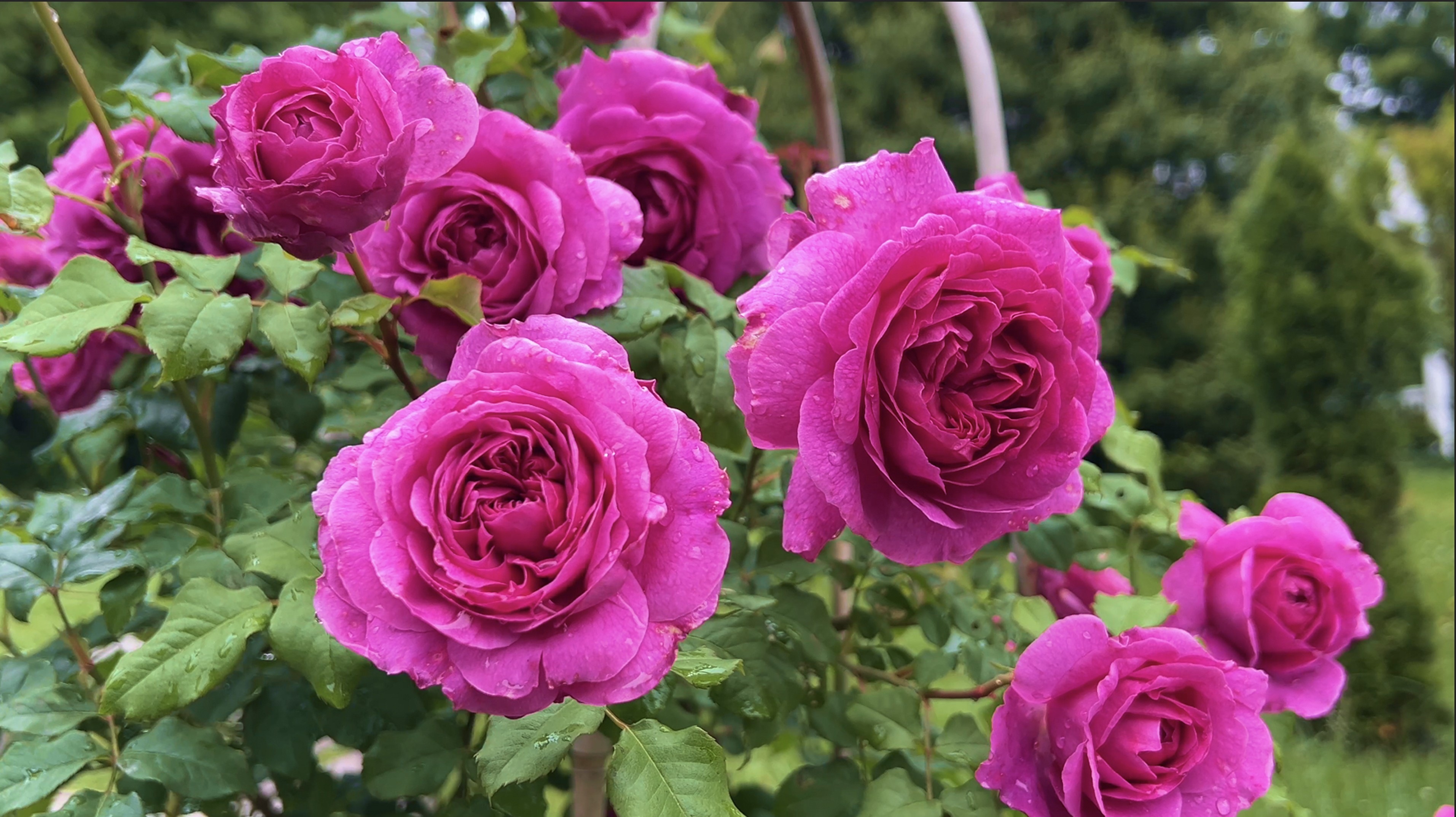
Young Lycidas at a Glance
☀️ Full sun | 🌹 Repeat bloomer, May–November | 📏 4–5 ft, trains as a compact climber | 🌸 Rich old-rose fragrance | 🛡️ Excellent disease & rain resistance
Get potted Young Lycidas here (10% off)
Like many of you, I went from zero to one hundred obsessed with David Austin roses — literally overnight. I never planned to buy Young Lycidas. By the time my rose garden obsession began, bare root season was already over, so I was left hunting for whatever I could still find locally here in New Jersey. I finally stumbled upon a handful of remaining varieties. Young Lycidas was there — so into my cart it went.
That accidental purchase turned out to be my absolute favorite rose in the entire garden. And I want to tell you exactly why, including the famous “octopus canes” everyone keeps asking about in Facebook groups.
Let's start with the flowers
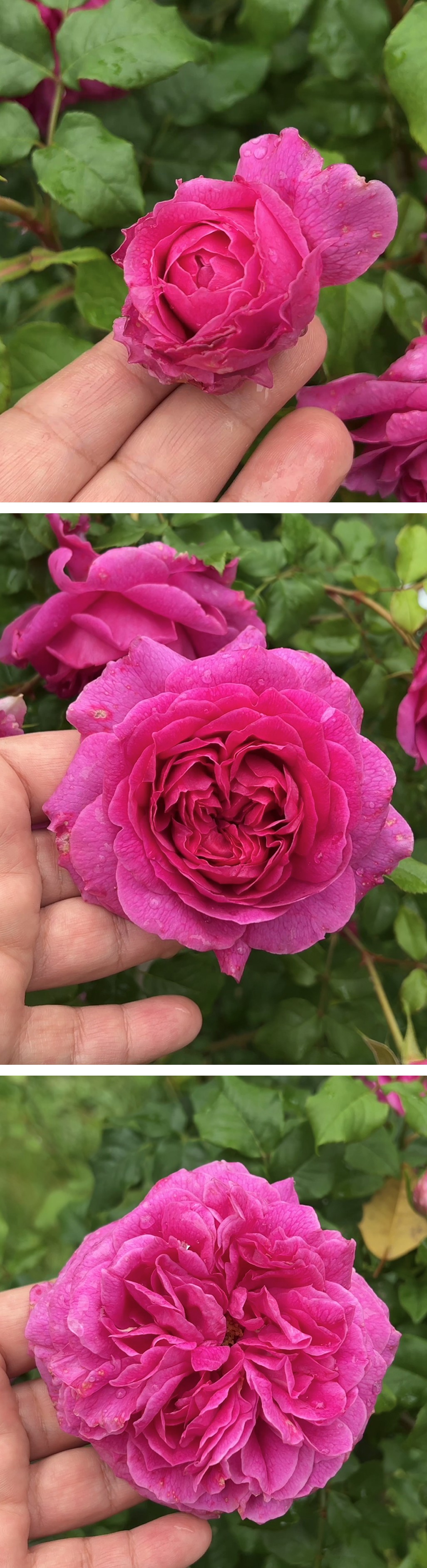
These stunning rosettes are a rich magenta pink, romantic and simply perfect. They look beautiful at every stage — from the small, elegant bud to the fully open bloom. They handle rain surprisingly well too. After two days of constant rain, these rosettes looked completely unbothered, holding their shape far better than many other roses.
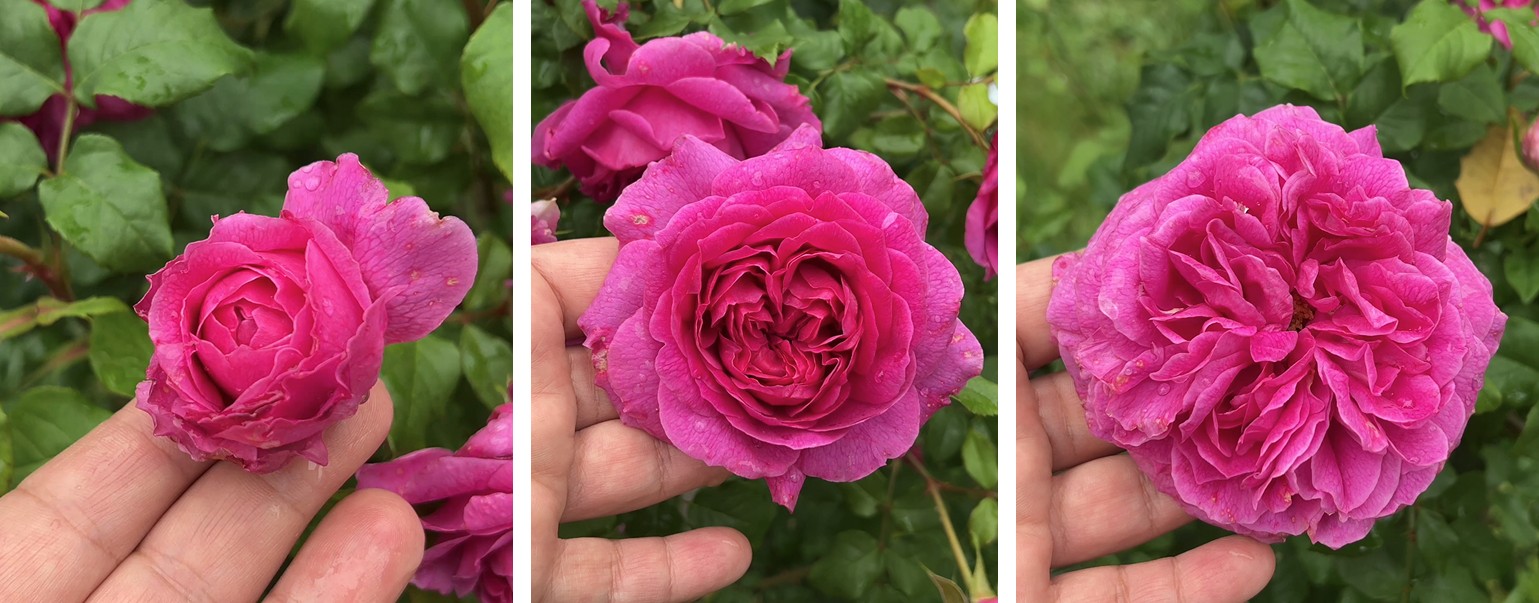
Young Lycidas is also the earliest David Austin rose to bloom in my garden, often flowering before many of the others even wake up. Even better, it keeps blooming well into November here in New Jersey (Zone 7A), making it one of the longest-performing roses in my garden.
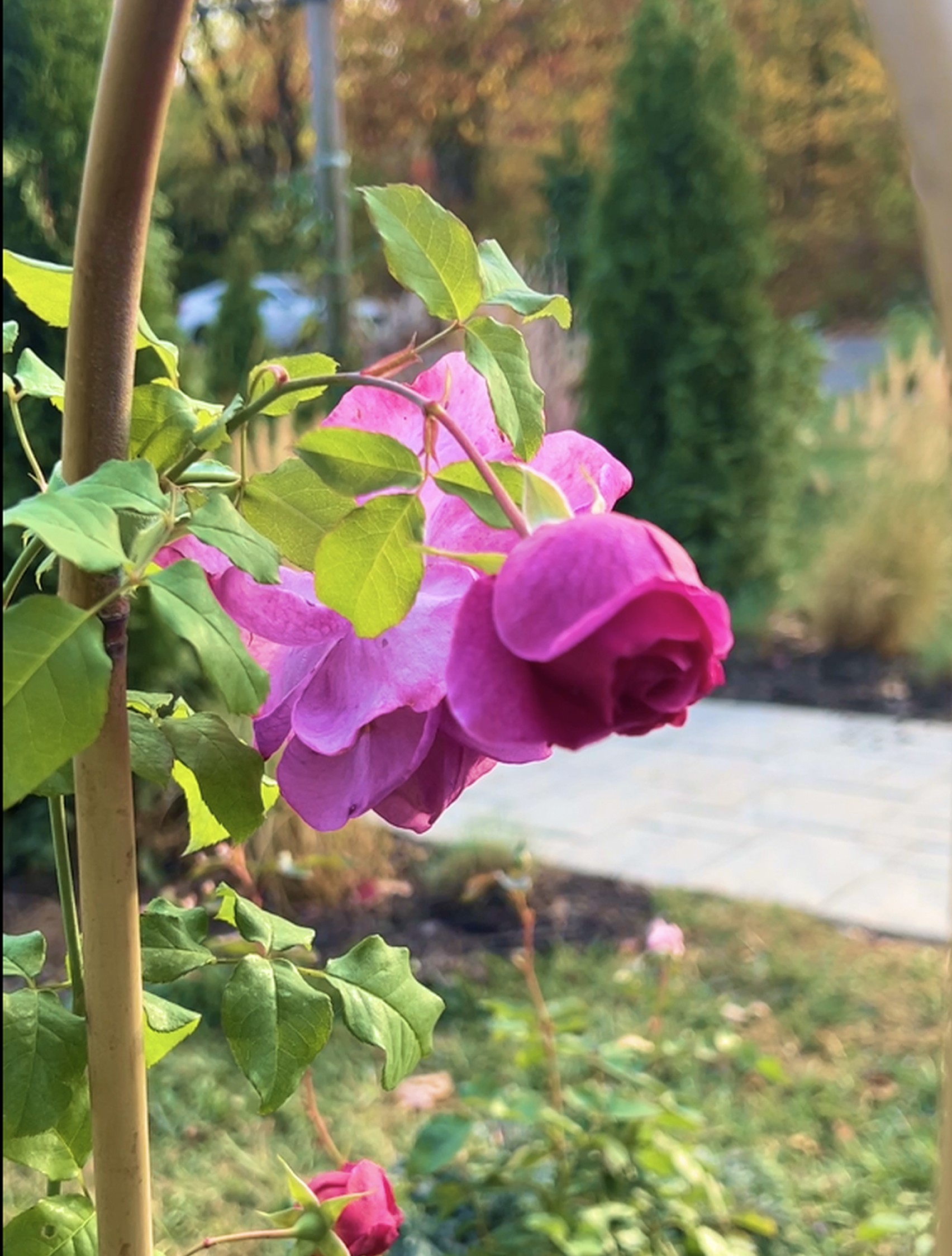
Young Lycidas, November Bloom, Zone 7A
But what truly makes this rose magical for me happens in the evening. At twilight, the petals seem to glow with an almost translucent magenta color that is genuinely hard to capture in photos.


Real plants. Real garden.
Honest perspective.
I share what works in my garden, including the mistakes!
The octopus canes — and what to do with them
Here's what nobody tells you about David Austin shrub roses: many of them don't want to be the tidy upright shrubs you might expect. Young Lycidas in particular throws out these long, flexible, almost floppy canes — especially in the second half of the season.
My first two years I kept trimming it back, trying to keep it tidy. That was a mistake.
In year three I stopped fighting it and instead bent those canes — essentially training it as a small climber. And that's when everything changed. The moment you bend a cane rather than cutting it, it erupts in side shoots absolutely covered in blooms. That's what this rose wants to do. Work with it, not against it.
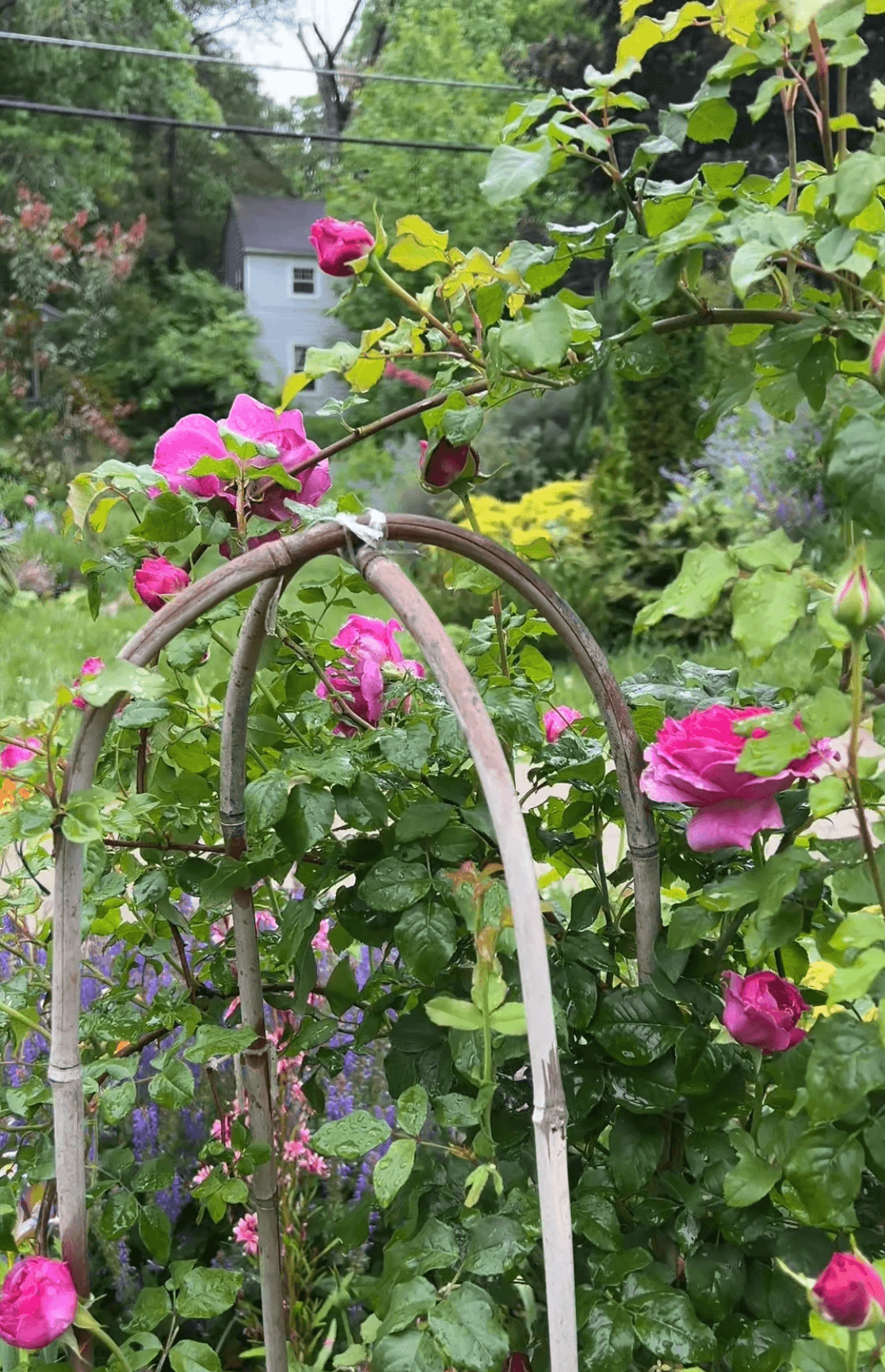
Here you can see the canes are thin and flexible, making it quite easy to wrap around an obelisk. Also, they are not very thorny so this is a really easy task!
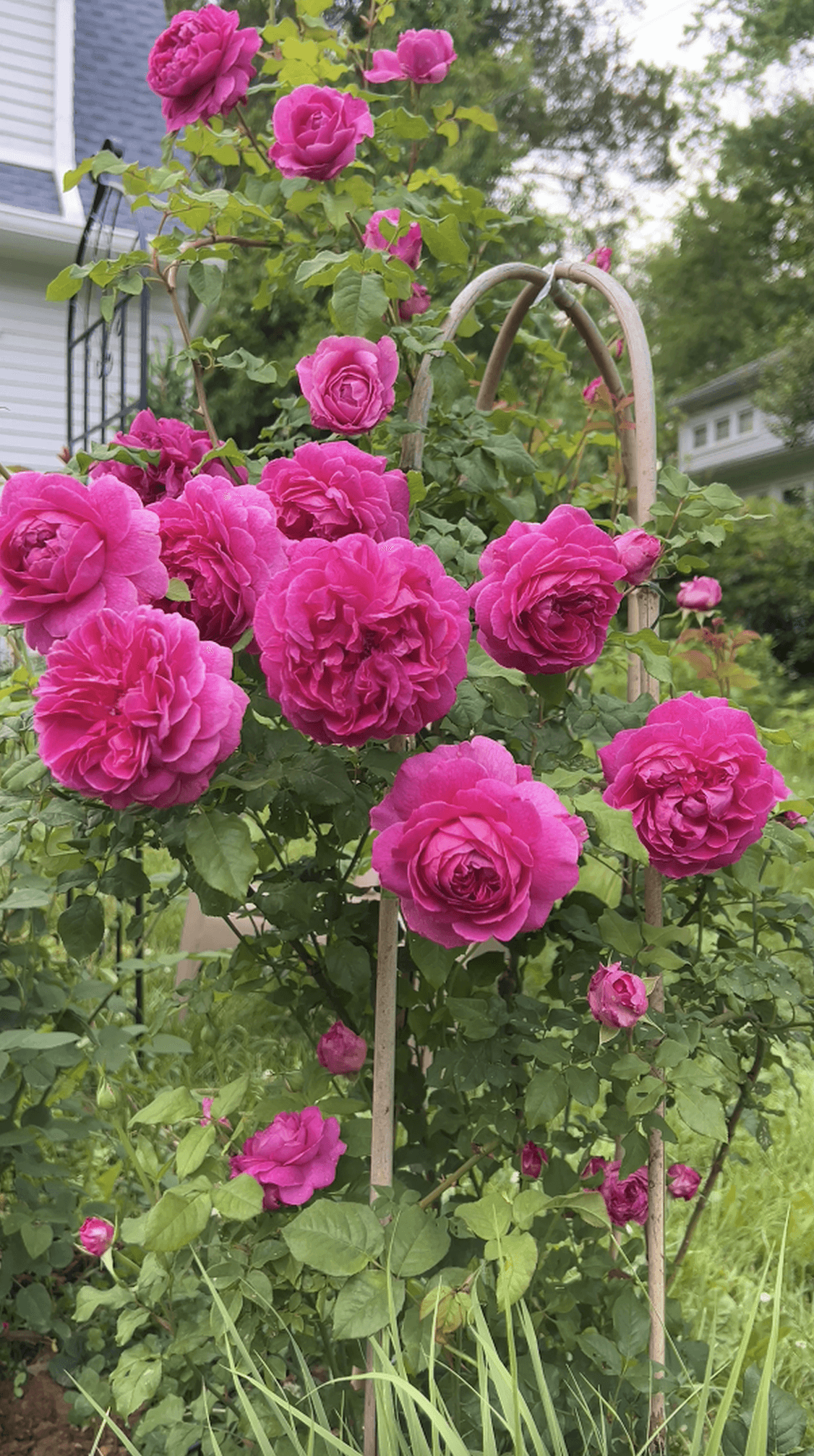
The result: A perfect small climber!
My advice: don't trim Young Lycidas aggressively, especially in the first few years. Let it grow, then bend and shape those long canes rather than cutting them back. You'll be rewarded with exponentially more flowers.
How it handles New Jersey weather
Zone 7A means humidity, torrential summer rains, and unpredictable springs. Young Lycidas handles all of it.
I shot my review video (see at the end of this post) right after two days of heavy rain — the kind that soaks every bloom and makes most roses ball up and turn brown. Young Lycidas was quite unbothered. The flowers were vibrant, fully open, completely undamaged. That disease and rain resistance in our climate is genuinely impressive.
We also had a really bad cold snap late spring. Many of my roses were affected. I found 2 or 3 buds on Young Lycidas that was also not looking best. The rest gave me the blooms you see in the photos.
Is it right for Zone 7A New Jersey?
After three years — yes, completely. It's healthy, vigorous, disease resistant, and puts on a show from early May through late autumn. If you're in the Mid-Atlantic or Northeast and have been hesitant about David Austin roses because of our climate, Young Lycidas is the one I'd start with.
It was an accidental buy. It's now my benchmark for every other rose I consider adding.
Where to buy Young Lycidas
It's not easily found in local nurseries so if you don't find it, order online.
Young Lycidas bare roots are available on David Austin website. You can also get potted Young Lycidas online during season:
Get potted Young Lycidas here (10% off)
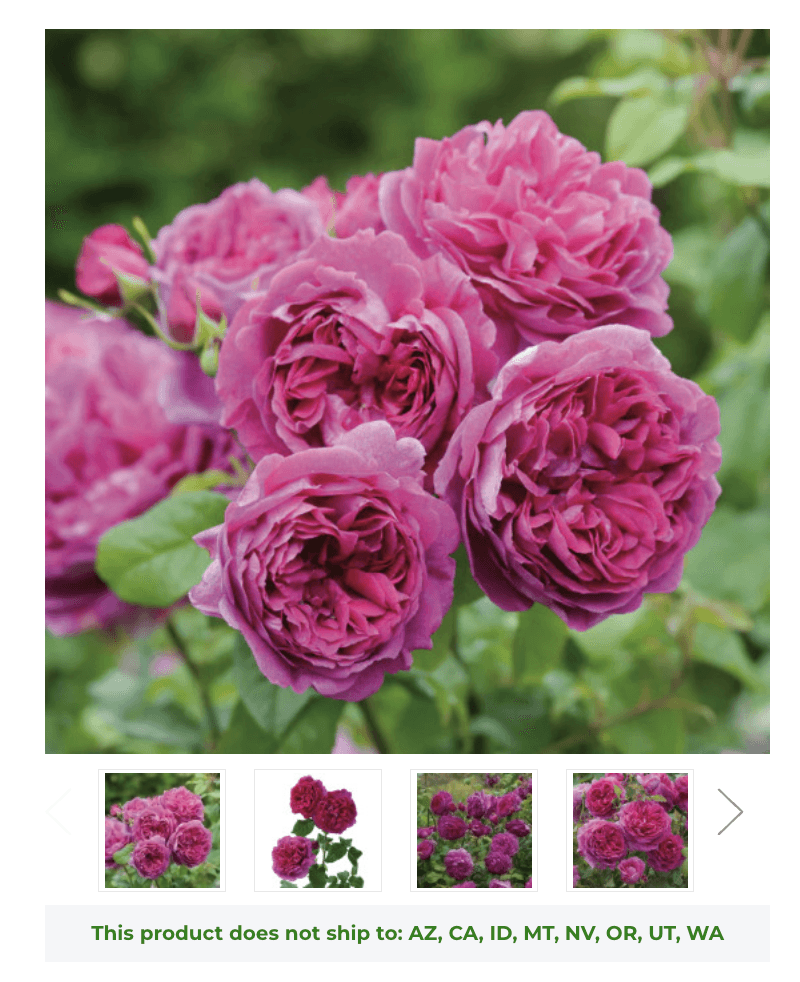
Get potted Young Lycidas here (10% off)
You can watch my entire review of this rose here:
Frequently Asked Questions
Is Young Lycidas a climber?
No. Young Lycidas is officially a David Austin shrub rose. However, its long, flexible canes make it easy to train on an obelisk or small support, where it performs much like a compact climber.
Why does Young Lycidas produce long floppy canes?
This is completely normal. Young Lycidas naturally sends out long, arching canes. Instead of cutting them back, bend and tie them horizontally to encourage numerous flowering side shoots.
Should I prune Young Lycidas hard?
Not if you want the most flowers. Light annual pruning is enough. Preserving and training the long canes usually results in a much heavier display of blooms.
Is Young Lycidas disease resistant?
In my Zone 7A New Jersey garden, Young Lycidas has been one of my healthiest David Austin roses. It has handled humidity, heavy rain, and changing weather with very few issues.
Does Young Lycidas tolerate rain?
Yes. The blooms have held their shape surprisingly well after heavy rain, with very little damage or balling compared to some other roses.
How often does Young Lycidas bloom?
Young Lycidas is a repeat-flowering English rose. In my garden, it begins blooming early in the season and continues producing flowers well into November.
How tall does Young Lycidas grow?
As a shrub, Young Lycidas typically reaches about 4–5 feet tall. If you train its flexible canes on an obelisk or support, it can appear taller while remaining compact.
Does Young Lycidas have a strong fragrance?
Yes. Young Lycidas is well known for its rich, old rose fragrance with hints of tea and cedar, making it one of David Austin's most fragrant varieties.
Is Young Lycidas a good rose for beginners?
Yes. If you're looking for your first David Austin rose, Young Lycidas is an excellent choice thanks to its repeat blooming, strong disease resistance, beautiful flowers, and reliable performance.
Is Young Lycidas suitable for New Jersey (Zone 6-7)?
Absolutely. After several years growing it in Zone 7A, I've found it to be vigorous, healthy, and one of the most dependable David Austin roses in my garden.
Key Takeaways Summary
Young Lycidas is the earliest David Austin rose to bloom in my garden, and it keeps flowering into November in Zone 7A
Don't trim the long "octopus canes" — bend and train them instead for dramatically more blooms
Exceptional disease and rain resistance; it sailed through heavy rain and humidity with barely a mark
Reaches 4–5 feet and can be trained on an obelisk as a compact climber
Hard to find locally — best sourced online from Plant Addicts or David Austin as a fall bare root
Happy gardening! 🌹
Young Lycidas at a Glance
☀️ Full sun | 🌹 Repeat bloomer, May–November | 📏 4–5 ft, trains as a compact climber | 🌸 Rich old-rose fragrance | 🛡️ Excellent disease & rain resistance
Get potted Young Lycidas here (10% off)
Like many of you, I went from zero to one hundred obsessed with David Austin roses — literally overnight. I never planned to buy Young Lycidas. By the time my rose garden obsession began, bare root season was already over, so I was left hunting for whatever I could still find locally here in New Jersey. I finally stumbled upon a handful of remaining varieties. Young Lycidas was there — so into my cart it went.
That accidental purchase turned out to be my absolute favorite rose in the entire garden. And I want to tell you exactly why, including the famous “octopus canes” everyone keeps asking about in Facebook groups.
Let's start with the flowers
These stunning rosettes are a rich magenta pink, romantic and simply perfect. They look beautiful at every stage — from the small, elegant bud to the fully open bloom. They handle rain surprisingly well too. After two days of constant rain, these rosettes looked completely unbothered, holding their shape far better than many other roses.
Explore My Garden
Shop the exact plants, seeds, and shrubs in my borders
Young Lycidas is also the earliest David Austin rose to bloom in my garden, often flowering before many of the others even wake up. Even better, it keeps blooming well into November here in New Jersey (Zone 7A), making it one of the longest-performing roses in my garden.
Young Lycidas, November Bloom, Zone 7A
But what truly makes this rose magical for me happens in the evening. At twilight, the petals seem to glow with an almost translucent magenta color that is genuinely hard to capture in photos.
Real plants. Real garden.
Honest perspective.
The octopus canes and what to do with them
Here's what nobody tells you about David Austin shrub roses: many of them don't want to be the tidy upright shrubs you might expect. Young Lycidas in particular throws out these long, flexible, almost floppy canes — especially in the second half of the season.
My first two years I kept trimming it back, trying to keep it tidy. That was a mistake.
In year three I stopped fighting it and instead bent those canes — essentially training it as a small climber. And that's when everything changed. The moment you bend a cane rather than cutting it, it erupts in side shoots absolutely covered in blooms. That's what this rose wants to do. Work with it, not against it.
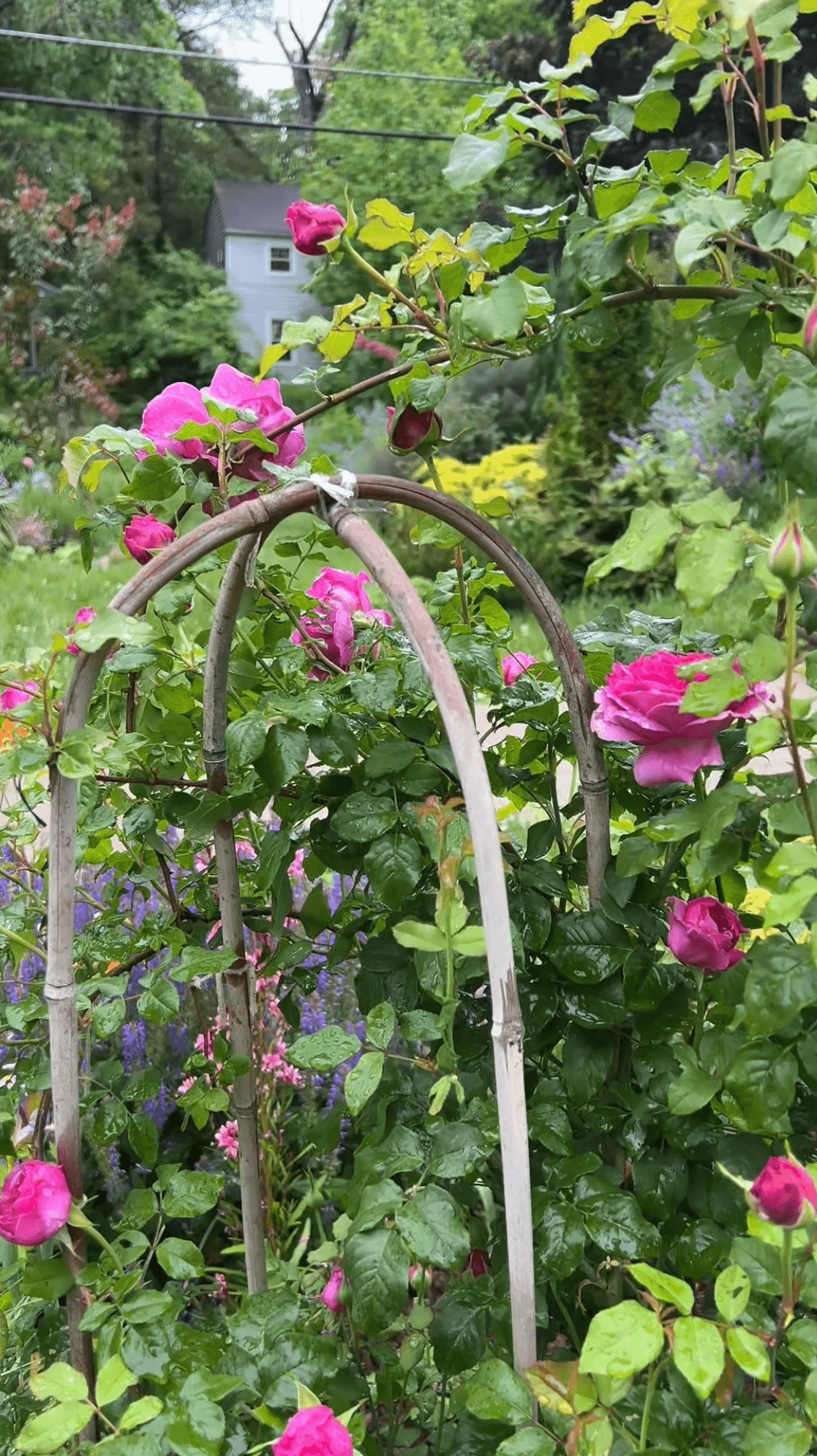
Here you can see the canes are thin and flexible, making it quite easy to wrap around an obelisk. Also, they are not very thorny so this is a really easy task!
The result: A perfect small climber!
My advice: don't trim Young Lycidas aggressively, especially in the first few years. Let it grow, then bend and shape those long canes rather than cutting them back. You'll be rewarded with exponentially more flowers.
How it handles New Jersey weather
Zone 7A means humidity, torrential summer rains, and unpredictable springs. Young Lycidas handles all of it.
I shot my review video (see at the end of this post) right after two days of heavy rain — the kind that soaks every bloom and makes most roses ball up and turn brown. Young Lycidas was quite unbothered. The flowers were vibrant, fully open, completely undamaged. That disease and rain resistance in our climate is genuinely impressive.
We also had a really bad cold snap late spring. Many of my roses were affected. I found 2 or 3 buds on Young Lycidas that was also not looking best. The rest gave me the blooms you see in the photos.
Where to buy Young Lycidas
It's not easily found in local nurseries so if you don't find it, order online.
Young Lycidas bare roots are available on David Austin website. You can also get potted Young Lycidas online during season:
Get potted Young Lycidas here (10% off)
Get potted Young Lycidas here (10% off)
You can watch my entire review of this rose here:
Frequently Asked Questions
Is Young Lycidas a climber?
No. Young Lycidas is officially a David Austin shrub rose. However, its long, flexible canes make it easy to train on an obelisk or small support, where it performs much like a compact climber.
Why does Young Lycidas produce long floppy canes?
This is completely normal. Young Lycidas naturally sends out long, arching canes. Instead of cutting them back, bend and tie them horizontally to encourage numerous flowering side shoots.
Should I prune Young Lycidas hard?
Not if you want the most flowers. Light annual pruning is enough. Preserving and training the long canes usually results in a much heavier display of blooms.
Is Young Lycidas disease resistant?
In my Zone 7A New Jersey garden, Young Lycidas has been one of my healthiest David Austin roses. It has handled humidity, heavy rain, and changing weather with very few issues.
Does Young Lycidas tolerate rain?
Yes. The blooms have held their shape surprisingly well after heavy rain, with very little damage or balling compared to some other roses.
How often does Young Lycidas bloom?
Young Lycidas is a repeat-flowering English rose. In my garden, it begins blooming early in the season and continues producing flowers well into November.
How tall does Young Lycidas grow?
As a shrub, Young Lycidas typically reaches about 4–5 feet tall. If you train its flexible canes on an obelisk or support, it can appear taller while remaining compact.
Does Young Lycidas have a strong fragrance?
Yes. Young Lycidas is well known for its rich, old rose fragrance with hints of tea and cedar, making it one of David Austin's most fragrant varieties.
Is Young Lycidas a good rose for beginners?
Yes. If you're looking for your first David Austin rose, Young Lycidas is an excellent choice thanks to its repeat blooming, strong disease resistance, beautiful flowers, and reliable performance.
Is Young Lycidas suitable for New Jersey (Zone 6-7)?
Absolutely. After several years growing it in Zone 7A, I've found it to be vigorous, healthy, and one of the most dependable David Austin roses in my garden.
Key Takeaways Summary
Young Lycidas is the earliest David Austin rose to bloom in my garden, and it keeps flowering into November in Zone 7A
Don't trim the long "octopus canes" — bend and train them instead for dramatically more blooms
Exceptional disease and rain resistance; it sailed through heavy rain and humidity with barely a mark
Reaches 4–5 feet and can be trained on an obelisk as a compact climber
Hard to find locally — best sourced online from Plant Addicts or David Austin as a fall bare root
Happy gardening! 🌹

Written by Jolanta Reynolds
You Might Like
You Might Like


You Might Like

Subscribe to my newsletter
Get new garden posts, seasonal tips, and what's blooming in my New Jersey cottage garden — straight to your inbox.
By subscribing, you agree to the Privacy Policy
Subscribe
to my
newsletter
Get new garden posts, seasonal tips, and what's blooming in my New Jersey cottage garden — straight to your inbox.
By subscribing, you agree to the Privacy Policy