
Perennials
How to Grow Echinacea (Purple Coneflower): Don't Make My Mistake
How to Grow Echinacea (Purple Coneflower): Don't Make My Mistake
5
min read
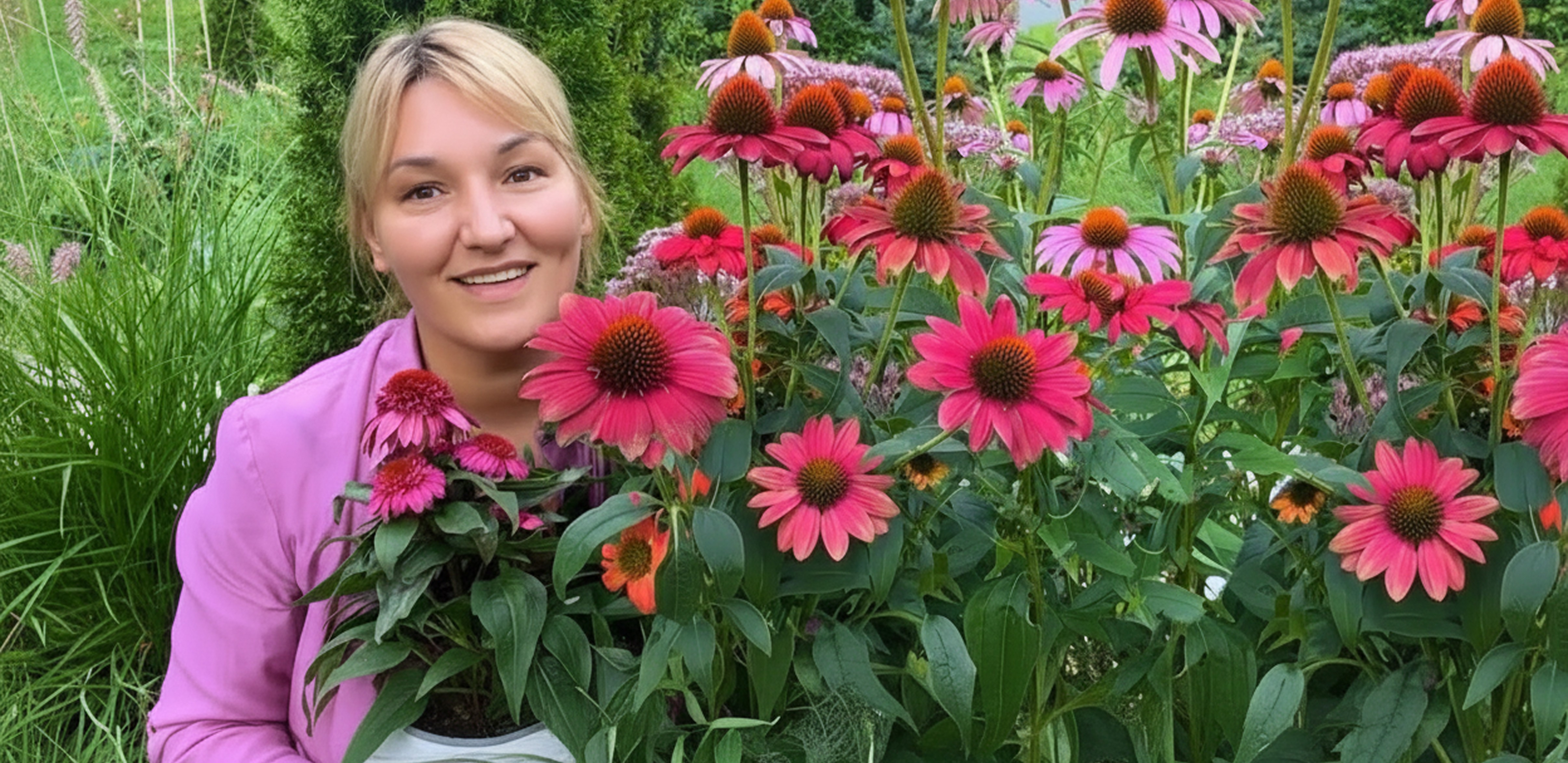
How to Grow Echinacea From Seed
☀️ Full sun | 🌱 Start indoors or direct sow. Press into soil, needs light | 💧 Moist 10–20 days to germinate | 🌸 Blooms in year two | 🪴 Compact Cultivars — buy as roots or plants, not seed
My relationship with purple coneflowers has been rocky. I planted them, got disappointed, evicted most of them out from my showy flower beds — and nearly wrote them off forever. And then, discovered what I have been doing wrong! I'm now convinced they're a must-have for every garden.
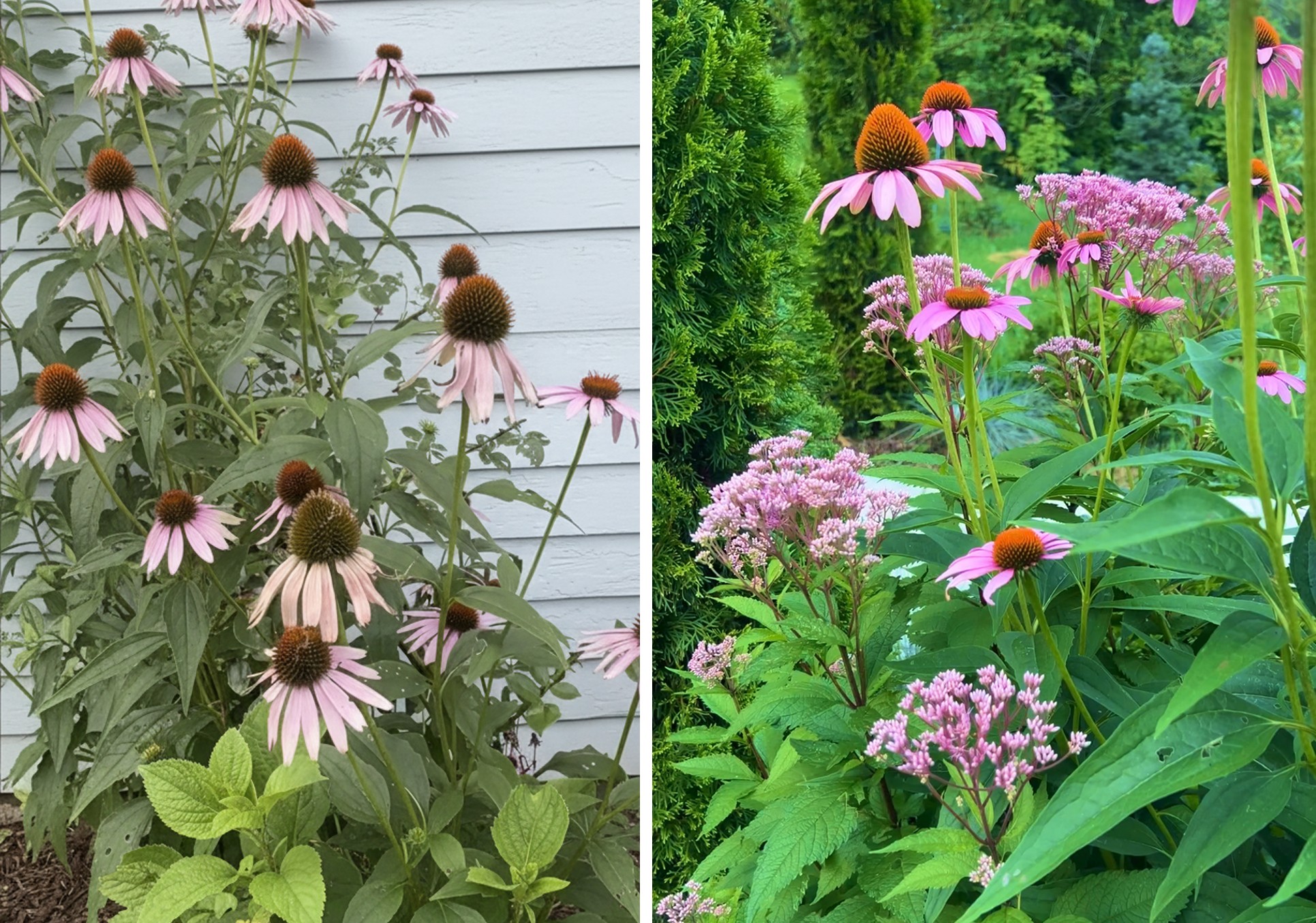
Take a look at the purple coneflower on the left.. disappointing.
And the one on the right? A perfect bouquet!
What makes echinacea so special
I have this lovely coneflower right near my walkway and it stops me every time. It's a daisy-like bloom with an impressive seed head — quite hard to touch — and a sweet and citrusy fragrance, absolutely adored by bees and butterflies. It can grow quite tall with a lot of stems; one plant easily can have 20 blooms on it. And it's extremely heat resistant.
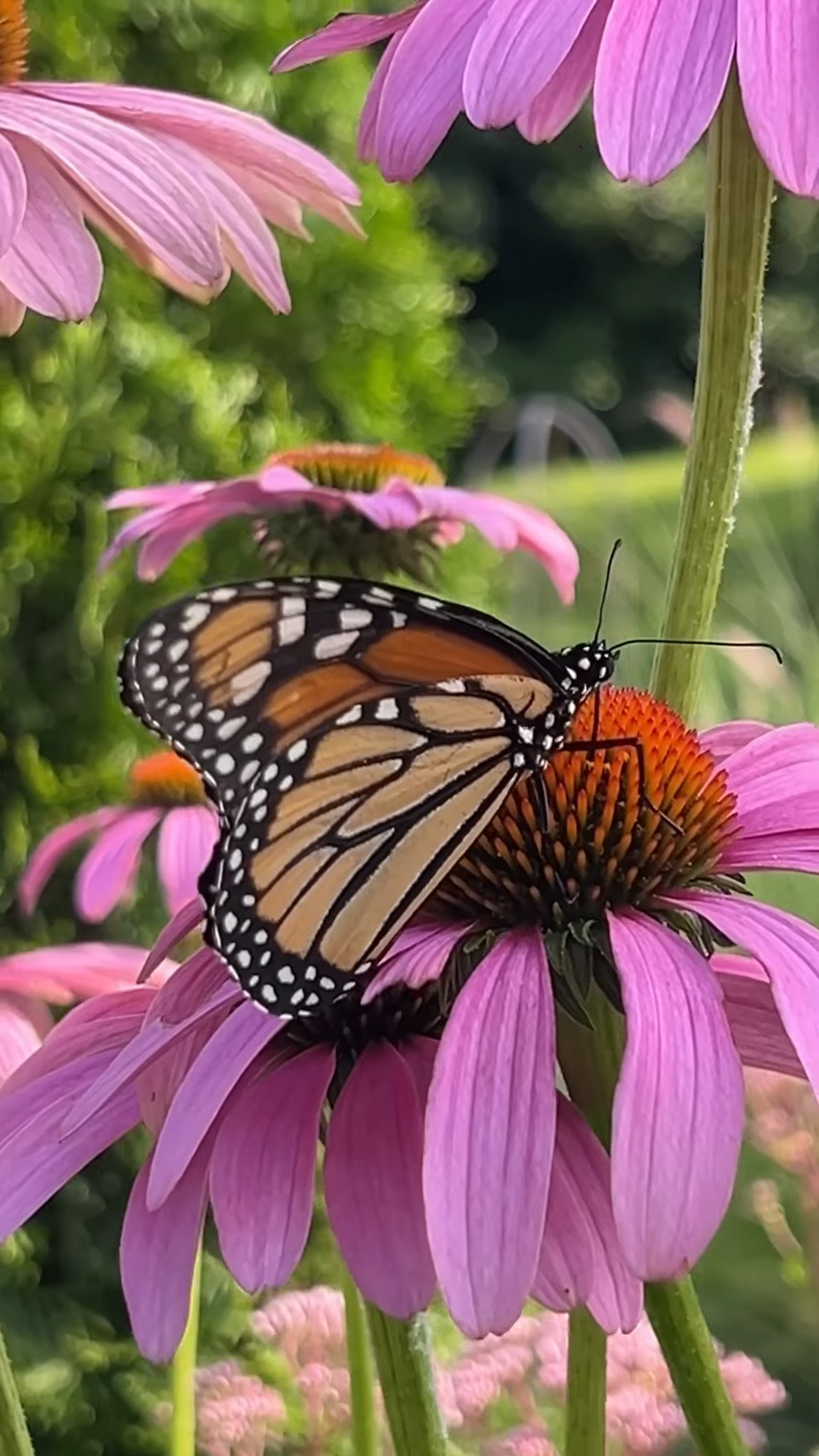
It's also a budget gardener's dream! When I first started my garden I bought one packet of echinacea seeds and the germination rate was absolutely through the roof (btw, that was also my experience with Cosmos and Zinnia seeds) I had so many seedlings I didn't know what to do with them. You can practically make a meadow from one packet of seeds, which is exactly what happened to me.
Why I fell out of love with echinacea
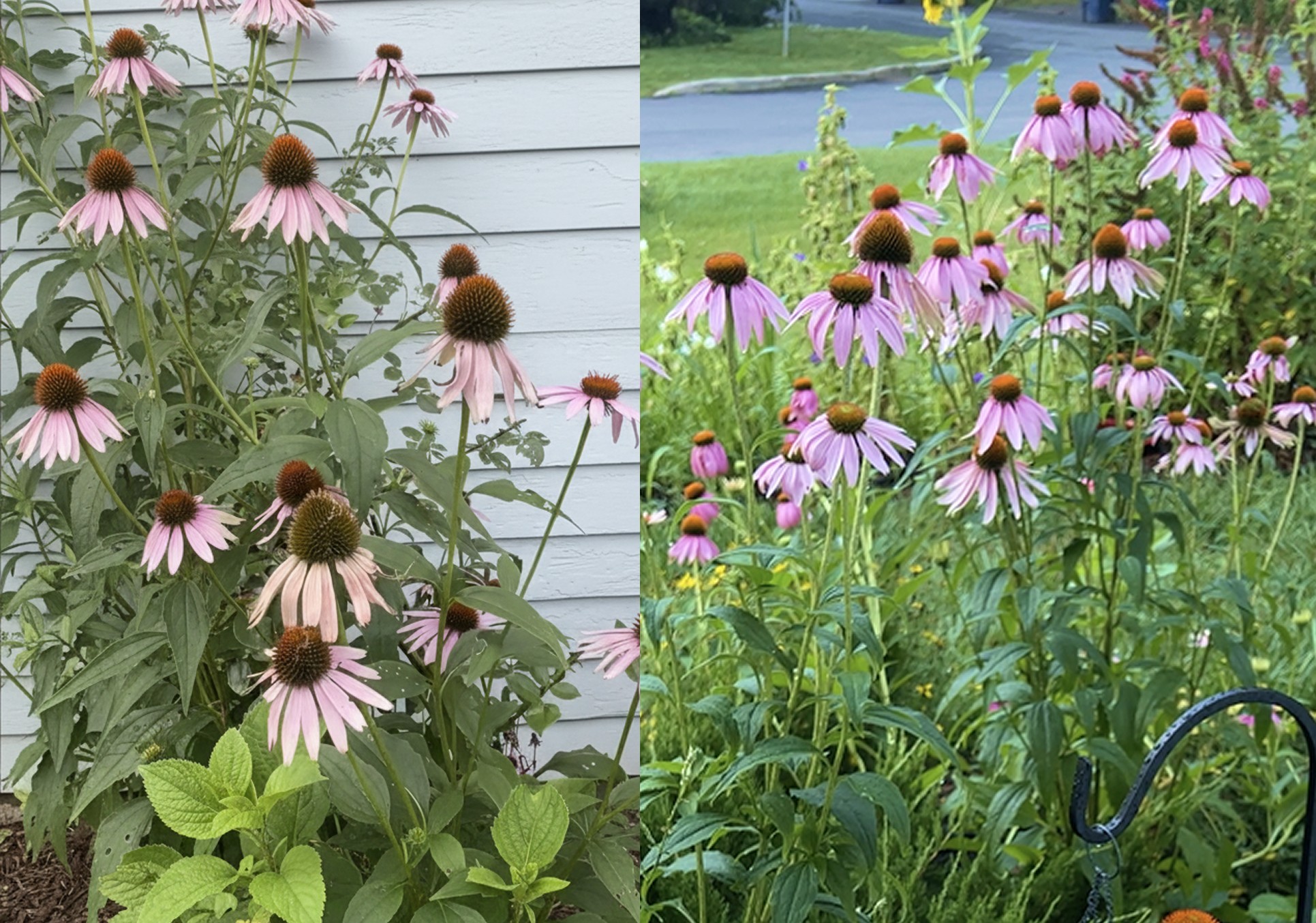
Here's my honest confession. With my many many seedlings, I planted them in droves across different flower beds. They were tall and dominated other perennials, and when they were spent, their soft pink become papery and brownish. Those first years really thought me a lot about many flowers that are easy to grow from see like Echinacea, Cosmos and Zinnias — I learned there is a right way and a wrong way to plant them!
Here are my flowers in the first year of gardening. Needless to say, I wasn't impressed. :-/

Real plants. Real garden.
Honest perspective.
I share what works in my garden, including the mistakes!
The following years, I moved most of my purple coneflowers and replaced them by other perennials, evergreens, hydrangeas and roses. My garden was taking shape… a mix of cottage and formal gardens.
Then August arrived.
It was scorching here in Zone 7A and most of my perennials were struggling. Except for the few purple coneflowers that I left in my flower beds. They were perfectly happy in the scorching sun, blooming beautifully and looking spectacular.
That's when I realized the beauty of echinacea IF PLANTED THE RIGHT WAY!

Shop My Favorite
Echinacea Varieties
How to grow echinacea to look stunning
Echinacea is a perennial. it comes back every year and gets bigger and fuller over time. It prefers full sun and well-drained, lean soil. Skip the fertilizer.
You can grow echinacea two ways:
As a border plant
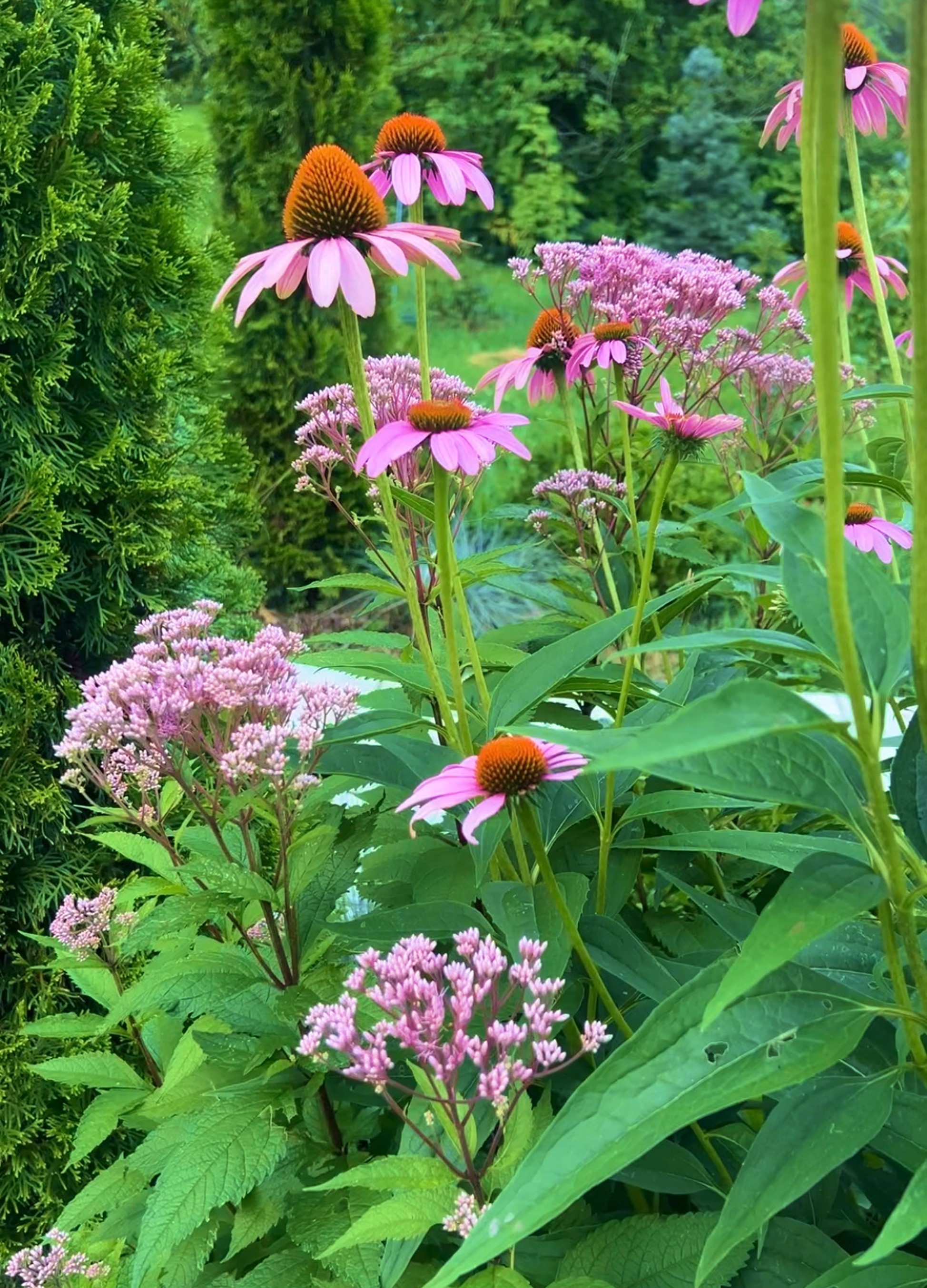
This is where most people go wrong. Echinacea grows tall stems with most of its leaves at the bottom. It's not a bushy, full plant. Plant it against a wall or house with nothing behind it and it just disappears — the pink isn't strong enough to stand alone. The secret is giving it a backdrop and a companion.
Get Echinacea seeds here (10% off)
Backdrop: evergreens are perfect. That deep green sets off the pink beautifully and gives the whole planting structure year round. Companion plant: pair it with Baby Joe, the compact variety of Joe Pye weed. It blooms at the same time, fills in the middle layer, and together they look like a perfectly arranged bouquet that put itself together.
As a meadow
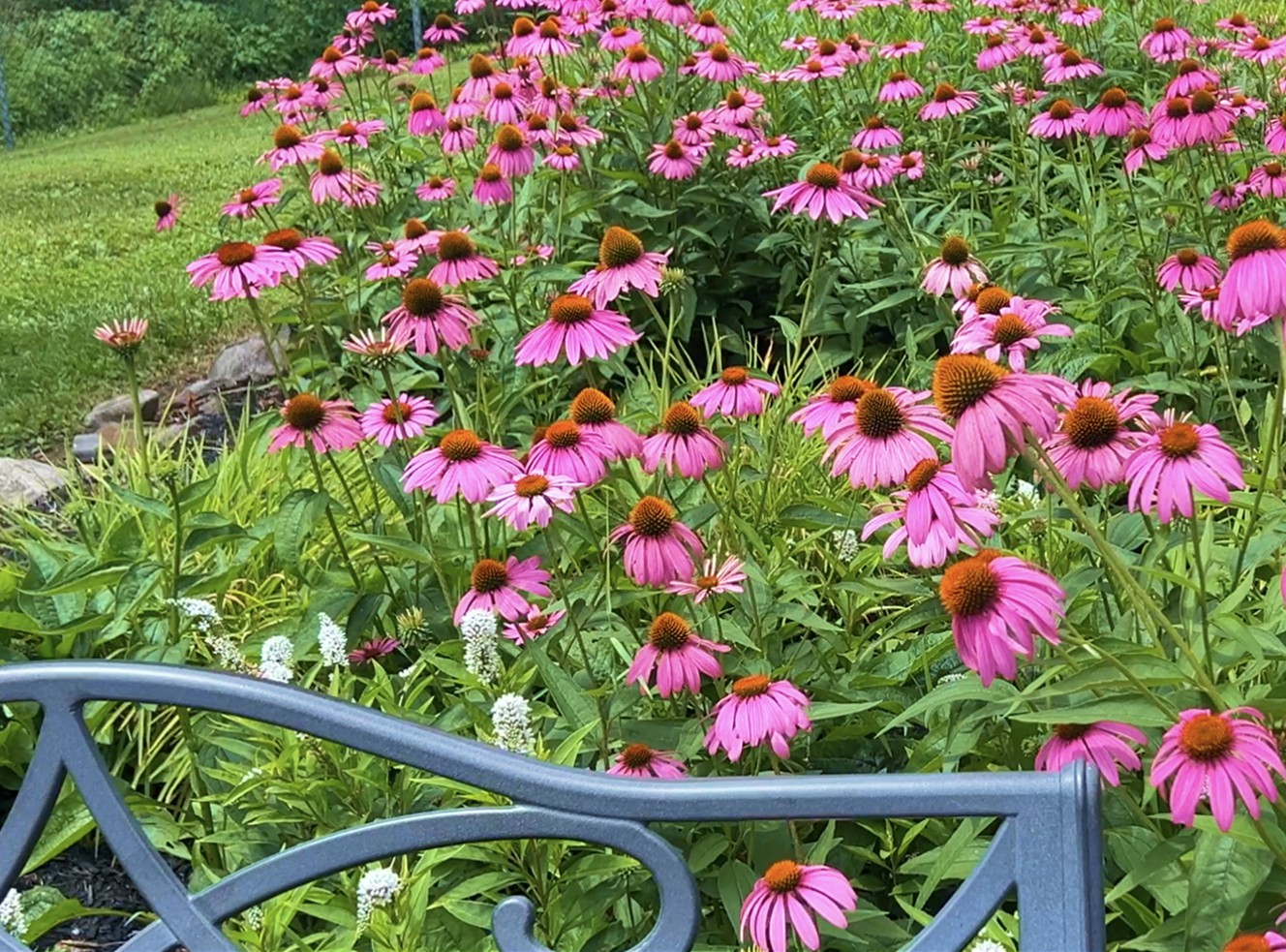
Plant densely from seed. Space them closely so they fill in and support each other. The key to keeping a meadow looking beautiful is deadheading. The moment spent blooms go papery and brown the whole planting looks neglected. Make a habit of walking through and snipping off faded flowers every few days in peak season. Done right, a mass planting of echinacea in full bloom is genuinely spectacular and keeps going all summer.
The exciting new cultivars
While I'm not planning to grow many more of the standard purple coneflowers, I did discover the world of echinacea cultivars and picked up a few that I'm very excited about:
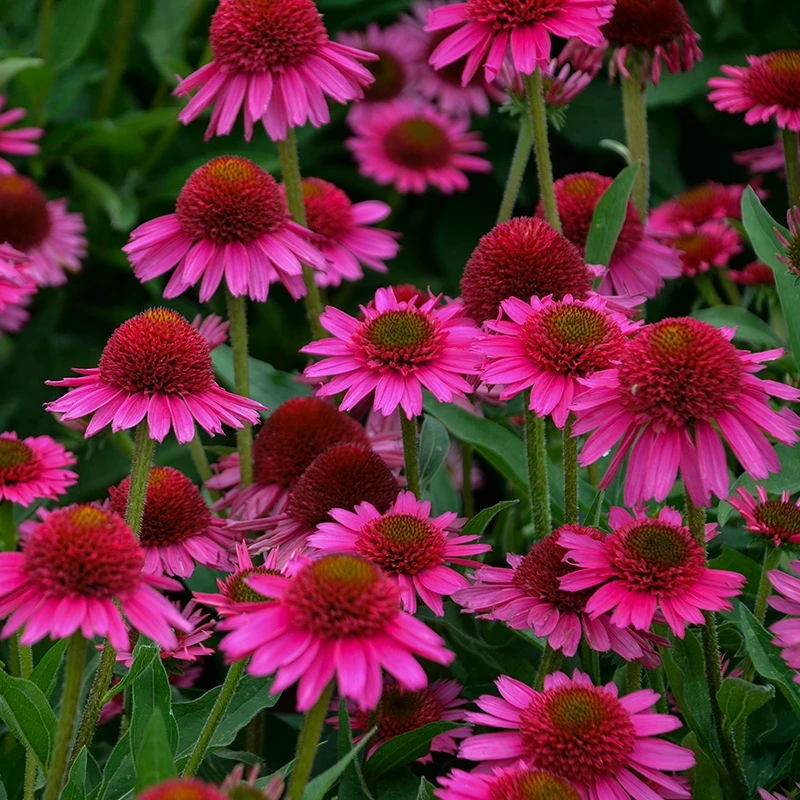
Delicious Candy Coneflower
Semi-double flower in a deep fuchsia pink color. Shorter (1.5-2 ft) and more compact than its companion varieties. Perfect as cut flower!
Get Delicious Candy Coneflower (10% OFF) Here
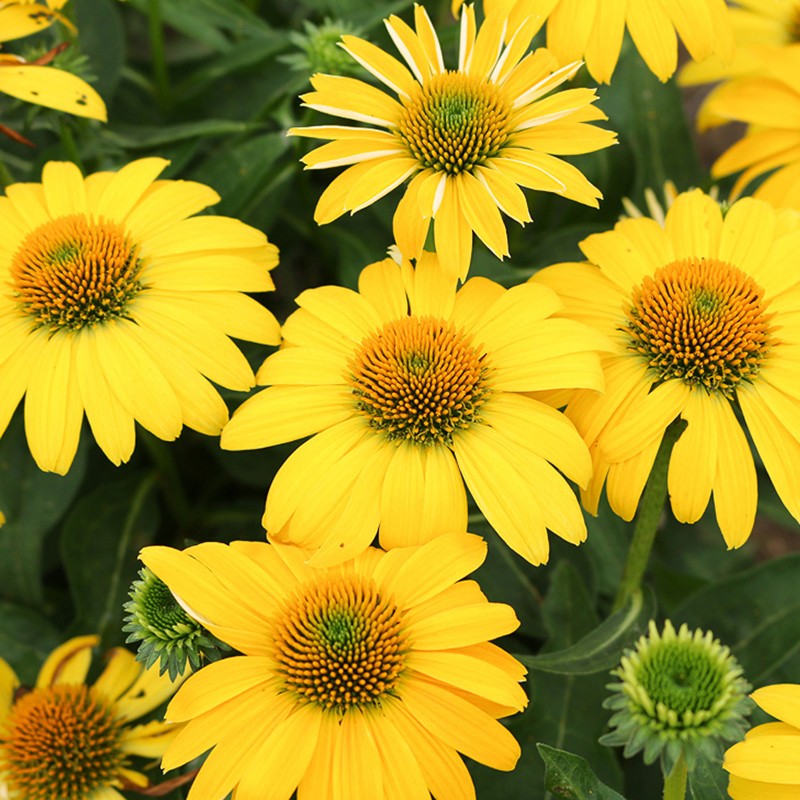
Sombrero® Lemon Yellow Coneflower Wide, overlapping petals ensure that the flower's bold color makes a big impact. Shorter (1.5-2 ft) and more compact than its companion varieties.
Get Sombrero® Lemon Yellow Coneflower (10% OFF)
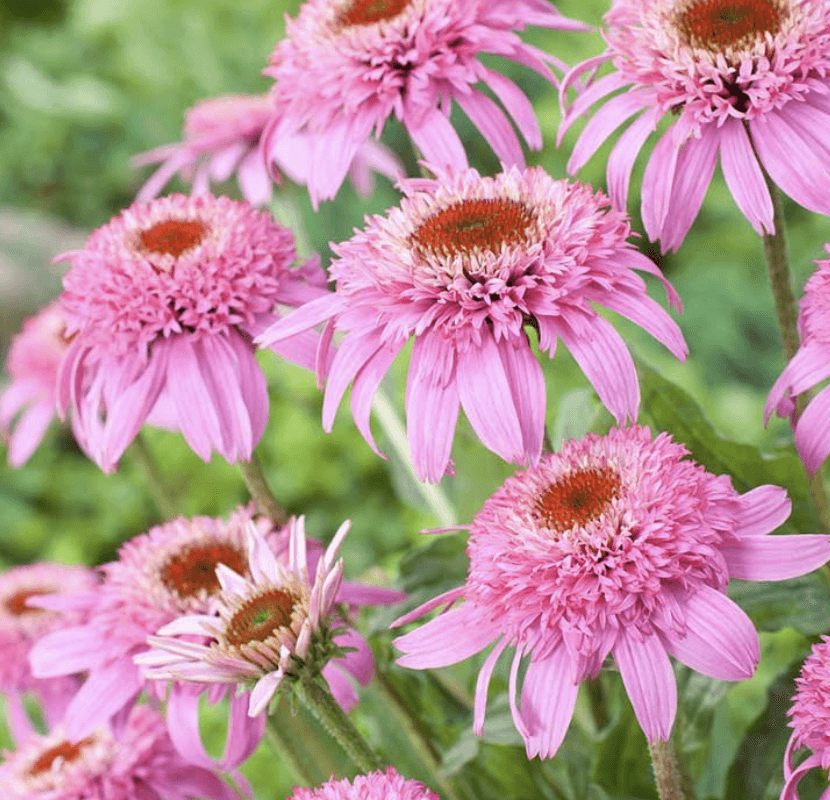
Echinacea Pink Double Delight
Reliably double flowers, compact growth habit, and multiple blooms on each sturdy stem. About 1.5 ft tall is impressively drought-tolerant. Perfect as cut flower!
Echinacea Pink Double Delight (10% OFF) here
Check out other beautiful varieties at Plant Addicts where you can buy plants in containers or Eden Brothers where you can get roots and seeds.
Watch my full video about Purple Coneflower here:
Growing Echinacea from Seed
One packet of echinacea seeds gave me more seedlings than I knew what to do with — the germination rate is exceptional.
Direct sow in spring after last frost, or start indoors 8–10 weeks before
Press seeds lightly into soil — they need light to germinate
Keep moist until germination (10–20 days)
Thin to 18–24 inches apart for border planting, closer for meadow effect
First year plants focus on roots — expect blooms in year two

YOU MAY ALSO LIKE
Heat Tolerant Perennials for Zone 7: What's Blooming When Everything Else Quits
Frequently Asked Questions
Is purple coneflower the same as echinacea?
Yes. Purple coneflower is the common name for Echinacea purpurea, one of the most popular perennial flowers for sunny gardens. Today there are also many colorful cultivars in shades of white, yellow, orange, red, and pink.
Does echinacea come back every year?
Yes. Echinacea is a hardy perennial that returns each spring. Over time, established plants become larger and produce more flowering stems.
Where should I plant purple coneflowers?
Plant echinacea in full sun with well-drained soil. For the best visual impact, place it in front of evergreen shrubs or pair it with fuller perennials rather than letting it stand alone against a wall.
Why does my echinacea look sparse?
This is completely normal. Purple coneflowers naturally produce upright stems with most of their foliage near the base. They look their best when planted with companion plants that fill the middle layer and against rich background like green shrubs or evergreen or when planted in groups.
How much sun does echinacea need?
Echinacea performs best with at least six hours of direct sunlight each day. More sun usually means stronger stems and more flowers.
Does echinacea spread?
Individual plants gradually form larger clumps, and they may self-seed if you leave the seed heads on the plant. Seedlings are easy to move or remove.
Should I deadhead echinacea?
Deadheading encourages a tidier appearance and may extend flowering. If you want to feed birds in autumn or encourage self-seeding, leave some seed heads in place at the end of the season.
Is echinacea drought tolerant?
Yes. Once established, echinacea is one of the most drought-tolerant perennials, making it an excellent choice for hot, sunny gardens.
Do bees and butterflies like echinacea?
Absolutely. Echinacea is one of the best pollinator plants, attracting bees, butterflies, and other beneficial insects throughout summer. In fall and winter, goldfinches often feed on the seed heads.
Can you grow echinacea from seed?
Yes. Purple coneflower is one of the easiest perennials to grow from seed. A single packet produces many seedlings, making it an affordable way to create large borders or naturalistic meadows.
Key Takeaways Summary
Echinacea looks best planted in front of green background like my evergreens
Pair with Baby Joe Pye weed for a bouquet effect that arranges itself
For meadow planting, deadhead regularly or the whole thing looks neglected
One packet of seeds gives you more plants than you'll know what to do with
New compact cultivars like Delicious Candy and Pink Double Delight are worth trying
How to Grow Echinacea From Seed
☀️ Full sun | 🌱 Start indoors or direct sow. Press into soil, needs light | 💧 Moist 10–20 days to germinate | 🌸 Blooms in year two | 🪴 Compact Cultivars — buy as roots or plants, not seed
My relationship with purple coneflowers has been rocky. I planted them, got disappointed, evicted most of them out from my showy flower beds — and nearly wrote them off forever. And then, discovered what I have been doing wrong! I'm now convinced they're a must-have for every garden.
Take a look at this purple coneflower...
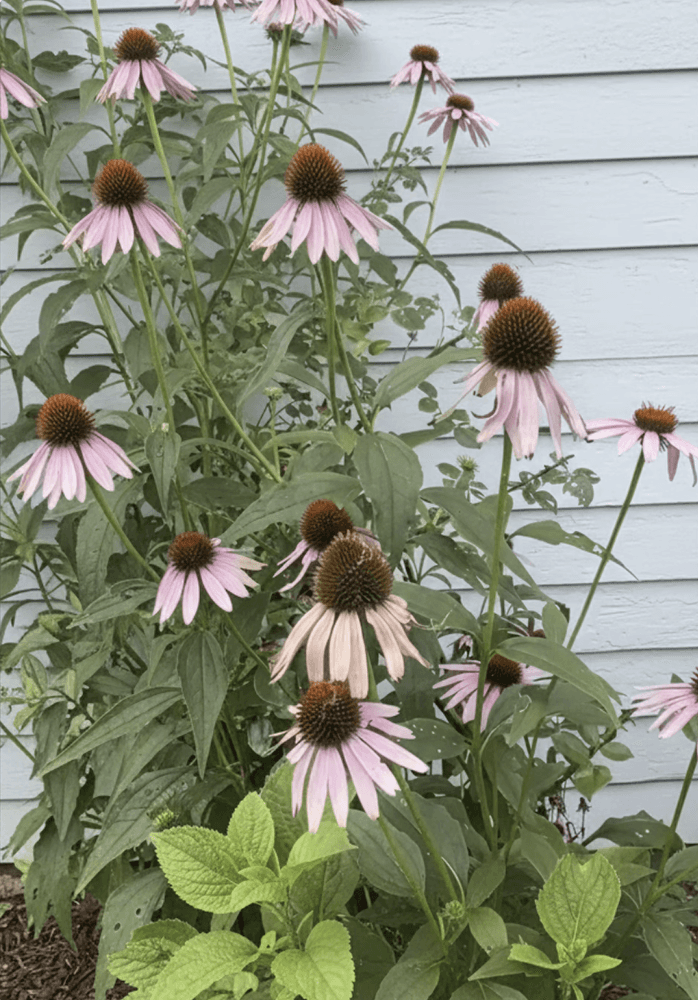
Disappointing.
And this one?
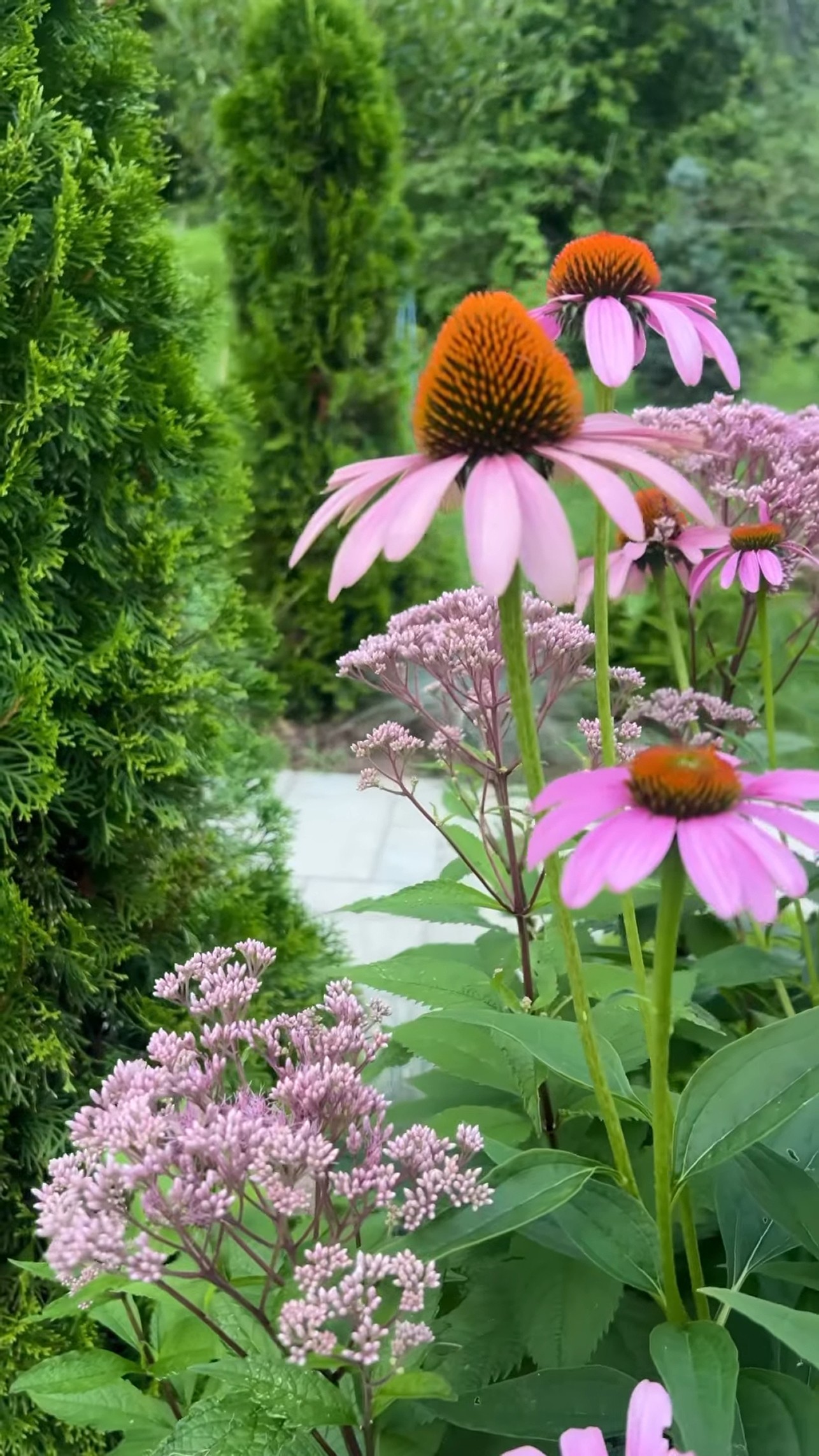
A picture of elegance!
First, what makes echinacea so special
I have this lovely coneflower right near my walkway and it stops me every time. It's a daisy-like bloom with an impressive seed head — quite hard to touch — and a sweet and citrusy fragrance, absolutely adored by bees and butterflies. It can grow quite tall with a lot of stems; one plant easily can have 20 blooms on it.
And it's extremely heat resistant.
It's also a budget gardener's dream!
When I first started my garden I bought one packet of echinacea seeds and the germination rate was absolutely through the roof (btw, that was also my experience with Cosmos and Zinnia seeds) I had so many seedlings I didn't know what to do with them. You can practically make a meadow from one packet of seeds, which is exactly what happened to me.
Why I fell out of love with echinacea
Here's my honest confession. With my many many seedlings, I planted them in droves across different flower beds. They were tall and dominated other perennials, and when they were spent, their soft pink become papery and brownish. Those first years really thought me a lot about many flowers that are easy to grow from see like Echinacea, Cosmos and Zinnias — I learned there is a right way and a wrong way to plant them!
Here are my flowers in the first year of gardening. Needless to say, I wasn't impressed. :-/
The following years, I moved most of my purple coneflowers and replaced them by other perennials, evergreens, hydrangeas and roses. My garden was taking shape… a mix of cottage and formal gardens.
Then August arrived.
It was scorching here in Zone 7A and most of my perennials were struggling. Except for the few purple coneflowers that I left in my flower beds. They were perfectly happy in the scorching sun, blooming beautifully and looking spectacular.
That's when I realized the beauty of echinacea IF PLANTED THE RIGHT WAY!
Shop My Favorite
Echinacea Varieties
How to grow echinacea to look stunning
Echinacea is a perennial. it comes back every year and gets bigger and fuller over time. It prefers full sun and well-drained, lean soil. Skip the fertilizer.
You can grow echinacea two ways:
As a border plant
This is where most people go wrong. Echinacea grows tall stems with most of its leaves at the bottom. It's not a bushy, full plant. Plant it against a wall or house with nothing behind it and it just disappears — the pink isn't strong enough to stand alone.
The secret is giving it a backdrop and a companion.
Get seeds here (10% off): https://collabs.shop/j25q2r
Backdrop: evergreens are perfect. That deep green sets off the pink beautifully and gives the whole planting structure year round. Companion plant: pair it with Baby Joe, the compact variety of Joe Pye weed. It blooms at the same time, fills in the middle layer, and together they look like a perfectly arranged bouquet that put itself together.
As a meadow
Plant densely from seed. Space them closely so they fill in and support each other. The key to keeping a meadow looking beautiful is deadheading. The moment spent blooms go papery and brown the whole planting looks neglected. Make a habit of walking through and snipping off faded flowers every few days in peak season. Done right, a mass planting of echinacea in full bloom is genuinely spectacular and keeps going all summer.
The exciting new cultivars
While I'm not planning to grow many more of the standard purple coneflowers, I did discover the world of echinacea cultivars and picked up a few that I'm very excited about:
Delicious Candy Coneflower
Semi-double flower in a deep fuchsia pink color. Shorter (1.5-2 ft) and more compact than its companion varieties. Perfect as cut flower!
Get Delicious Candy Coneflower (10% OFF) Here
Sombrero® Lemon Yellow Coneflower Wide, overlapping petals ensure that the flower's bold color makes a big impact. Shorter (1.5-2 ft) and more compact than its companion varieties.
Get Sombrero® Lemon Yellow Coneflower (10% OFF)
Echinacea Pink Double Delight
Reliably double flowers, compact growth habit, and multiple blooms on each sturdy stem. About 1.5 ft tall is impressively drought-tolerant. Perfect as cut flower!
Echinacea Pink Double Delight (10% OFF) here
Check out other beautiful varieties at Plant Addicts where you can buy plants in containers or Eden Brothers where you can get roots and seeds.
Watch my full video about Purple Coneflower here:
Growing Echinacea from Seed
One packet of echinacea seeds gave me more seedlings than I knew what to do with — the germination rate is exceptional.
Direct sow in spring after last frost, or start indoors 8–10 weeks before
Press seeds lightly into soil — they need light to germinate
Keep moist until germination (10–20 days)
Thin to 18–24 inches apart for border planting, closer for meadow effect
First year plants focus on roots — expect blooms in year two
YOU MAY ALSO LIKE
Heat Tolerant Perennials for Zone 7: What's Blooming When Everything Else Quits
Frequently Asked Questions
Is purple coneflower the same as echinacea?
Yes. Purple coneflower is the common name for Echinacea purpurea, one of the most popular perennial flowers for sunny gardens. Today there are also many colorful cultivars in shades of white, yellow, orange, red, and pink.
Does echinacea come back every year?
Yes. Echinacea is a hardy perennial that returns each spring. Over time, established plants become larger and produce more flowering stems.
Where should I plant purple coneflowers?
Plant echinacea in full sun with well-drained soil. For the best visual impact, place it in front of evergreen shrubs or pair it with fuller perennials rather than letting it stand alone against a wall.
Why does my echinacea look sparse?
This is completely normal. Purple coneflowers naturally produce upright stems with most of their foliage near the base. They look their best when planted with companion plants that fill the middle layer and against rich background like green shrubs or evergreen or when planted in groups.
How much sun does echinacea need?
Echinacea performs best with at least six hours of direct sunlight each day. More sun usually means stronger stems and more flowers.
Does echinacea spread?
Individual plants gradually form larger clumps, and they may self-seed if you leave the seed heads on the plant. Seedlings are easy to move or remove.
Should I deadhead echinacea?
Deadheading encourages a tidier appearance and may extend flowering. If you want to feed birds in autumn or encourage self-seeding, leave some seed heads in place at the end of the season.
Is echinacea drought tolerant?
Yes. Once established, echinacea is one of the most drought-tolerant perennials, making it an excellent choice for hot, sunny gardens.
Do bees and butterflies like echinacea?
Absolutely. Echinacea is one of the best pollinator plants, attracting bees, butterflies, and other beneficial insects throughout summer. In fall and winter, goldfinches often feed on the seed heads.
Can you grow echinacea from seed?
Yes. Purple coneflower is one of the easiest perennials to grow from seed. A single packet produces many seedlings, making it an affordable way to create large borders or naturalistic meadows.
Key Takeaways Summary
Echinacea looks best planted in front of green background like my evergreens
Pair with Baby Joe Pye weed for a bouquet effect that arranges itself
For meadow planting, deadhead regularly or the whole thing looks neglected
One packet of seeds gives you more plants than you'll know what to do with
New compact cultivars like Delicious Candy and Pink Double Delight are worth trying
Written by Jolanta Reynolds
You Might Like
You Might Like


You Might Like

Subscribe to my newsletter
Get new garden posts, seasonal tips, and what's blooming in my New Jersey cottage garden — straight to your inbox.
By subscribing, you agree to the Privacy Policy
Subscribe
to my
newsletter
Get new garden posts, seasonal tips, and what's blooming in my New Jersey cottage garden — straight to your inbox.
By subscribing, you agree to the Privacy Policy