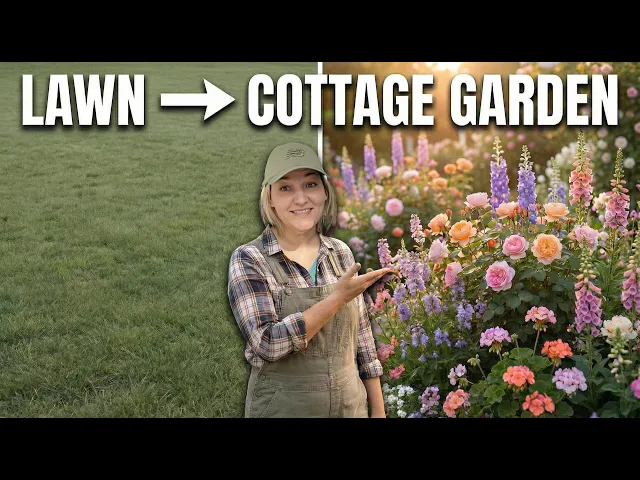
Lawn to Garden
How to Turn Your Front Lawn Into a Garden
How to Turn Your Front Lawn Into a Garden
5
min read

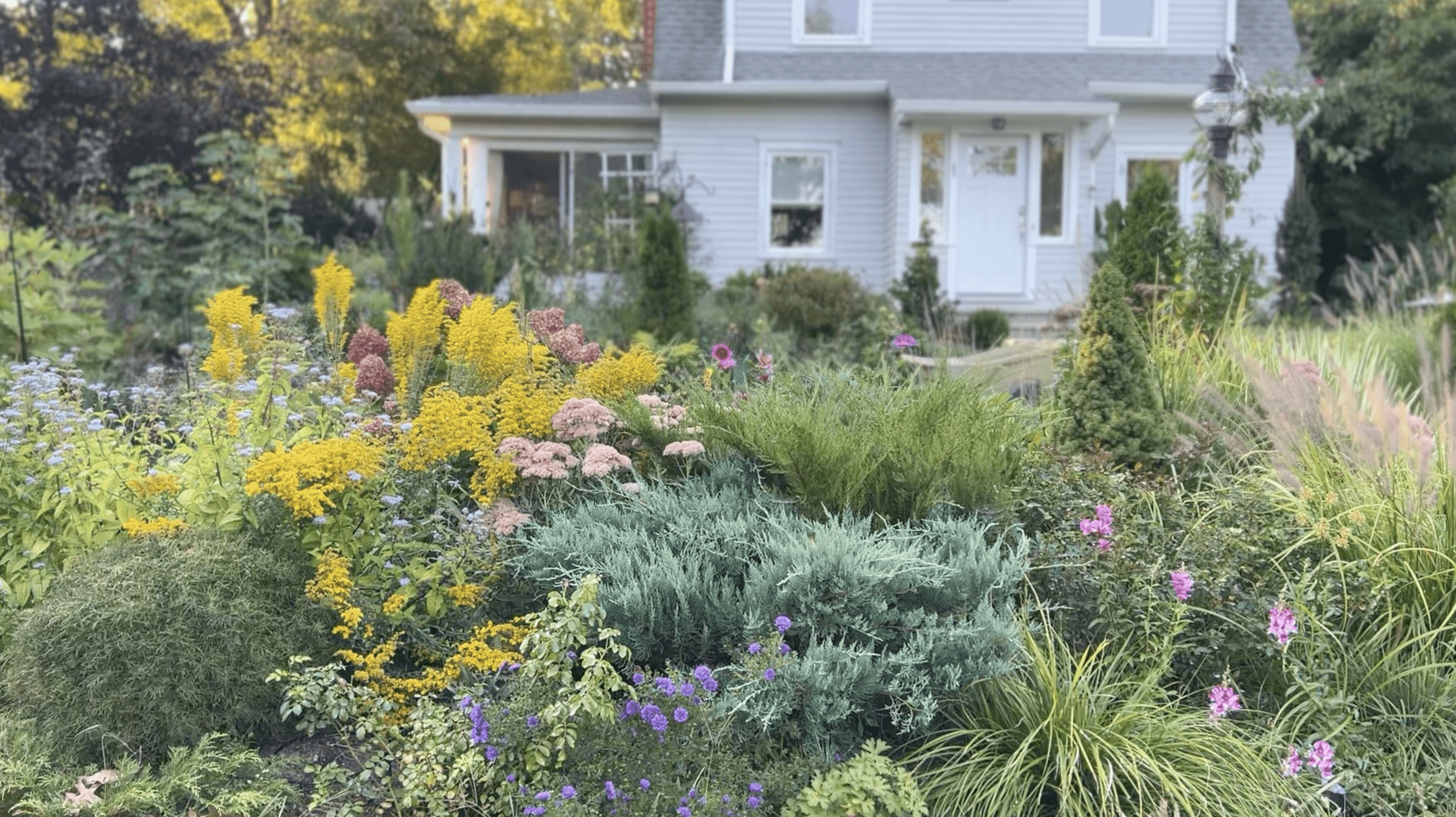
Four years ago, we bought a 100-year-old colonial home with a very empty front lawn. Since then I've been slowly — and sometimes chaotically — transforming it into the garden you see today. If you're at the beginning of that journey, here's what I wish someone had told me.
Four years ago — just grass, a hill, and a dream

Today


Real plants. Real garden.
Honest perspective.
I share what works in my garden, including the mistakes!
1. Don't try to do it all at once
When I looked at my front lawn for the first time, it was a large, blank canvas. Being a corner house made it even bigger. If I had tried to tackle it all at once, it would have been a disaster.
Fortunately for me, I didn't yet aspire to creating a botanical garden in my own yard!
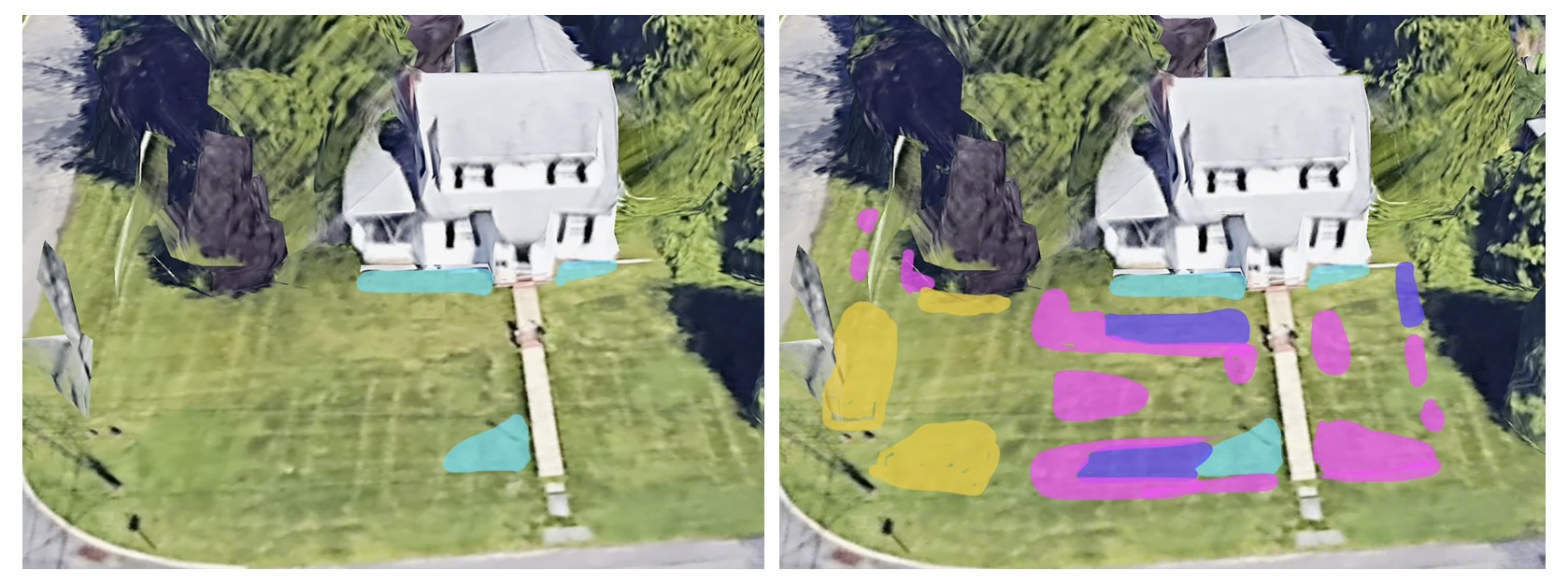
I started with one small flower border right next to the house. Then another bed. Then another. The rest of the lawn stayed as grass — and honestly? That was fine. The grass kept everything looking neat while I figured out what I was doing. One bed was my work area and a place to experiment.
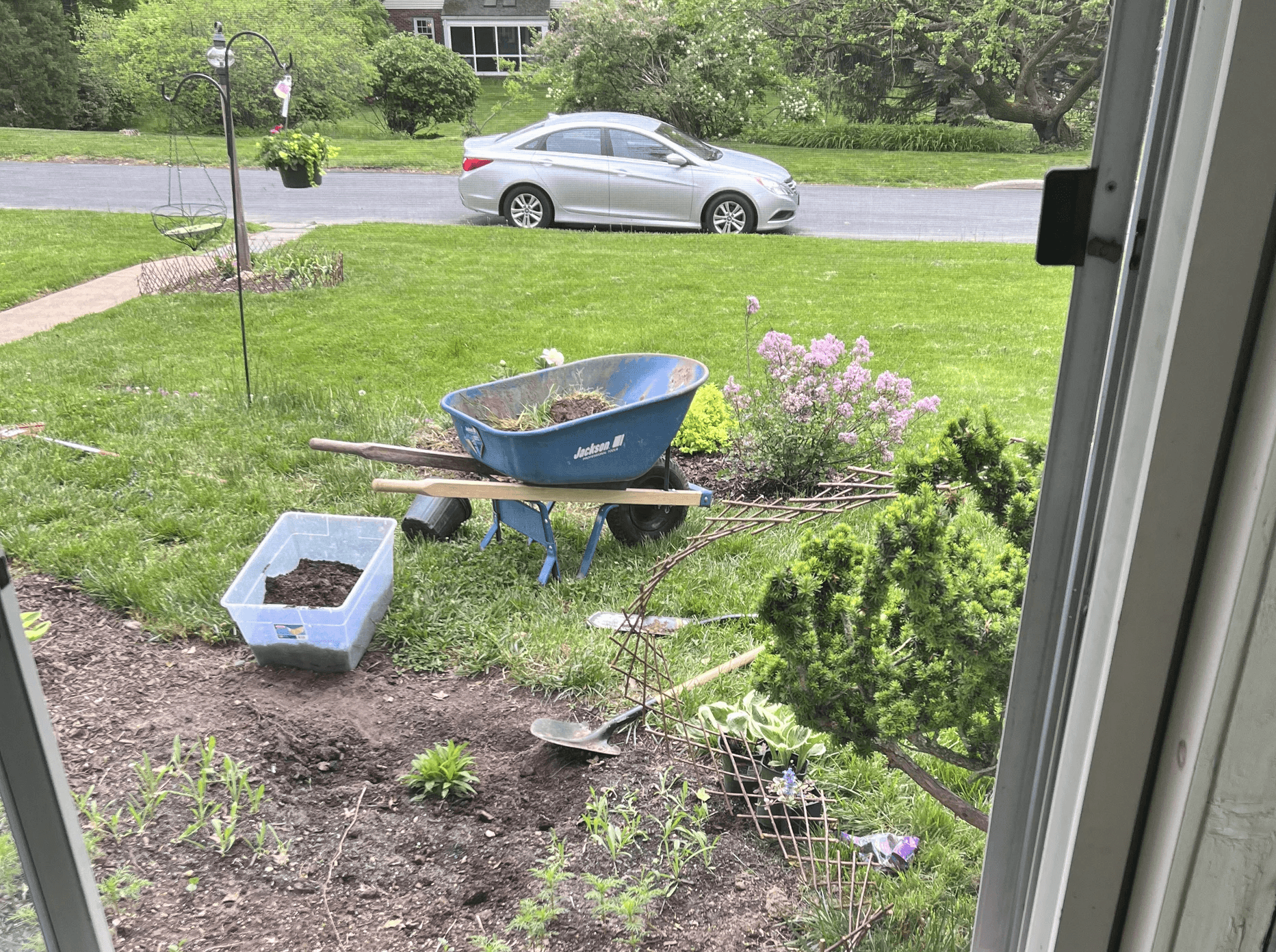
Before I knew it, my front yard was filling in with flower beds. Now the lawn is more of a pathway between them.
Year after year additions

Bottom line, you don't have to have a grand plan. You just have to start somewhere small enough that you can actually finish it. A chaos garden is wonderful. Until it becomes too chaotic.
How to Remove Grass for a Garden Bed
Before you plant anything, you need to deal with the existing turf. Three methods that actually work:
Lasagna gardening: Layer cardboard directly over grass, top with 4–6 inches of compost. No digging. Grass smothers over one season. Perfect for a corner lot with large areas.
Manual removal: Slice under the turf with a flat spade and roll it up like carpet. Labor-intensive but instant results — great for smaller beds.
Solarization: Cover grass with clear plastic sheeting for 4–6 weeks in summer. Heat kills the grass and weed seeds. Best in hot climates.
Flipping the turf (MY METHOD): Slice under the turf with a flat spade, then flip each section completely upside down — grass facing down into the soil. The grass smothers itself and breaks down into organic matter over the season. No hauling, no waste, and it improves your soil at the same time.
2. Layer your plants and lead with structure, not flowers
Once you have your bed, think in layers. For a border: tall plants (3–5 ft) at the back, medium (2–3 ft) in the middle, low growers at the front. For an island bed, put your most striking plants off-center and let everything cascade outward.
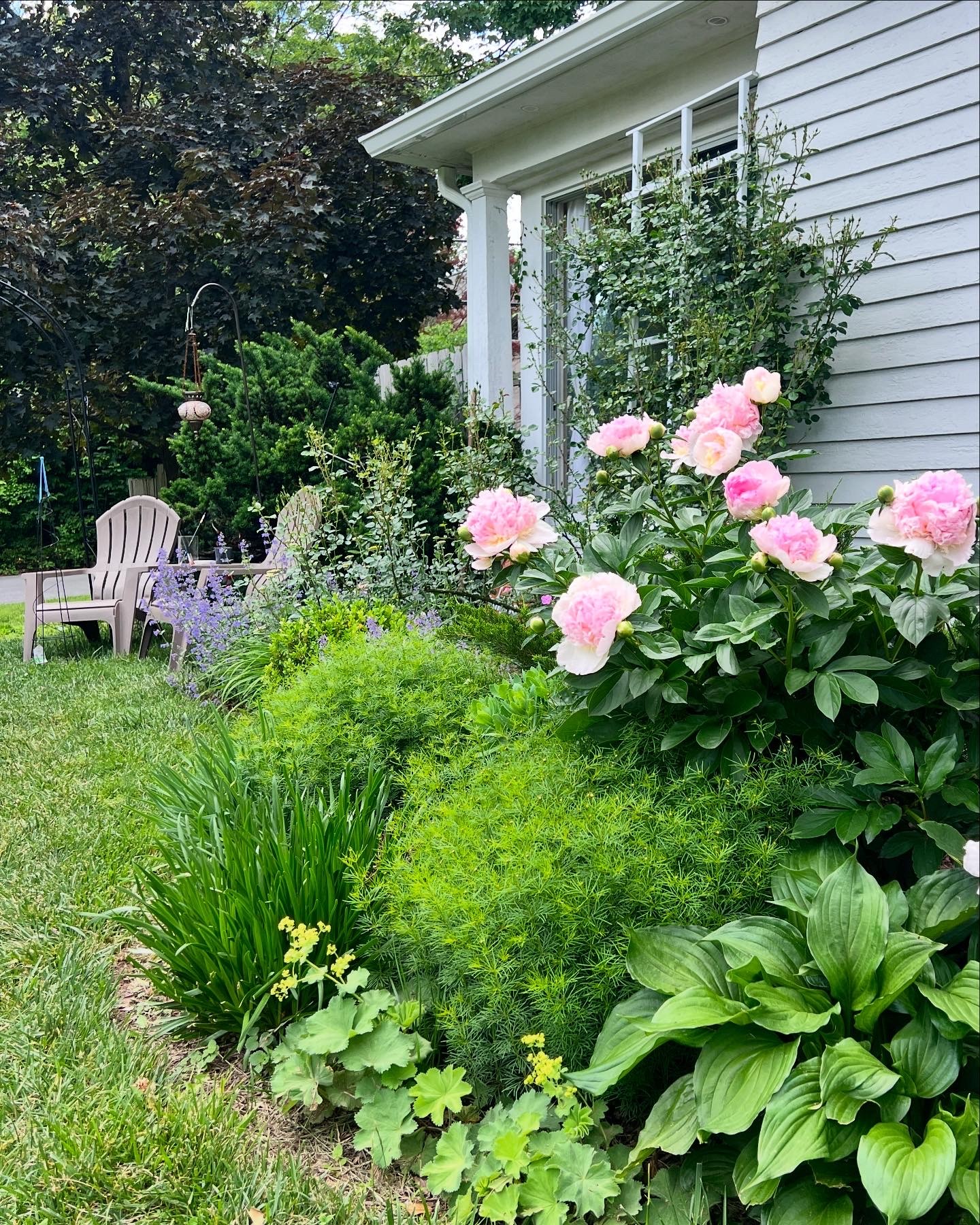
Here's something I learned the hard way: flowers are the cherry on top, not the foundation.
I started with just flowers. It was an easy and inexpensive way to get my hands literally dirty as soon as winter started to give way. I sowed annuals and perennials - I began with forgiving seeds like purple coneflower (echinacea), zinnias, and cosmos, and before long I’d even created a full cosmos meadow that looked like a little fairyland right outside my front door.
But something was off!
Flowers have a short shelf live! The beds are bare for most of spring. Before you know it, the foliage of your annuals is no longer lush and the beds start look tired. I started visiting botanical gardens whenever I got a chance in the U.S. and Europe and it finally hit me. My garden was missing the bones: evergreens, shurbs and ornamental grasses.
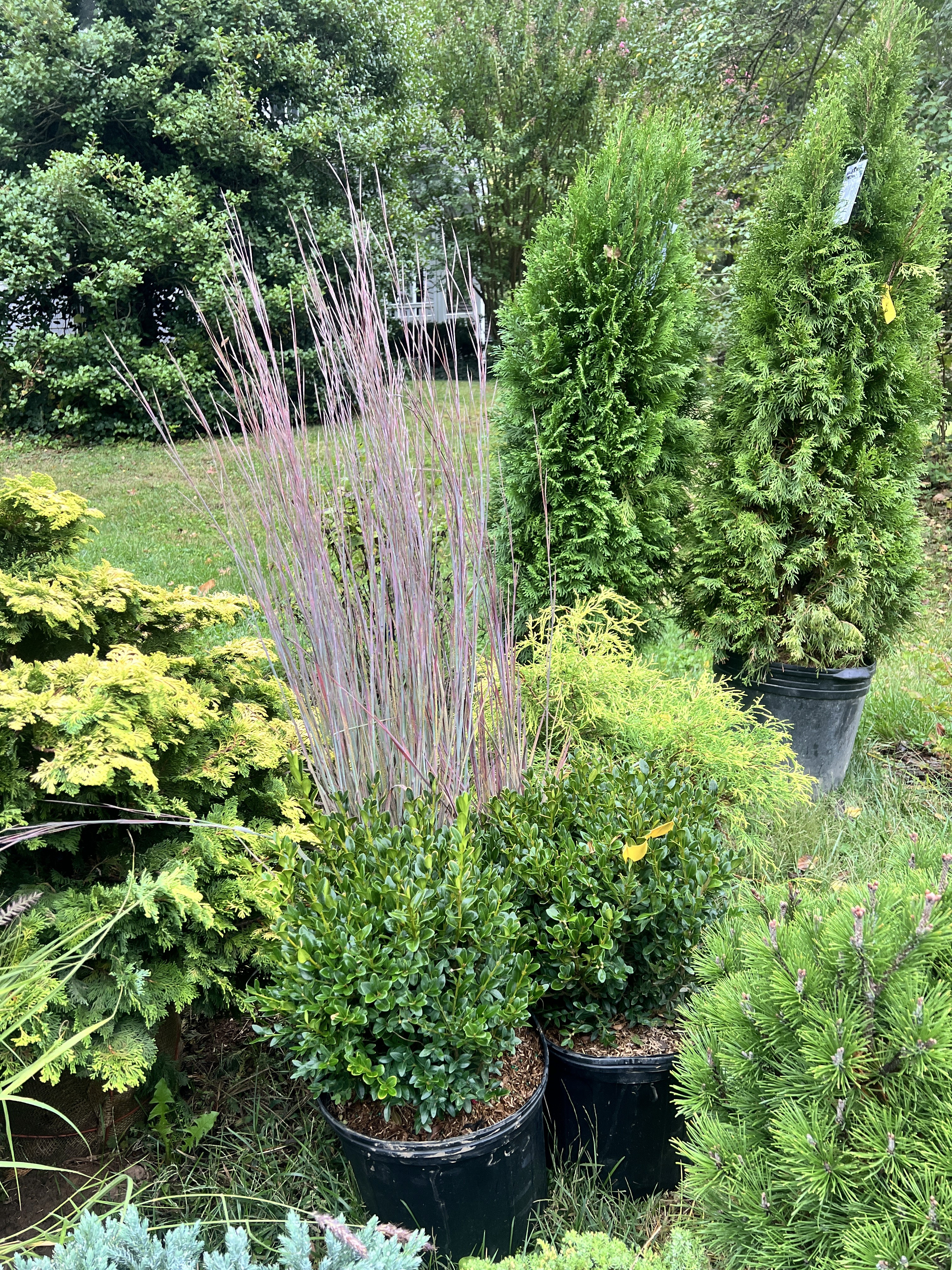
That's when I started adding evergreens:

And then, flowering shrubs: hydrangeas, spirea, and roses. Once that skeleton is in place, tucking in colorful flowers becomes easy, and the whole bed looks full and lush even when nothing is in bloom!
Think of it this way: the shrubs and evergreens are your constants — they look good in every season. The flowers are your variables — the seasonal color and drama layered on top. Get the constants right first.
3. Pick one plant and repeat it everywhere
A garden, especially a cottage garden, can start to feel messy if every bed is doing its own thing. The secret is a common thread. I learned that in my work in marketing. A common thread needs to tie all of your creative so that it feels intentional even if varied. The same goes in gardening. You can have a different theme in every bed, but without something connecting them the overall effect feels scattered.
For me, those plants are juniper, coreopsis, and catmint. I've planted them in almost every border, and they tie the whole garden together — even when everything else is wildly different.
Find your version of catmint. A plant that thrives for you, that you love, that you can repeat. It will make the whole garden feel intentional rather than accidental.
4. Be patient — a garden is like wine
Oh, and one more thing. The most important thing!
A garden is like wine. The longer you have it, the better it becomes. Plants fill in, self-seed, and surprise you. That shrub that looked lonely in year one becomes the backbone of the whole bed by year three. The garden you have in four years will be unrecognizable — in the best possible way — compared to what you start with today.
When you're staring at one finished bed and a whole lawn still to go, remember: it's the journey, not the destination. Turn your garden into your mental and physical health outlet. Your creative project. Your reason to be outside with your hands in the dirt.
Let that be your number one goal — not perfection, not finishing fast, just the quiet pleasure of watching something you planted grow.
It takes time. And that's exactly what makes it worth it.
Watch the full video here
FAQ: How to transform your front yard into a garden
How do you turn your front lawn into a garden?
Turn one small area into a flower bed first instead of ripping everything out at once. Focus on edging, soil prep, and a few structural plants, then gradually expand the beds as you gain confidence. The lawn that remains actually helps — it keeps everything looking tidy while you figure out where you're going.
How do you start a garden for beginners?
Start close to the house where you'll see it every day, keep the space small, and choose a handful of tough plants you actually like. Learn how they behave for a full season before adding more. One successful bed gives you the confidence to keep going.
How long does it take to transform a lawn into a cottage garden?
Longer than you think — and that's actually the good news. My front lawn transformation has taken four years and it's still evolving. The first year you're learning. The second year plants start establishing. By year three the garden takes on a life of its own. Start small, be patient, and enjoy every stage of the journey.
What is the 70/30 rule in gardening?
Many gardeners aim for about 70% reliable structural plants — evergreens, shrubs, tough perennials — and 30% seasonal color and experiments. I learned this the hard way after filling my first beds with only flowers and wondering why they looked bare in spring. The bones come first.
What is the rule of 3 in landscaping?
Plant in odd numbers and repeat the same plant at least three times across your beds. I repeat catmint, juniper, and coreopsis throughout my borders — that repetition is what ties the whole garden together and makes it feel intentional rather than random.
Can you just put soil on top of grass?
You can smother grass by layering cardboard and compost on top — this is called lasagna gardening and it works well. But simply dumping a thin layer of soil over turf usually leads to weeds pushing right through. For a front yard, it's worth doing a proper removal or smothering for lasting results.
What month is too late to start a garden?
It depends on your zone, but for many temperate climates you can still plant perennials and shrubs well into early fall. Even if it's late for annuals, it's rarely too late to start improving the structure of your beds. In Zone 7A New Jersey, I plant and move things around well into October.
What is the most low-maintenance garden layout?
Fewer, larger beds with curved edges and evergreens, shurbs and ornamental grasses. Repeating a small palette of tough plants reduces decision fatigue and ongoing care. My most low-maintenance beds are the ones anchored by evergreen shrubs, grasses with perennials tucked in between.
Key Takeaways
Start with one small bed — not the whole lawn at once
Lead with structure first: evergreens and shrubs before flowers
Pick one repeating plant (catmint, coreopsis, juniper) to tie all beds together
Flowers are the variables; shrubs and evergreens are the constants
A front lawn transformation takes 2-3 years minimum — patience is the strategy
The 70/30 rule: 70% structural plants, 30% seasonal color
Happy gardening. 🌸
Four years ago, we bought a 100-year-old colonial home with a very empty front lawn. Since then I've been slowly — and sometimes chaotically — transforming it into the garden you see today. If you're at the beginning of that journey, here's what I wish someone had told me.
Four years ago — just grass, a hill, and a dream
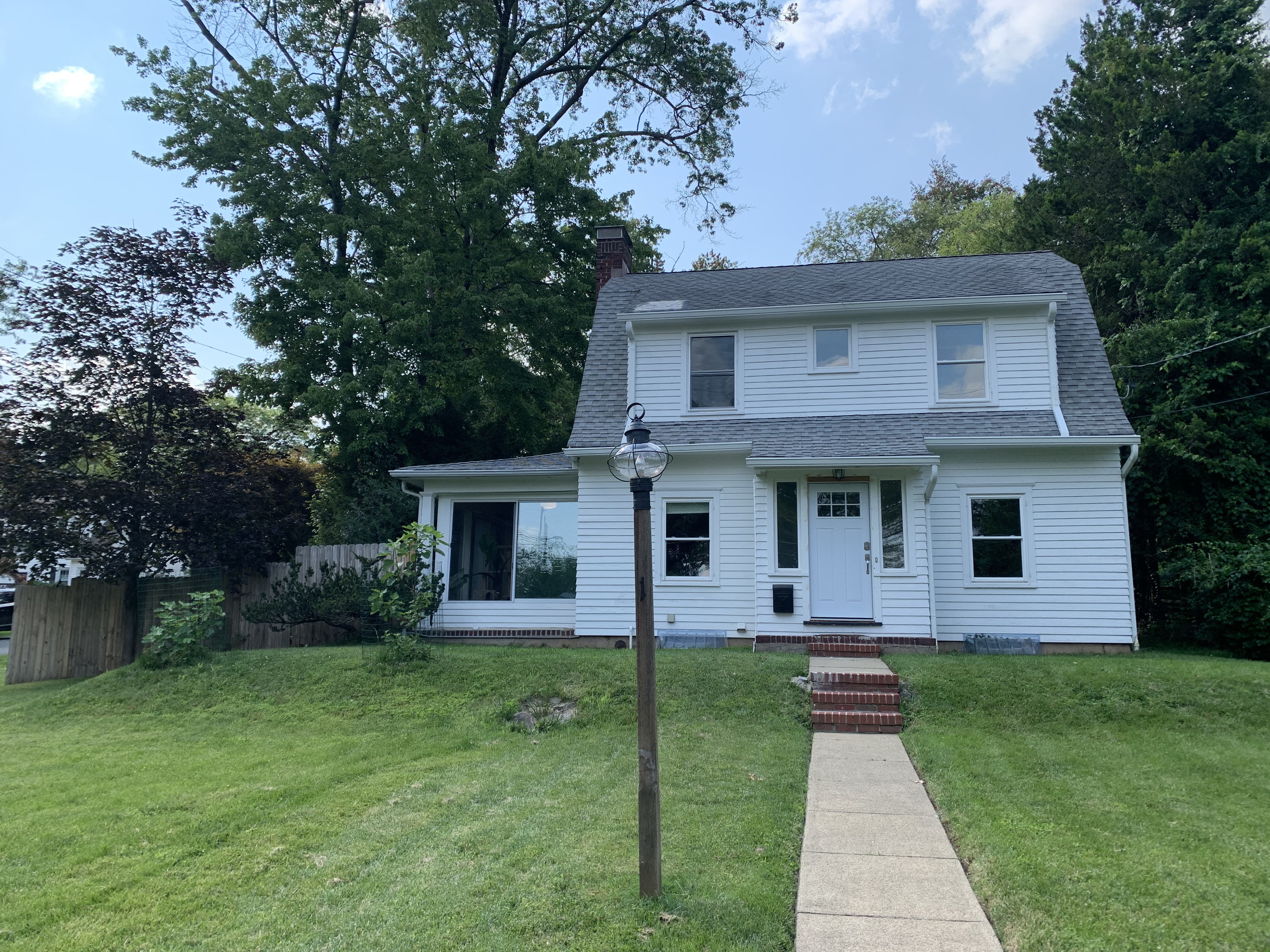
Today
Explore My Garden
Shop the exact plants, seeds, and shrubs in my borders
1. Don't try to do it all at once
When I looked at my front lawn for the first time, it was a large, blank canvas. Being a corner house made it even bigger. If I had tried to tackle it all at once, it would have been a disaster.
Fortunately for me, I didn't yet aspire to creating a botanical garden in my own yard!
I started with one small flower border right next to the house. Then another bed. Then another. The rest of the lawn stayed as grass — and honestly? That was fine. The grass kept everything looking neat while I figured out what I was doing. One bed was my work area and a place to experiment.
Before I knew it, my front yard was filling in with flower beds. Now the lawn is more of a pathway between them.
Year after year additions
Bottom line, you don't have to have a grand plan. You just have to start somewhere small enough that you can actually finish it. A chaos garden is wonderful. Until it becomes too chaotic.
How to Remove Grass for a Garden Bed
Before you plant anything, you need to deal with the existing turf. Three methods that actually work:
Lasagna gardening: Layer cardboard directly over grass, top with 4–6 inches of compost. No digging. Grass smothers over one season. Perfect for a corner lot with large areas.
Manual removal: Slice under the turf with a flat spade and roll it up like carpet. Labor-intensive but instant results — great for smaller beds.
Solarization: Cover grass with clear plastic sheeting for 4–6 weeks in summer. Heat kills the grass and weed seeds. Best in hot climates.
Flipping the turf (MY METHOD): Slice under the turf with a flat spade, then flip each section completely upside down — grass facing down into the soil. The grass smothers itself and breaks down into organic matter over the season. No hauling, no waste, and it improves your soil at the same time.
2. Layer your plants and lead with structure, not flowers
Once you have your bed, think in layers. For a border: tall plants (3–5 ft) at the back, medium (2–3 ft) in the middle, low growers at the front. For an island bed, put your most striking plants off-center and let everything cascade outward.
Here's something I learned the hard way: flowers are the cherry on top, not the foundation.
I started with just flowers. It was an easy and inexpensive way to get my hands literally dirty as soon as winter started to give way. I sowed annuals and perennials - I began with forgiving seeds like purple coneflower (echinacea), zinnias, and cosmos, and before long I’d even created a full cosmos meadow that looked like a little fairyland right outside my front door.
But something was off!
Flowers have a short shelf live! The beds are bare for most of spring. Before you know it, the foliage of your annuals is no longer lush and the beds start look tired. I started visiting botanical gardens whenever I got a chance in the U.S. and Europe and it finally hit me. My garden was missing the bones: evergreens, shurbs and ornamental grasses.
That's when I started adding evergreens:
Real plants. Real garden.
Honest perspective.
And then, flowering shrubs: hydrangeas, spirea, and roses. Once that skeleton is in place, tucking in colorful flowers becomes easy, and the whole bed looks full and lush even when nothing is in bloom!
Think of it this way: the shrubs and evergreens are your constants — they look good in every season. The flowers are your variables — the seasonal color and drama layered on top. Get the constants right first.
3. Pick one plant and repeat it everywhere
A garden, especially a cottage garden, can start to feel messy if every bed is doing its own thing. The secret is a common thread. I learned that in my work in marketing. A common thread needs to tie all of your creative so that it feels intentional even if varied. The same goes in gardening. You can have a different theme in every bed, but without something connecting them the overall effect feels scattered.
For me, those plants are juniper, coreopsis, and catmint. I've planted them in almost every border, and they tie the whole garden together — even when everything else is wildly different.
Find your version of catmint. A plant that thrives for you, that you love, that you can repeat. It will make the whole garden feel intentional rather than accidental.
4. Be patient — a garden is like wine
Oh, and one more thing. The most important thing!
A garden is like wine. The longer you have it, the better it becomes. Plants fill in, self-seed, and surprise you. That shrub that looked lonely in year one becomes the backbone of the whole bed by year three. The garden you have in four years will be unrecognizable — in the best possible way — compared to what you start with today.
When you're staring at one finished bed and a whole lawn still to go, remember: it's the journey, not the destination. Turn your garden into your mental and physical health outlet. Your creative project. Your reason to be outside with your hands in the dirt.
Let that be your number one goal — not perfection, not finishing fast, just the quiet pleasure of watching something you planted grow.
It takes time. And that's exactly what makes it worth it.
Watch the full video here
FAQ: Turning a Front Lawn into a Cottage Garden
How do you turn your front lawn into a garden?
Turn one small area into a flower bed first instead of ripping everything out at once. Focus on edging, soil prep, and a few structural plants, then gradually expand the beds as you gain confidence. The lawn that remains actually helps — it keeps everything looking tidy while you figure out where you're going.
How do you start a garden for beginners?
Start close to the house where you'll see it every day, keep the space small, and choose a handful of tough plants you actually like. Learn how they behave for a full season before adding more. One successful bed gives you the confidence to keep going.
How long does it take to transform a lawn into a cottage garden?
Longer than you think — and that's actually the good news. My front lawn transformation has taken four years and it's still evolving. The first year you're learning. The second year plants start establishing. By year three the garden takes on a life of its own. Start small, be patient, and enjoy every stage of the journey.
What is the 70/30 rule in gardening?
Many gardeners aim for about 70% reliable structural plants — evergreens, shrubs, tough perennials — and 30% seasonal color and experiments. I learned this the hard way after filling my first beds with only flowers and wondering why they looked bare in spring. The bones come first.
What is the rule of 3 in landscaping?
Plant in odd numbers and repeat the same plant at least three times across your beds. I repeat catmint, juniper, and coreopsis throughout my borders — that repetition is what ties the whole garden together and makes it feel intentional rather than random.
Can you just put soil on top of grass?
You can smother grass by layering cardboard and compost on top — this is called lasagna gardening and it works well. But simply dumping a thin layer of soil over turf usually leads to weeds pushing right through. For a front yard, it's worth doing a proper removal or smothering for lasting results.
What month is too late to start a garden?
It depends on your zone, but for many temperate climates you can still plant perennials and shrubs well into early fall. Even if it's late for annuals, it's rarely too late to start improving the structure of your beds. In Zone 7A New Jersey, I plant and move things around well into October.
What is the most low-maintenance garden layout?
Fewer, larger beds with curved edges and evergreens, shurbs and ornamental grasses. Repeating a small palette of tough plants reduces decision fatigue and ongoing care. My most low-maintenance beds are the ones anchored by evergreen shrubs, grasses with perennials tucked in between.
Key Takeaways
Start with one small bed — not the whole lawn at once
Lead with structure first: evergreens and shrubs before flowers
Pick one repeating plant (catmint, coreopsis, juniper) to tie all beds together
Flowers are the variables; shrubs and evergreens are the constants
A front lawn transformation takes 2-3 years minimum — patience is the strategy
The 70/30 rule: 70% structural plants, 30% seasonal color
Happy gardening. 🌸

Written by Jolanta Reynolds
You Might Like
You Might Like


You Might Like

Subscribe to my newsletter
Get new garden posts, seasonal tips, and what's blooming in my New Jersey cottage garden — straight to your inbox.
By subscribing, you agree to the Privacy Policy
Subscribe
to my
newsletter
Get new garden posts, seasonal tips, and what's blooming in my New Jersey cottage garden — straight to your inbox.
By subscribing, you agree to the Privacy Policy